
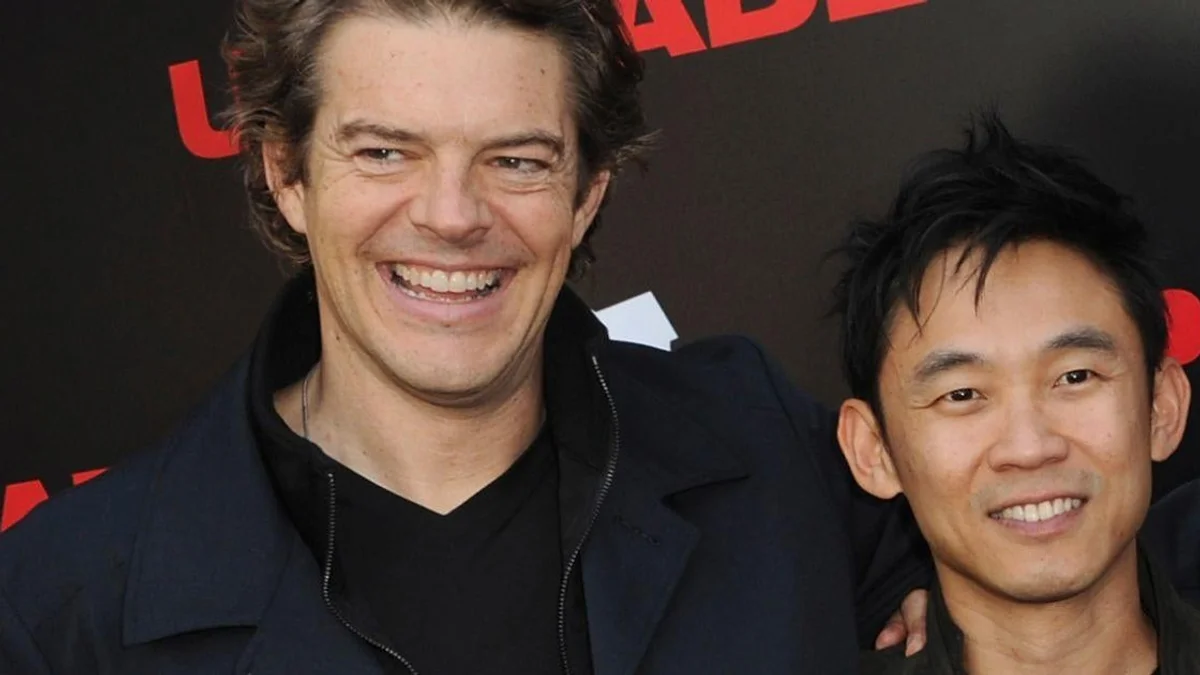
Blumhouse Atomic Monster has lost a word, but its ambitions appear to be growing. Jason Blum and James Wan are simplifying the corporate name of their combined production company to Blumhouse Atomic, almost three years after formally bringing their horror businesses together.
The announcement might appear to be a routine branding exercise. The financial figures released alongside it suggest something more significant: a company that has expanded its output while continuing to operate with production budgets that remain modest by the standards of major Hollywood franchises.
According to Blumhouse Atomic, its combined films have generated more than $2.5 billion at the worldwide box office since the 2024 merger, against aggregate production budgets below $330 million.
For 2026, the company reports nearly $1.3 billion in worldwide grosses from films with combined production costs below $70 million.
These figures are not equivalent to net profit. Marketing expenses, distribution fees, theatrical revenue sharing and other costs are not captured by a simple comparison between box office and production budgets.
Nevertheless, the numbers illustrate why Blum and Wan have become such influential figures in the modern horror business. Their combined company is competing for substantial worldwide audiences without consistently adopting the spending levels associated with Hollywood's largest spectacle franchises.
Two creative labels under one corporate identity
The new name does not mean that Blumhouse and Atomic Monster are being dissolved into a single production label.
Both will continue developing films and television projects under their respective banners, with separate creative teams responsible for their work.
That distinction is central to understanding the announcement. Blumhouse Atomic is the umbrella organization. Blumhouse and Atomic Monster remain recognizable production identities inside it.
Blumhouse has long been associated with high-concept horror projects built around disciplined budgets. Its record includes Paranormal Activity, The Purge, Get Out and M3GAN, although individual projects have involved different partners, filmmakers and financing structures.
Atomic Monster is closely associated with James Wan's career as a director and producer, particularly his involvement in franchises such as The Conjuring, Insidious and Saw.
Their creative histories overlap, but maintaining separate labels allows individual teams to keep their development identities while benefiting from the larger business.
It also avoids the impression that every future movie must be developed under one unified creative formula.
Distribution arrangements remain a separate matter. The combined company works with multiple studios, including Universal, Paramount, Warner Bros. and Lionsgate, depending on the project. A shared corporate name does not mean that all of its films will be distributed by the same company.
The economics behind the rebranding
Blumhouse Atomic's financial announcement highlights a business model that has attracted considerable attention throughout the entertainment industry.
The company reports more than $2.5 billion in worldwide box office since the merger. Its combined production budgets during that period have remained below $330 million.
The figures for 2026 are particularly striking: nearly $1.3 billion in global receipts against less than $70 million in aggregate production costs.
There are limits to what those comparisons establish. The reported grosses represent theatrical ticket sales, not money transferred directly to Blumhouse Atomic. The budget totals do not account for every expense involved in financing, releasing and promoting the films.
The numbers therefore cannot be used to calculate the company's precise profit margin.
They do, however, illustrate the scale of the opportunity created by successful horror films made at relatively controlled costs.
A large action franchise may require several hundred million dollars in combined production and marketing spending before its performance can be judged. A horror project developed with a much smaller production budget carries a different financial exposure.
This does not eliminate the possibility of failure. Horror audiences can reject an established franchise just as easily as an original film. But a portfolio of comparatively affordable projects allows a company to experiment while limiting the financial consequences of individual disappointments.
Obsession and Backrooms have become proof points
Blumhouse Atomic is not relying exclusively on established franchises to demonstrate the value of its approach. Two breakout filmmakers feature prominently in its account of the past year: Curry Barker and Kane Parsons.
Barker directed Obsession, a supernatural horror film about romantic desire taking a disturbing turn. His creative background includes online video work, allowing him to build an audience and develop a recognizable approach before moving into features.
Parsons followed another digital path. His Backrooms videos developed a distinctive form of internet horror built around empty environments, strange architecture and the suggestion of a reality extending beyond familiar physical space.
The feature adaptation of Backrooms became a major theatrical success in 2026, strengthening the argument that online creators can move into feature filmmaking without abandoning the identities that attracted their original audiences.
Wan has emphasized the company's interest in filmmakers including Barker, Parsons, Josh Giuliano and Dylan Clark.
His stated goal is to support new voices over the long term rather than simply fund a successful debut and move on to unrelated projects.
That aspiration is important because the process of discovering talent has changed. A filmmaker no longer needs to wait for traditional industry access to demonstrate an audience for a horror concept.
The more difficult challenge is preserving the originality of those filmmakers once they enter a commercial system that naturally rewards recognizable properties and repeatable success.
The return of Saw illustrates the partnership's possibilities
One of the most meaningful developments behind the new corporate structure involves Saw.
Blumhouse acquired rights relating to future Saw productions in 2025, creating a path for James Wan to return to a franchise he helped create with Leigh Whannell.
The arrangement requires an important qualification. Blumhouse Atomic does not simply own the entire Saw property without restrictions.
Lionsgate retains existing ownership and distribution rights, while Content Partners and Mark Burg have interests in the earlier films' library.
The deal is therefore better understood as a significant creative and business opportunity for future installments rather than the complete transfer of every historical franchise right.
For Blum, bringing Wan back to Saw provides a particularly visible example of what the combined organization can accomplish.
The pair are also developing additional projects connected to Paranormal Activity and Blair Witch, two properties whose commercial history demonstrates the appeal of horror concepts built around relatively simple premises.
These projects offer the company established brand recognition. Their creative success will still depend on finding stories that justify returning to those worlds.
A broad 2027 slate combines familiar names and new ideas
The company's announced 2027 lineup includes River, The Revenge of La Llorona, The Exorcist: Martyrs, Anything But Ghosts, Paranormal Activity, Molepeople, Blair Witch, Sleepover and Seasons.
The list includes several distinct kinds of production, from returning horror franchises to original concepts and new adaptations.
Mike Flanagan's The Exorcist: Martyrs is among the most recognizable projects, with Scarlett Johansson attached to the film.
Curry Barker's Anything But Ghosts is scheduled for May 7, 2027, through Focus Features. The horror-comedy follows would-be ghost hunters whose pursuit of fame takes an unexpectedly dangerous turn.
The next Paranormal Activity film is scheduled for May 21, 2027, with Paramount handling its theatrical release. Ian Tuason is directing, and Blum and Wan are among the producers.
Lionsgate has also scheduled a new Blair Witch film for September 2027, directed by Dylan Clark.
These films are at different stages of production and operate through different distribution arrangements. Their presence on the company's slate should not be interpreted as evidence that every project has the same level of production certainty or identical worldwide release plans.
The larger significance is the mixture of development strategies. Blumhouse Atomic wants to keep recognizable franchises active while building relationships with filmmakers who may create the next generation of horror properties.
The horror business is expanding beyond movies
The rebranding also reflects the company's interest in television, gaming, live entertainment and consumer products.
Its television activities include The Rainmaker for USA Network, Scarpetta for Prime Video and Netflix's Worst Ever documentary programming.
In gaming, Blumhouse Games is involved with projects such as Grave Seasons, a title combining farming-life mechanics with a darker mystery.
The company has also explored live entertainment through a stage adaptation of Paranormal Activity and collaborations associated with Universal Halloween Horror Nights.
These activities allow horror properties to reach audiences in ways that do not depend entirely on the release of a new feature film.
They also reflect the value of intellectual property across modern entertainment. A successful concept may support sequels, interactive adaptations, themed experiences and merchandise.
However, this kind of expansion comes with creative risks. Horror often depends on uncertainty and surprise, while long-running franchises become increasingly familiar to their audiences.
A monster that once terrified viewers can eventually become a recognizable consumer brand. Managing that transition without losing the original appeal is one of the challenges facing any company that wants to turn horror into a diversified entertainment business.
Blum and Wan are building a longer-term institution
The corporate change follows a merger completed in early 2024, but the professional relationship between the two producers predates that transaction.
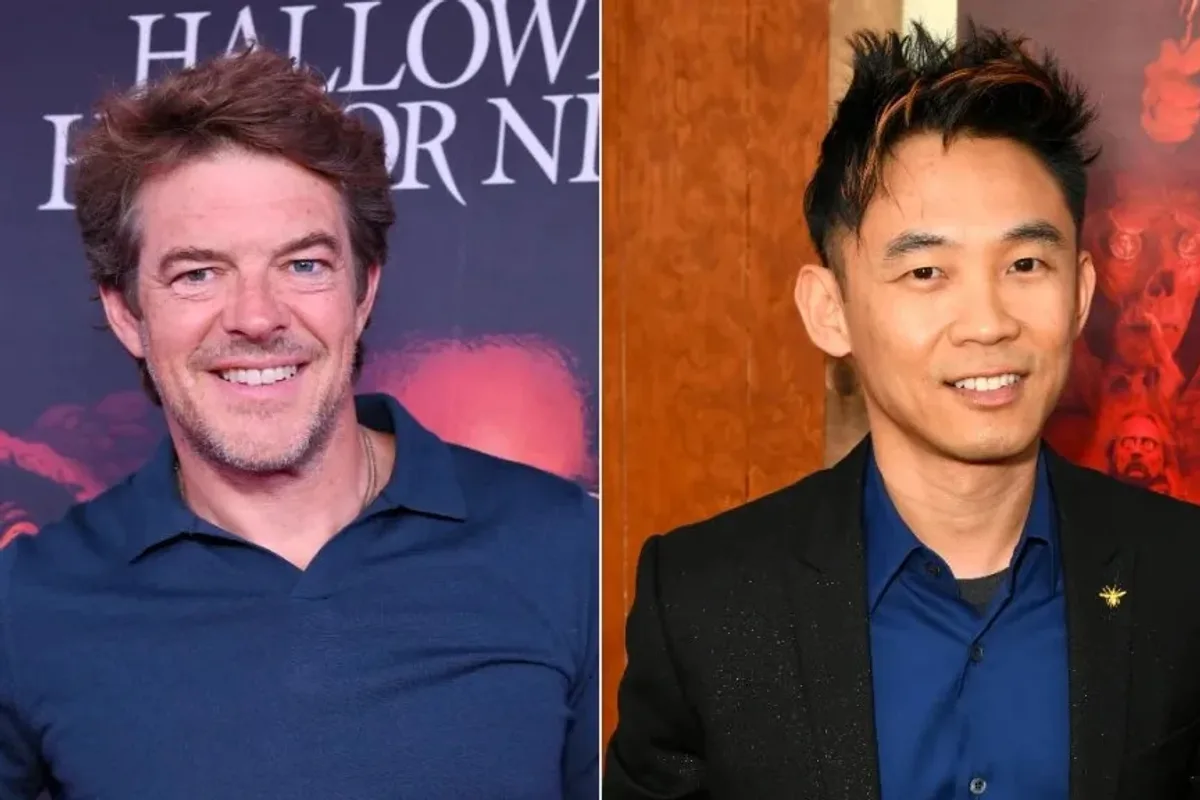
Blum is closely associated with production economics and the development of commercially efficient projects. Wan has built his reputation through distinctive horror direction, successful franchises and the discovery of other filmmakers.
These skills are complementary, even if the day-to-day responsibilities within the company are necessarily more complicated than a simple division between business and creativity.
The name Blumhouse Atomic represents a shift in how the partnership presents itself. It is no longer merely two companies announcing that they have joined forces. It is a combined organization describing its own identity, strategy and ambitions.
The financial figures released with the announcement support a strong commercial case for that partnership.
The more difficult test will be maintaining creative variety as its scale increases. A horror company can build a successful business around familiar franchises, but its long-term relevance also depends on the unfamiliar ideas that eventually become the next franchises.
Blumhouse Atomic now has the resources, relationships and commercial momentum to pursue both strategies. Whether it can preserve their balance will determine what the new name ultimately represents.