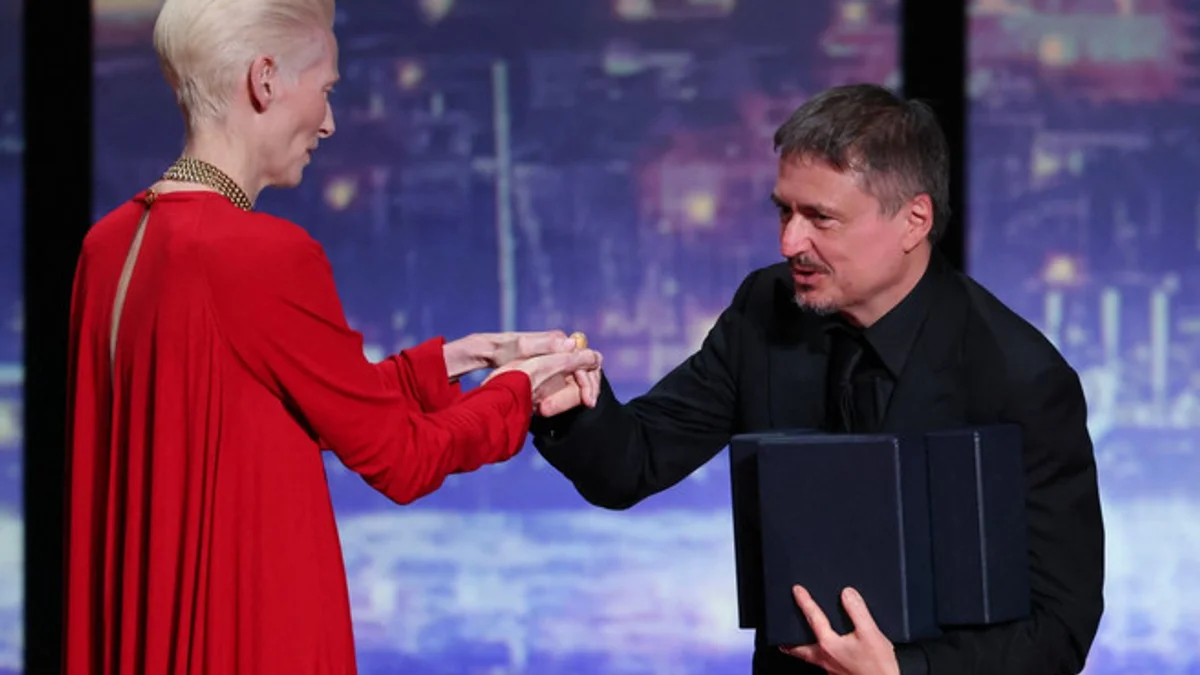
The Feature Film Jury chaired by Park Chan-wook awarded Fjord the Palme d'Or on May 23. Tilda Swinton presented Mungiu with the prize during the closing ceremony.
Park allowed himself one joke afterward. He said he would have preferred not to award any movie the Palme because he had never won one himself. Then he dropped the joke: Fjord, he said, definitely deserved it.
The victory places Mungiu among Cannes' group of ten filmmakers who have won the Palme twice.
His first Palme came before Cannes could call him a veteran
4 Months, 3 Weeks and 2 Days was only Mungiu's second feature. Set in 1980s Romania, it follows a student helping her friend obtain an illegal abortion under Nicolae Ceaușescu's regime. Cannes awarded it the Palme in 2007.
The film became one of the defining international successes associated with the Romanian New Wave. Mungiu could easily have remained fixed to that breakthrough in the way festival careers sometimes become permanently summarized by one title.
His subsequent Cannes record made that difficult.
Four of five Competition films have left with awards
Beyond the Hills returned Mungiu to the Competition in 2012 and won him Best Screenplay, while Cristina Flutur and Cosmina Stratan shared the acting prize. Graduation followed in 2016 and earned Mungiu the Best Director award ex aequo.
R.M.N. competed in 2022 without winning a prize. Fjord is his fifth Competition feature and the fourth to be represented on the winners' list.
Cannes also brought him into its juries. He served on Steven Spielberg's Feature Film Jury in 2013 and chaired the Cinéfondation and Short Films Jury in 2017.
By the time Tilda Swinton handed him the second Palme, Mungiu's history with the Festival already contained almost every role except opening-night host.
Fjord leaves Romania without leaving Mungiu's arguments behind
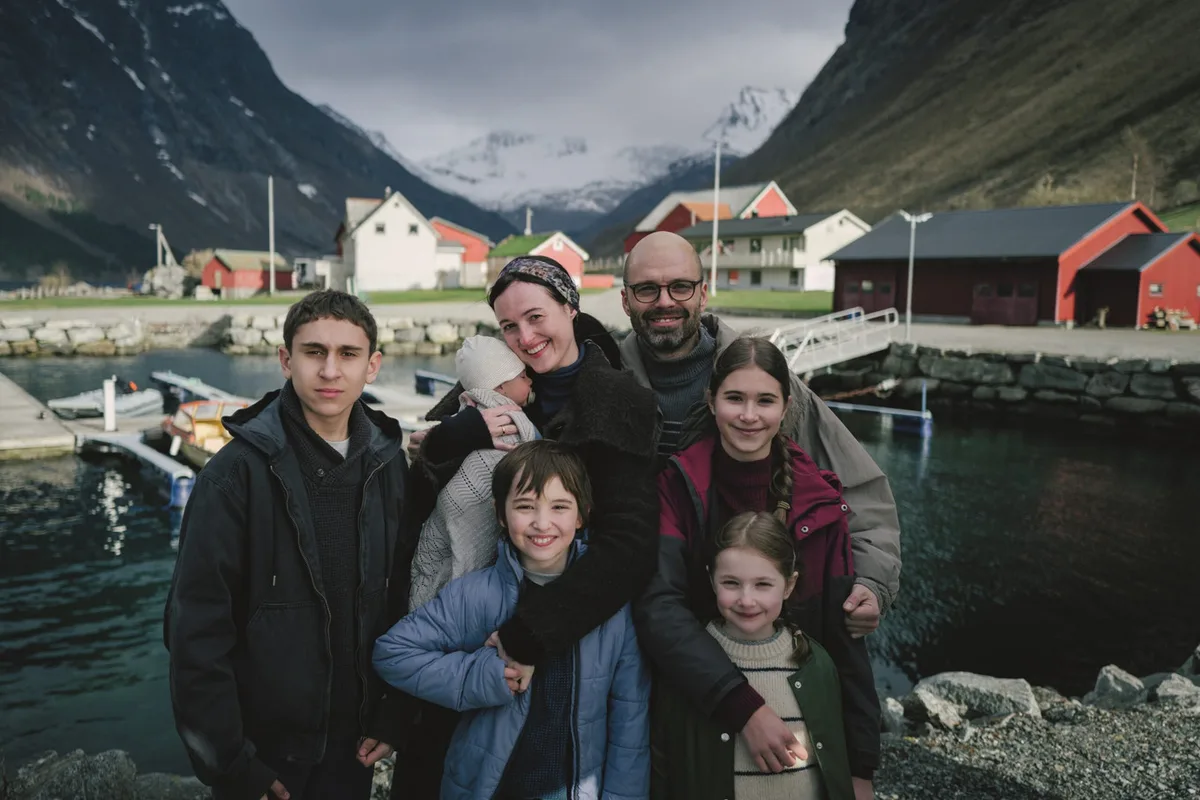
The new film begins with the Gheorghius, a deeply religious Romanian-Norwegian couple settling in a village at the end of a fjord. Their children become close to the neighboring Halberg family. Then teachers notice bruises on the eldest Gheorghiu daughter, Elia, and the family's private approach to raising its children becomes a public question.
Sebastian Stan and Renate Reinsve lead an ensemble that also includes Lisa Carlehed, Ellen Dorrit Petersen, Lisa Loven Kongsli, Henrikke Lund-Olsen and Vanessa Ceban.
The production itself is spread across Europe. Cannes lists Romania, France, Norway, Sweden and Denmark among the countries behind the film, with Mobra Film joined by companies including Why Not Productions, Eye Eye Pictures, Snowglobe Film, Aamu Film Company, Filmgate Films and Garagefilm International.
The setting has moved. Mungiu's interest in institutions, family pressure and the unstable line between private conviction and public responsibility has not.
The winner does not offer the jury's verdict as the movie's verdict
Speaking to international press after the award, Mungiu returned to the idea that there is no single truth capable of resolving every conflict in Fjord. People, he argued, still have to find a way to coexist when their values remain incompatible.
That is a slightly awkward philosophy for a film festival prize, which necessarily ends with nine jurors deciding that one movie stands above the other twenty-one.
Fjord does not seem especially interested in giving its own characters that luxury. A child's bruises can demand action without automatically making every judgment surrounding them simple. Belief can be sincere and still create consequences for somebody else. A community can intervene and still misunderstand the people it is judging.
Mungiu warned that refusing dialogue pushes the consequences toward social violence and toward the children who inherit it.
A second Palme changes the shape of a career
The first Cannes victory made Mungiu internationally unavoidable. The second arrives after Best Screenplay, Best Director, jury service and five Competition selections spread across nearly two decades.
That makes Fjord less of a comeback than a new peak on a route Cannes has been measuring for years.
The film opened in France on August 19 through Le Pacte.