An unexpected prison call after six months of silence
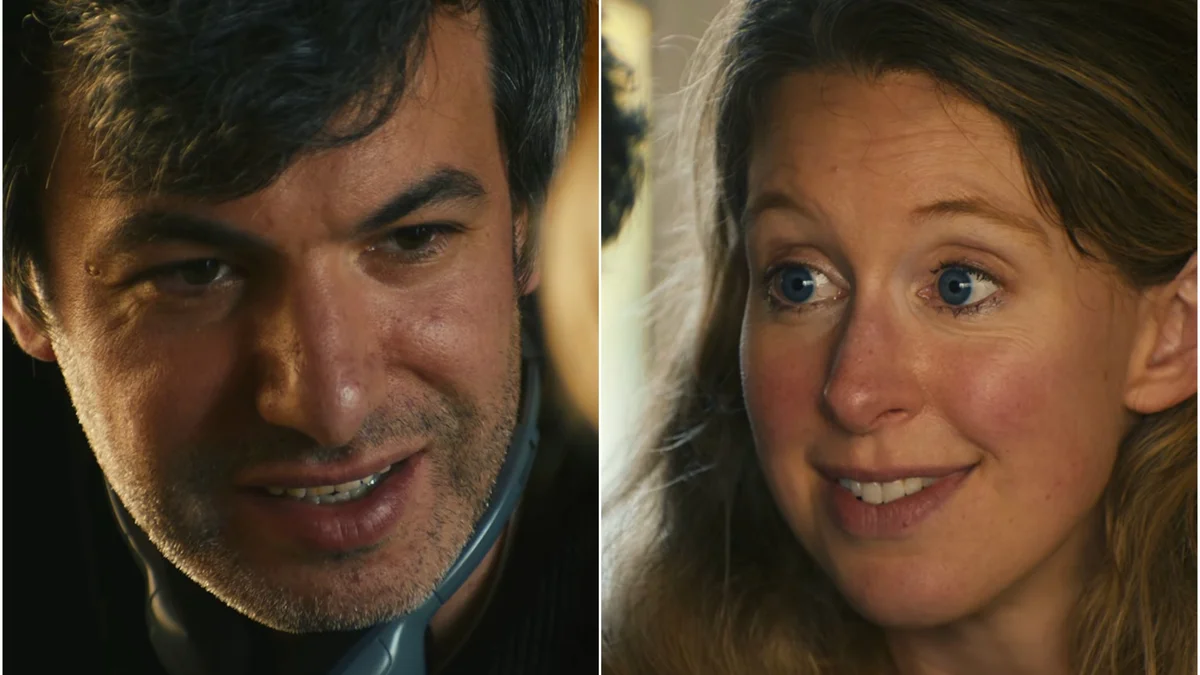
Nathan Fielder discovered the missed calls while checking his phone. A message indicated that someone was trying to reach him from a correctional institution. Then a third call arrived. This time, he answered.
The caller was Elizabeth Holmes, the former Theranos executive serving a federal prison sentence following her fraud conviction. According to Fielder's account in WIRED, they had not spoken on the phone for more than six months.
The conversation began ordinarily. Holmes asked how he was doing. Fielder wanted to know whether she had heard about the early coverage of You Can See Everything, the documentary he had completed with Lance Oppenheim.
Holmes explained that she had received some information but had not read most of the articles and commentary about the film.
Then she told him that she trusted him.
The conversation continued. They discussed other subjects, including her children and personal updates Fielder chose not to disclose to the journalist.
Before the call ended, Holmes repeated the same statement.
Fielder acknowledges that he still does not understand why she felt the need to say it twice.
The timing makes the encounter particularly striking. The film was about to reach theaters, while its central subject had not necessarily seen the finished work or the full public discussion surrounding it.
What does that trust actually mean?
Holmes' words could be interpreted as encouragement.
Perhaps she wanted Fielder to know that she expected him to tell her story fairly, or simply wished to acknowledge the relationship they had developed during filming.
But the filmmaker refuses to select one explanation.
Speaking to Katie Drummond, he says he does not know what Holmes intended.
He cannot establish whether the words were spontaneous, calculated or connected to particular expectations about the documentary.
That uncertainty makes the conversation more interesting than an ordinary celebrity anecdote.
Trust is fundamental to documentary filmmaking. Without it, a director may struggle to gain meaningful access to someone's private life.
Yet trust does not necessarily mean that both parties want the same outcome.
Someone may agree to be filmed because they hope to change public perceptions of themselves. A documentarian may instead want to investigate contradictions, understand behavior or examine events without defending the subject.
The problem becomes especially complicated when the person being filmed is associated with a legal case as widely known as Theranos.
Fielder cannot know precisely what Holmes expects from him.
He can only report that she chose to contact him and repeat the statement.
You Can See Everything offers extraordinary access to Holmes
The documentary began under unusual circumstances.
Elizabeth Holmes and her partner Billy Evans had previously explored the possibility of making a documentary about their daily lives.
They had approached A24, but the initial discussions did not result in a completed project.
When Fielder learned about the approach, he asked to meet Holmes.
He was familiar with her history, partly through journalist John Carreyrou's investigative book Bad Blood.
His curiosity extended beyond the Theranos scandal itself.
He wanted to understand why a woman who had largely avoided the media was suddenly interested in inviting a camera crew into her life.
Fielder and Oppenheim eventually received permission to document Holmes and Evans during the final 34 days before her imprisonment in May 2023.
Their access went far beyond a conventional interview.
The filmmakers entered the couple's family environment, observed daily routines and participated in conversations of a highly personal nature.
A24 describes the movie as the beginning of a three-year documentary journey in which intimate observation gradually becomes a broader investigation into what recorded images can actually reveal.
The arrangement raises a problem that cannot simply be solved by gathering additional footage.
Does seeing more necessarily mean understanding more?
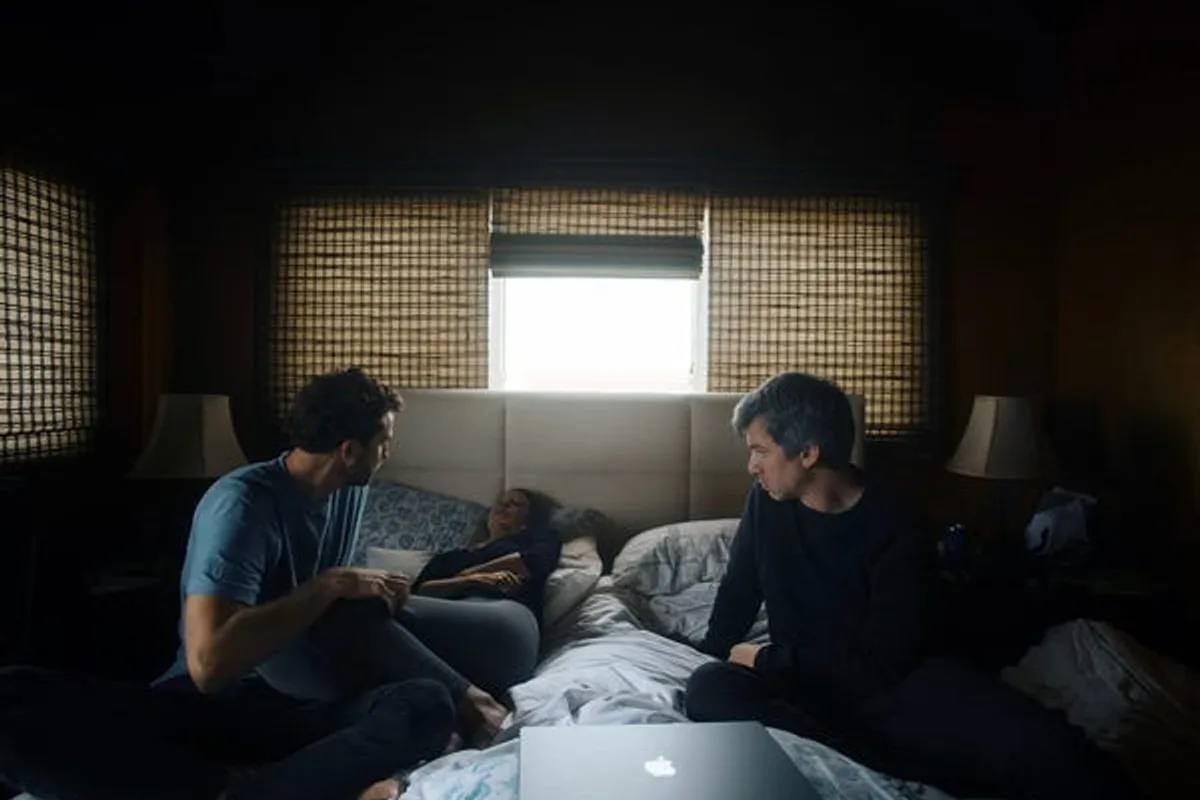
Why did Holmes allow Nathan Fielder into her life?
That question occupies an important place in Fielder's WIRED interview.
The filmmaker is known for unconventional methods.
In Nathan for You and The Rehearsal, he constructs situations in which participants, audiences and sometimes Fielder himself struggle to distinguish spontaneous behavior from performance.
He would not seem the most obvious choice for someone hoping to carefully control a public image.
Yet Holmes and Evans agreed to his presence.
Fielder recalls raising the question during the earliest days of filming.
Even after completing the documentary, he still has no satisfactory explanation.
The filmmaker describes an almost paradoxical experience.
He met a woman whose legal history he knew, but who could also appear friendly and considerate during their conversations.
The contrast between what he understood about Theranos and what he experienced personally became a source of continuing uncertainty.
A person can appear sincere during a conversation without that impression verifying the accuracy of their statements.
Fielder explains that he repeatedly tried to determine whether Holmes was speaking honestly or attempting to influence his perception.
The documentary does not convert that uncertainty into a definitive psychological judgment.
Instead, it investigates the experience of doubt and how that doubt evolves when a filmmaker becomes personally acquainted with a controversial figure.
The filmmaker-subject relationship does not end with filming
The prison call highlights an aspect of documentary work that audiences rarely see: relationships developed during production can continue long after the final day of shooting.
Putting away cameras, finishing an edit and arranging a premiere do not necessarily dissolve the human connections involved.
For several weeks, Fielder shared part of Holmes and Evans' daily life.
The team then spent years trying to understand and organize the material they had recorded.
The filmmaker consequently knows certain personal details about their lives, while the couple understands that he possesses considerable influence over how those experiences are publicly represented.
This imbalance is not unique to You Can See Everything.
It exists in many intimate documentaries.
A participant shares part of their life, and a filmmaker later decides what to include, exclude or place alongside other events.
Such relationships depend on trust whose limits may never be explicitly defined.
Fielder's account of the telephone call exposes precisely that ambiguity.
Holmes may trust him without knowing every creative decision he has made.
Fielder may want to understand her without accepting her interpretation of events.
Neither possibility fully explains the call.
A film questioning its own ability to show the truth
The title You Can See Everything carries an almost ironic promise.
The suggestion of complete visibility implies that nothing important is hidden.
Documentary cinema, however, always depends on framing, perspective and editing decisions.
A camera can record a reaction, but it cannot directly capture the intention producing it.
An interview can preserve a statement, but it cannot guarantee that the words reflect every belief held by the speaker.
Those limitations matter particularly when a film explores someone convicted of misleading investors.
Fielder and Oppenheim are not simply observing Holmes in the hope that her behavior will produce an obvious answer.
Their film also considers the difficulties experienced by people attempting to understand her.
Its later sections take that investigation further through reenactment.
Amanda Seyfried, who previously portrayed Holmes in the television drama The Dropout, participates in an exploration of the difference between a real person and the representations constructed around them.
That approach does not turn the documentary into conventional fiction.
Instead, it emphasizes that recorded images and performed scenes both require interpretation.
Some viewers may question a documentary that moves so freely between observation and reconstruction.
But the technique fits the film's underlying concern: cameras do not automatically eliminate uncertainty.
The Theranos fraud case remains a matter of established fact
Fielder's interest in Holmes should not obscure the scandal that made her famous.
Theranos promised to transform medical testing through machines supposedly capable of carrying out numerous blood analyses using extremely small samples.
The company attracted major investment and developed an extraordinary reputation in Silicon Valley.
Investigative reporting and subsequent legal proceedings revealed serious discrepancies between the technology's advertised abilities and its actual performance.
Holmes was convicted in 2022 of multiple fraud-related offenses involving investors.
She began serving a federal prison sentence in May 2023.
Her continued claims of innocence are personal assertions.
They do not overturn the legal verdict.
That distinction remains essential when discussing such an intimate documentary.
Seeing a mother with her children or someone experiencing a painful family separation can generate empathy.
But empathy is not evidence of innocence.
Equally, a criminal conviction does not erase every other dimension of a person's private life.
Documentary filmmaking must navigate these different realities without confusing them.
Billy Evans wanted audiences to see a different side of Holmes
Billy Evans' explanation provides another clue about the project's origins.
Speaking on the All-In podcast shortly before the American release, Holmes' partner described why the couple agreed to participate.
According to Evans, people who knew Holmes primarily through media coverage often formed a strongly negative opinion of her.
He claims that people close to him sometimes changed their attitudes after spending time with her personally.
The documentary was intended to offer a larger audience an opportunity to observe Holmes within her family environment.
That stated motivation is significant.
It suggests that the filmmakers' access was not only about documenting a difficult period of someone's life.
According to Evans, the couple also hoped to influence how Holmes would be perceived.
That does not establish that Fielder or Oppenheim agreed to produce a sympathetic portrait.
On the contrary, the potential difference between the subjects' expectations and the filmmakers' intentions forms part of the project's central tension.
Holmes' unexpected telephone call arrived just as those competing interpretations were beginning to encounter public reactions.
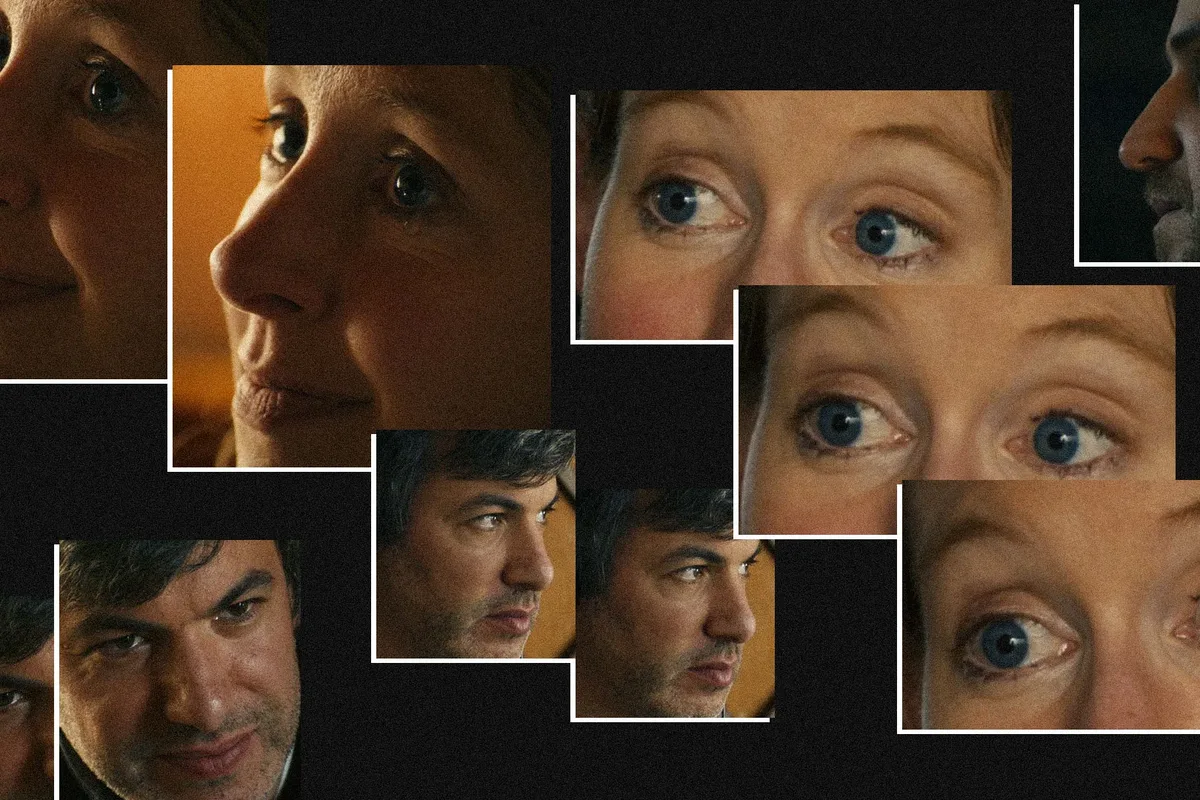
Fielder started filming without knowing what movie he would make
In WIRED, Fielder describes a creative process unusual even by the standards of his previous work.
When he proposed meeting Holmes to A24, he did not have a definitive conception of the eventual documentary.
He knew her story had already been explored through extensive journalism and audiovisual adaptations.
He did not want simply to reproduce familiar information with additional interviews.
His interest lay in meeting Holmes and discovering something he could not yet define.
Fielder says he requested the freedom to deliver no finished film if the production failed to produce worthwhile material.
That condition allowed the filmmakers to begin without immediately forcing events into a predetermined narrative.
The approach involves obvious risks.
A documentary without a clear destination can consume considerable time and resources without finding a meaningful form.
But it can also reveal relationships and contradictions that a tightly planned production might overlook.
You Can See Everything appears to have followed that second possibility, gradually making the filmmakers' difficulty interpreting events part of its central subject.
A production kept secret for years
The documentary was also developed under unusually strict secrecy.
Fielder explains that the early filming involved a relatively small team, limiting the number of people who knew the project existed.
That confidentiality served several purposes.
Holmes and Evans were already living under intense public scrutiny.
Announcing the presence of filmmakers could have attracted additional attention and changed their behavior.
The directors also wanted the freedom to approach other participants without the project's story being publicly defined before they had discovered its direction.
The secrecy contributed to the surprise when You Can See Everything premiered at the Telluride Film Festival in September 2026.
Audiences knew Fielder for his unusual television experiments.
Discovering that he had spent years working on Holmes represented a dramatic expansion of his creative scope.
A24 subsequently promoted the project's unusual nature without immediately revealing every element of its construction.
The film opened in American theaters on October 16.
Its release finally allows audiences to compare their own interpretations with the filmmaker's.
The theatrical success does not answer the movie's questions
You Can See Everything performed far above initial expectations during its opening weekend.
According to Variety and Associated Press, the documentary earned approximately $15 million in North America from 855 theaters.
It finished second at the American box office behind Street Fighter.
That is an extraordinary performance for a nonmusical documentary running nearly three hours.
But those figures are not the central subject of this new development.
Ticket sales establish public curiosity.
They do not determine whether audiences agree with Fielder's interpretations, sympathize with Holmes or reject her behavior entirely.
Nor do they reveal how Holmes herself understands the reaction.
During the telephone conversation, she reportedly told the filmmaker that she had heard about some coverage but had not read most of it.
Fielder therefore does not confirm that she has watched the final documentary under the same circumstances as theatrical audiences.
Her expression of trust cannot be treated as explicit approval of the finished edit.
The commercial success simply gives greater visibility to the questions raised during production.
A filmmaker confronting his own uncertainty
One of Nathan Fielder's distinctive creative qualities is his ability to turn uncertainty into artistic material.
In Nathan for You, he developed absurd business strategies to observe people confronting unexpected situations.
In The Rehearsal, he expanded his interest in preparation and control by constructing environments in which participants could practice conversations or events before experiencing them in real life.
Those projects initially appeared to give Fielder an unusually powerful position.
He seemed to be the person defining the rules of the experiment.
Yet his work often revealed the limits of that control.
With Holmes, the process becomes different.
He is not simply creating an artificial situation to observe another person.
He enters circumstances shaped by legal, family and media pressures that existed long before he arrived.
He cannot control every element or consequence.
In WIRED, Fielder says he continues revisiting conversations and wondering what they meant.
The prison call adds another event for him to interpret.
He could turn it into a spectacular conclusion.
Instead, he acknowledges that he still does not possess an answer.
Trust guarantees neither innocence nor truth
The word Holmes used sits at the center of this story.
Trusting a filmmaker may mean accepting that they will observe difficult moments, ask uncomfortable questions or tell a story whose consequences cannot be fully controlled.
But trust does not create an obligation to agree.
A director can recognize a subject's humanity while remaining critical of their statements.
They may also feel empathy for personal circumstances without changing their assessment of facts established through reporting or legal proceedings.
That distinction is especially important for Holmes, whose public reputation is linked to an enormous discrepancy between her company's promises and what investigators eventually discovered.
No amount of intimate footage can automatically resolve that contradiction.
Equally, Holmes repeating her trust in Fielder does not establish that she was trying to manipulate him.
Such an intention would require evidence.
The value of the WIRED interview lies partly in Fielder's refusal to turn ambiguous behavior into proof.
He identifies what happened, considers possible explanations and leaves their meaning unresolved.
A story continuing beyond its final scene
The release of You Can See Everything might have provided a natural ending.
After three years of work, Fielder and Oppenheim had completed their documentary, A24 had prepared its distribution and audiences could finally discover the result.
Holmes' telephone call shifted that boundary.
The film is complete, but the relationship between its director and central subject has not necessarily ended.
That highlights a fundamental difference between fiction and certain documentary productions.
In fiction, characters generally cease to exist outside the story.
In documentary, the people portrayed continue living, reacting and sometimes contacting those who represented their experiences.
Their opinions of the finished work may change.
Filmmakers may also discover new information or develop additional questions.
None of this constitutes an announcement of a sequel.
No follow-up film to You Can See Everything has been confirmed.
For now, the continuation is personal and intellectual: Fielder remains uncertain about Holmes' intentions and the meaning of their relationship.
Holmes' words capture the documentary's central paradox
Elizabeth Holmes' statement is deceptively simple.
She says she trusts Nathan Fielder, but he cannot determine precisely what she expects that trust to mean.
He does not know whether she intended to thank him, encourage him or influence the way he presents her story.
The filmmaker refuses to turn any of those interpretations into an established fact.
That response is consistent with the movie he created alongside Lance Oppenheim.
You Can See Everything does more than document the former Theranos executive's final days before imprisonment.
It examines what happens when a filmmaker gains extraordinary access to a convicted public figure without ever becoming certain that he understands her intentions.
The phone conversation shortly before release carries that uncertainty into real life.
Even after three years of work, hours of footage and a completed edit, Fielder is confronted with a sentence whose meaning he cannot establish.
Holmes tells him she trusts him.
The filmmaker refuses to pretend he knows why.
Perhaps that is the most unsettling aspect of the story: a documentary can show an extraordinary amount while never giving its audience complete access to what the person in front of the camera is thinking.