
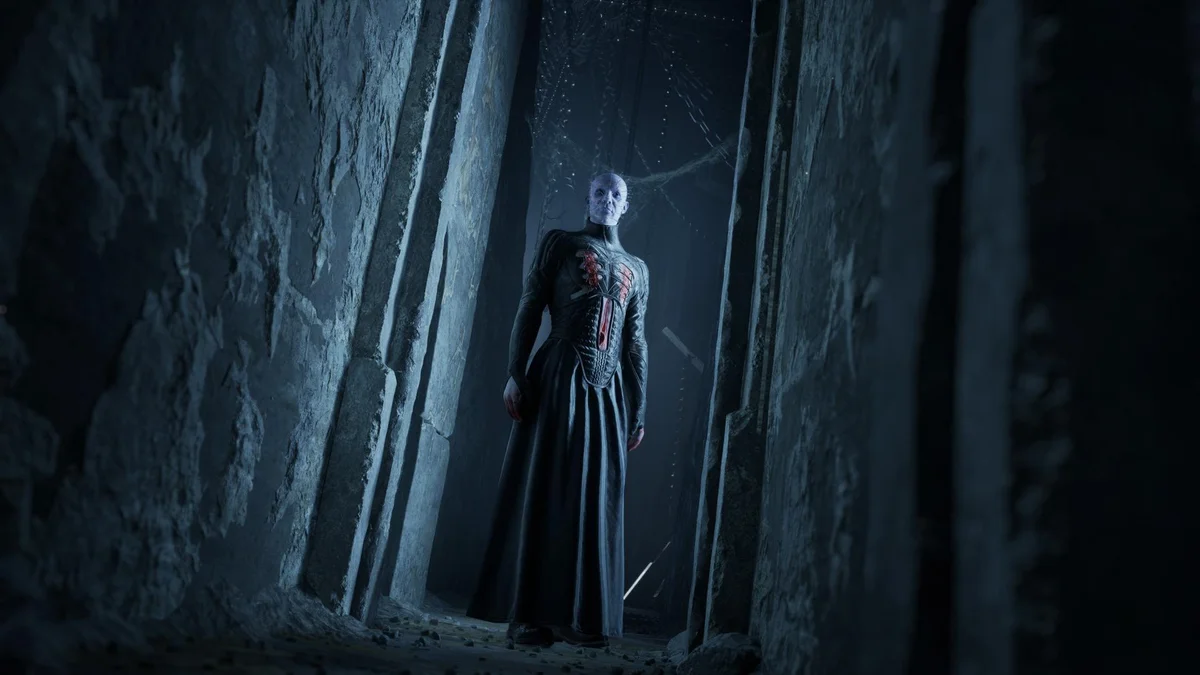
Hellraiser Reconnects With Its Creator
The history of Hellraiser is partly the history of a work that gradually moved beyond the direct control of its creator.
Since the original film in 1987, the franchise has produced sequels and reinterpretations with differing artistic priorities.
Clive Barker adapted his own novella, The Hellbound Heart, into the first film and established a distinctive vision of supernatural horror.
Over the following decades, he developed a complicated relationship with how the property was exploited.
The release of Hellraiser: Revival has given him an opportunity to express unusually direct enthusiasm.
In an October 14 interview with Dread Central, Barker praised the developers for preserving the unsettling conceptual and visual identity of his universe.
A second interview, published the following day, connected that achievement with his hopes for the wider franchise.
The Original Fear Was a Safer Hellraiser
Barker admitted that he initially feared excessive censorship.
That concern makes sense when considering Hellraiser's origins.
Both The Hellbound Heart and the original film explore human desire, extreme sensation and the consequences of pursuing forbidden experiences.
The Cenobites embody that ambiguity.
Their appearance is monstrous, but their understanding of pain and pleasure cannot easily be reduced to conventional morality.
Removing those themes would preserve Hellraiser's recognizable visual elements while weakening the ideas that make it distinctive.
Barker believes Saber Interactive largely avoided that problem.
His approval therefore concerns more than the quantity of disturbing imagery in the game. It reflects the preservation of an uncompromising artistic approach.
Doug Bradley Connects the Game With Its Origins
Pinhead remains one of horror cinema's most recognizable characters.
However, the character's history extends beyond that iconic appearance.
Barker recalled knowing Doug Bradley since their teenage years.
The two worked together in theater long before Hellraiser became a film franchise.
When Barker directed the original movie, that shared experience helped inform his approach to Bradley's performance.
He understood the value of restraint.
Pinhead does not need constant movement or shouting to become threatening. The character's calm authority is central to his effectiveness.
Bradley's return to voice Pinhead in Revival consequently represents more than a nostalgic reference.
It reunites an important part of the franchise with the performer who helped establish its cinematic identity.
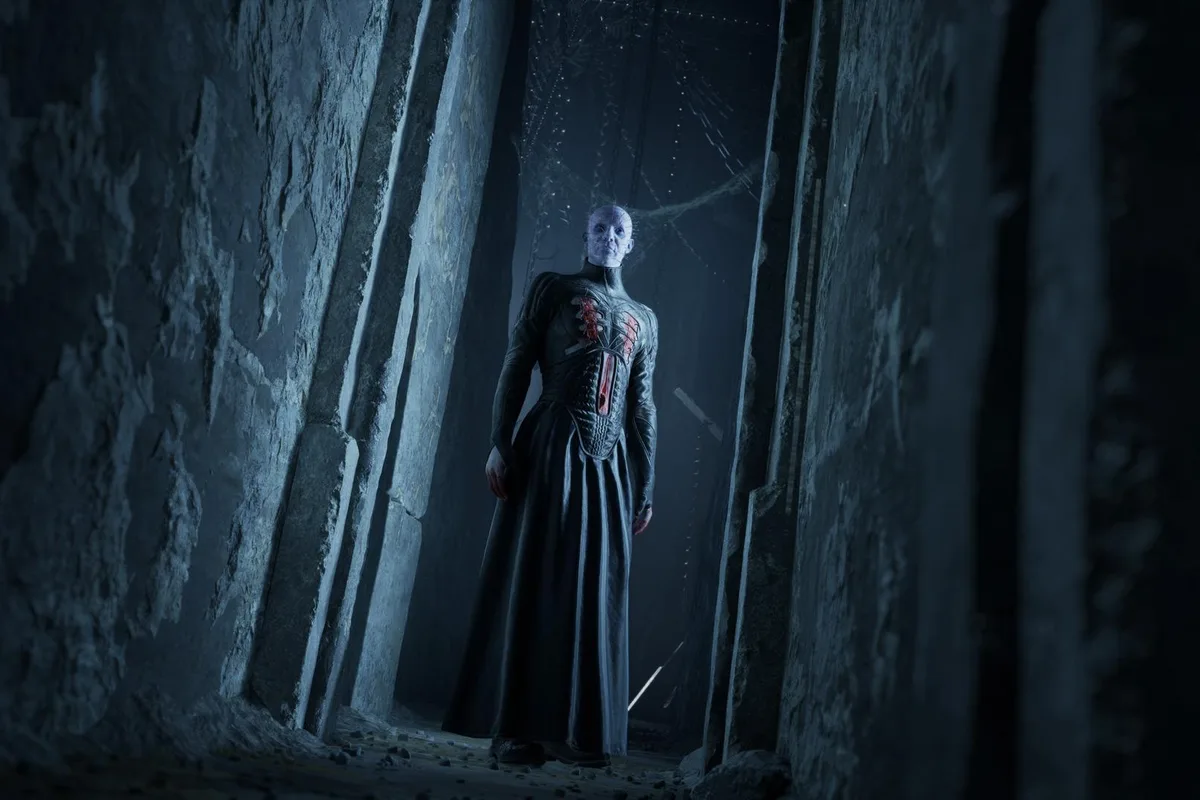
An Adaptation That Does Not Simply Recreate the Film
Hellraiser: Revival does not retell the exact narrative of the 1987 movie.
Saber Interactive presents a new story centered on Aidan, who attempts to rescue his girlfriend Sunny from the Cenobites' Labyrinth.
Players use the Genesis Configuration, a supernatural puzzle box, to fight enemies and progress through the environment.
That decision transforms one of the franchise's defining symbols into an interactive mechanic.
In Barker's original fiction, opening a configuration often fundamentally changes a character's existence.
In the game, the box also provides direct agency.
That is a significant difference between cinema and videogames.
An interactive adaptation cannot merely reproduce camera angles and dialogue. It needs meaningful actions and decisions for players.
The challenge is preserving the original themes while introducing systems that sustain gameplay.
Barker's advisory role contributed to that creative process.
Revival Is Presented as a New Official Chapter
Saber Interactive describes Revival as a new story within the Hellraiser universe.
It is therefore not simply an unofficial game inspired by Pinhead and the franchise's imagery.
The project belongs to an authorized exploitation of the intellectual property.
It also benefited from creative involvement by the franchise's originator.
That provides a meaningful connection with Barker's original themes.
However, it does not mean every gameplay decision should be interpreted as a definitive rule governing all previous and future versions of Hellraiser.
Different stories can explore the same mythology without requiring every adaptation to follow an identical creative structure.
Barker Criticizes the Franchise's Previous Rights Management
In the October 15 interview, Barker also discussed his relationships with previous rights holders and commercial partners.
He made allegations concerning business practices associated with Bob Weinstein and earlier Dimension-era productions.
These are Barker's personal accounts and should be attributed accordingly.
He argued that some sequels were produced primarily to retain or exploit rights rather than to pursue substantial artistic ideas.
At the same time, he distinguished the decisions of commercial organizations from the contributions of individual writers and directors.
His criticism concerns the ways industrial priorities can constrain creative work.
The return of certain United States copyright interests in his original Hellraiser material, effective in December 2021, provides additional background.
That development is part of his desire for greater control over future stories.
The Game Becomes an Argument for More Ambitious Films
One of Barker's most interesting observations concerns Revival's potential significance beyond videogames.
He sees the adaptation as an example of how creators can return to established mythology without simply repeating familiar stories.
Saber Interactive's project demonstrates that the Hellraiser setting can accommodate a fresh creative approach.
That does not mean a new film based on the game is already in production.
Barker is discussing ideas he wants to explore, not announcing a financed project with a release schedule.
The distinction matters for a franchise whose audience regularly anticipates news of future installments.
Artistic Influences Beyond American Horror
Barker also discussed inspirations that continue to inform his imagination.
He described a visit to Rome and the Vatican, where monumental art and darker aspects of religious history suggested possibilities for further representations of Hell.
He also referenced Italian horror cinema, including Black Sunday and Suspiria.
These references demonstrate that Hellraiser is not simply a collection of familiar monsters and graphic effects.
Its mythology can absorb different visual and cultural traditions while preserving its central themes.
Revival appears to have renewed Barker's interest in that creative flexibility.
Is Another Production Actually Coming?
At present, there is no basis for announcing a new Hellraiser film directly derived from Revival.
Barker has expressed ideas and an interest in working with the game's collaborators again.
Those are meaningful creative intentions, but not production agreements.
Saber Interactive's current FAQ also states that no major DLC is planned for Revival, although patches remain possible.
No videogame sequel has therefore been confirmed.
The October 8 release is the established commercial event, while the subsequent interviews explain the author's response and hopes.
More Meaningful Than a Routine Endorsement
In licensed entertainment, creator approval can sometimes amount to a brief promotional statement.
Barker's response is more substantial because he discusses specific themes, performers and the compromises he wants to avoid.
He does not simply praise the game's visuals. He explains why their uncompromising nature matters to Hellraiser.
His satisfaction also connects with a long-running question surrounding the franchise: who gets to determine the shape of its future stories?
Revival does not guarantee a cinematic revival.
However, it demonstrates that a videogame adaptation can become more than a secondary commercial product.
It can give an original creator another way to explore familiar themes and perhaps reconsider the creative possibilities of an established universe.
For now, Hellraiser has brought its creator into an unusual position: not merely watching another adaptation from a distance, but recognizing a meaningful continuation of the ideas that still make his creation important to him.