

On paper, Klara and the Sun had several elements that could attract attention.
An Oscar-winning filmmaker in Taika Waititi. A major young star in Jenna Ortega. An internationally respected actress in Amy Adams. And a source novel written by Nobel Prize-winning author Kazuo Ishiguro.
Yet that combination was not enough to secure a strong opening in Australian theaters.
The first figures published by Variety Australia reveal a debut well below the country's leading releases.
Klara and the Sun failed to reach the national top ten.
That result does not tell the whole commercial story, but it raises a relevant question.
Why has a movie featuring so many familiar names struggled to turn their visibility into ticket sales?
A$257,000 and a thirteenth-place opening
The reported ranking covers Thursday, October 22, through Sunday, October 25, 2026.
During that period, Klara and the Sun earned A$257,000.
It placed thirteenth.
Variety Australia also reports an average of just A$993 per screen.
That second measure provides useful context.
A film may earn relatively little simply because it is playing in a small number of theaters.
Revenue per screen can help indicate how effectively a release is attracting audiences where it is available.
In this case, the particularly low average suggests limited initial demand.
However, the figure must be interpreted carefully.
It measures revenue rather than the exact number of admissions.
Ticket prices, scheduled screenings and cinema capacity also influence the outcome.
The verified conclusion remains that the movie experienced a difficult Australian launch.
There is no need to exaggerate the figures beyond what they actually establish.
Clayface leads a competitive weekend
Other releases provide useful context for the result.
Clayface, DC Studios' horror movie, opened at No. 1 with A$1.89 million.
Street Fighter followed with A$1.16 million.
Verity held third place with A$857,000.
Another new release, Wildwood, entered the chart at No. 4 with A$820,000, including advance screenings.
Sense and Sensibility completed the top five with A$702,000.
Those results show that Australian audiences were still attending cinemas during the weekend.
Klara and the Sun's performance cannot simply be attributed to an absence of moviegoers.
But comparisons between individual releases also have limitations.
The films may have different marketing budgets, numbers of screenings and commercial strategies.
An introspective science-fiction drama does not necessarily target the same audience as a horror-oriented superhero production or a video game adaptation.
The figures demonstrate a substantial gap.
They do not establish every cause behind it.
Jenna Ortega plays an artificial companion
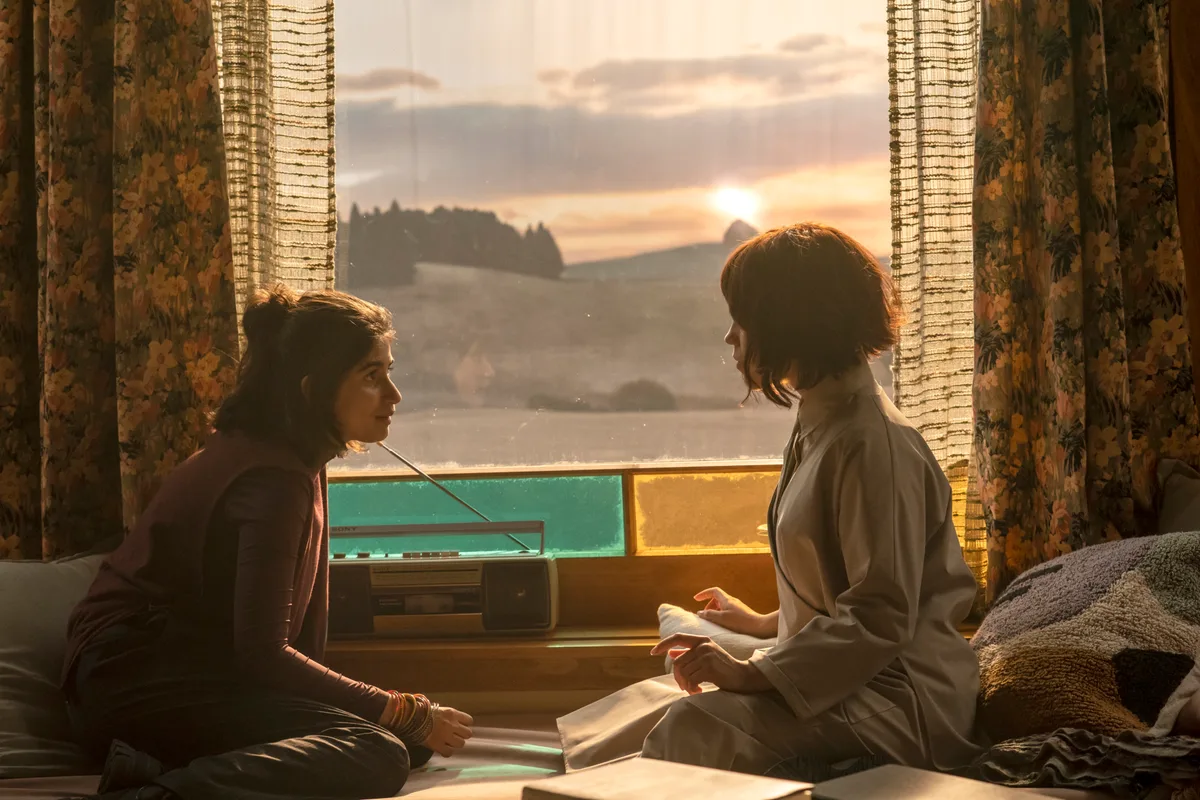
Klara and the Sun takes place in a near future where people can purchase artificial companions.
These robots are designed to provide company, particularly for children and teenagers experiencing loneliness.
Jenna Ortega plays Klara, a solar-powered artificial intelligence.
The character closely observes her surroundings and tries to understand human emotions.
Her life changes when she meets Josie, portrayed by Mia Tharia.
Josie is a teenager whose fragile health causes deep concern within her family.
Her mother, Chrissie, played by Amy Adams, is struggling with the situation.
Klara gradually develops a bond with Josie and encounters the contradictions of a household shaped by the fear of loss.
The movie is not about an artificial intelligence attempting to dominate humanity.
Instead, it explores a machine created to provide affection and the possibility that humans might give such a companion a meaningful place in their lives.
An adaptation of Kazuo Ishiguro's novel
The movie adapts Klara and the Sun, the novel published by Kazuo Ishiguro in 2021.
The British author received the Nobel Prize in Literature in 2017.
His other works include The Remains of the Day and Never Let Me Go.
His fiction frequently examines memory, identity and the limits of how characters understand their own experiences.
Klara and the Sun continues several of those interests.
Its artificial narrator observes human behavior closely but does not always possess enough information to understand what she sees.
That perspective allows the story to explore social relationships, affection and mortality without relying on a conventional human narrator.
Adapting the novel presented a significant challenge.
Much of the original story depends on how Klara perceives her environment.
A film must translate that internal experience into images, sounds and performances.
Waititi and co-writer Dahvi Waller were responsible for finding a cinematic form for that unusual perspective.
Taika Waititi explores a different emotional register
Waititi's involvement was a source of considerable interest.
The New Zealand filmmaker is known for mixing comedy, fantasy and genuine emotion.
Jojo Rabbit earned him the Academy Award for Best Adapted Screenplay.
He has also directed Hunt for the Wilderpeople, Thor: Ragnarok and Thor: Love and Thunder.
Klara and the Sun gives him a different kind of story, more directly concerned with loneliness and intimate human relationships.
The film retains elements of his comic sensibility, but its narrative is dominated by melancholy and vulnerability.
What does it mean to provide companionship?
Is affection created artificially less valuable than a human feeling?
How does a family respond when illness threatens one of its members?
These questions place the project in a more intimate register than Waititi's best-known large-scale fantasy productions.
His name could generate curiosity without necessarily guaranteeing attendance comparable to his most commercially successful films.
A prestigious cast does not guarantee ticket sales
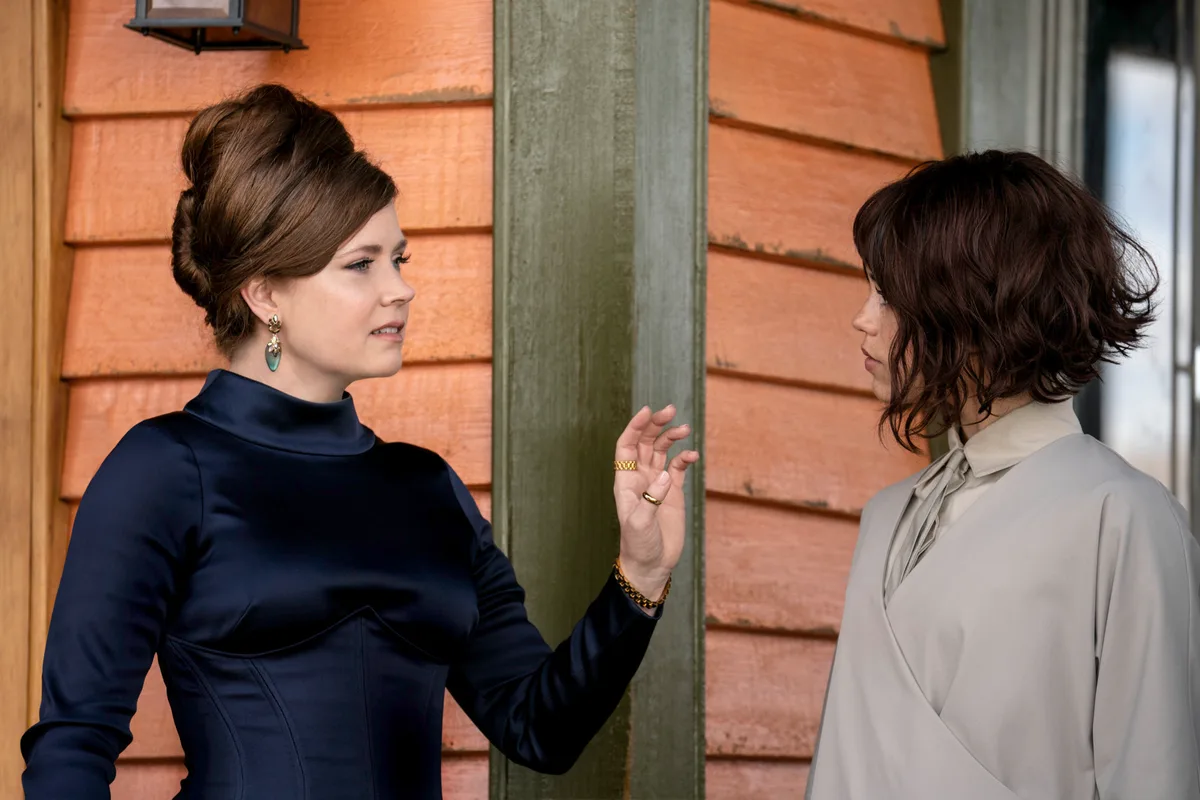
The ensemble is nevertheless a clear promotional advantage.
Jenna Ortega has achieved major visibility through television and film roles.
Amy Adams has built an acclaimed career across productions including Arrival, American Hustle and Enchanted.
Steve Buscemi and Natasha Lyonne provide two additional recognizable names.
Mia Tharia also plays a central role as Josie.
But assembling familiar performers does not automatically create a large theatrical audience.
Interest in a star can be closely connected to a particular genre or type of character.
Viewers who enjoy Ortega in horror and fantasy projects may not immediately seek out a contemplative literary adaptation.
Similarly, Adams' involvement does not ensure that an intimate science-fiction drama will attract large opening-weekend crowds.
The Australian figures highlight a basic commercial reality.
Star power can support promotion, but it is not a guarantee of demand.
The decisive issue is whether the film reaches the audience most likely to respond to its story.
Science fiction without conventional spectacle
A movie centered on artificial intelligence might suggest elaborate visual effects, threatening robots or major technological conflicts.
Klara and the Sun takes a different approach.
Its story focuses on an artificial companion and her relationship with a teenage girl.
Technology is important, but it primarily serves questions about human behavior.
That positioning can make the film harder to summarize in a marketing campaign.
An alien invasion or a dangerous artificial intelligence immediately communicates familiar high-stakes conflict.
A story about a sick teenager and her devoted robotic companion requires a different explanation.
That is not an artistic weakness in itself.
It is a different kind of commercial proposition.
Some films develop their audiences gradually through reviews, recommendations or sustained theatrical availability.
But the weak Australian opening demonstrates that Klara and the Sun did not immediately generate widespread curiosity.
The coming weeks will reveal whether word of mouth can improve its performance.
The film arrives amid continuing debate about AI
Klara and the Sun reaches cinemas at a time when artificial intelligence is a major cultural subject.
Conversational tools and generative systems have made questions once associated mainly with speculative fiction feel more immediate.
Can a person develop an emotional attachment to an artificial intelligence?
Can a machine that reproduces caring behavior genuinely understand what it expresses?
What risks emerge when an artificial companion becomes indispensable to someone vulnerable?
Ishiguro's novel explored these concerns before the present popularity of generative AI assistants.
But the story was never simply intended to predict future technology.
It uses an artificial narrator to examine human needs, contradictions and emotional vulnerability.
That background may strengthen the movie's cultural relevance.
It does not guarantee commercial success.
Public interest in artificial intelligence does not automatically create demand for every film that addresses the subject.
What have critics said so far?
Early responses to Klara and the Sun suggest a mixed reception.
On October 22, The Guardian published an interview discussing the film with Taika Waititi and Kazuo Ishiguro.
The conversation explored differences between the novel and its adaptation, along with the role of comedy in a story concerned with painful experiences.
Waititi acknowledged his tendency to use humor when approaching difficult emotions.
Ishiguro emphasized human relationships, loneliness and mortality.
On October 26, ABC News Australia published a considerably more negative assessment, describing the adaptation as overly sentimental and lacking nuance.
That judgment is a critic's opinion, not an established fact about the film's artistic quality.
It does show that the adaptation has not received uniformly enthusiastic responses.
However, it would be unreasonable to attribute weak Australian ticket sales to a single review or an unverified critical consensus.
Critical reception and commercial performance can influence one another, but they remain different measures.
The Australian figure is not the worldwide box office
The A$257,000 reported by Variety Australia is denominated in Australian dollars.
It relates to the local market over one specific weekend.
It is neither the American gross nor the movie's worldwide total.
The Numbers separately reports US$701,059 for the film's first three days in the United States, where it opened in 880 theaters.
That American result provides another indication of limited initial demand.
But combining a handful of preliminary figures does not reveal profitability.
A reliable financial assessment would require the complete production budget, marketing expenses, distribution agreements and eventual revenue from later release windows.
Theatrical receipts are also shared between distributors and exhibitors.
The film can continue earning revenue in other countries and eventually through additional formats.
As of October 26, the conclusion must remain limited.
The Australian opening is disappointing, while initial American figures do not indicate a major commercial breakout.
Those numbers alone cannot establish the movie's final worldwide financial outcome.
Sony has already released the film in several markets
Klara and the Sun opened in Australia on October 22, 2026.
Sony Pictures Releasing Australia had organized an advance screening at Melbourne's ACMI on October 21.
The American theatrical release followed on October 23.
However, distribution dates vary internationally.
In Germany, Sony Pictures has scheduled the movie for October 29.
That staggered rollout is another reason the Australian result should not automatically be applied to other markets.
Cinema attendance, competition, familiarity with the original novel and promotional strategies can differ significantly between territories.
A literary adaptation may also attract different levels of interest depending on the author's local readership.
Sony will therefore need to assess the performance of each market separately.
There is no verified official announcement establishing that the film has already been withdrawn from theatrical release or redirected to streaming because of its initial receipts.
Such a claim would be premature.
Why this opening matters
The film industry pays close attention to opening weekends because they influence expectations about future performance.
Theater operators can adjust schedules according to demand.
Distributors evaluate promotional campaigns and opportunities to extend a movie's theatrical run.
A weak opening can reduce a production's flexibility.
It does not necessarily determine the rest of its commercial life.
Films aimed at specific audiences may sometimes benefit from prolonged recommendations or revenue earned after their initial release.
Klara and the Sun is an interesting example because it combines several elements normally regarded as valuable.
Its director is well known, its cast is prestigious and its story comes from an acclaimed literary source.
But it also tells a melancholic story whose central conflicts are primarily emotional.
The initial Australian figures show that those promotional strengths did not immediately turn the release into a major theatrical event.
A wider question for literary adaptations
Klara and the Sun's performance also raises questions about the place of literary adaptations in contemporary theatrical distribution.
The reputation of a novel can support financing and attract media coverage.
But it does not guarantee that readers will attend cinemas during opening week.
Turning a successful book into a successful film depends on numerous factors.
Genre, reviews, marketing and the ability to reach viewers unfamiliar with the original story all matter.
Waititi's adaptation also needed to communicate its unusual identity.
Its central character is a robot, but the film does not belong to conventional effects-driven science fiction.
It explores affection, vulnerability and the difficulty of understanding human emotions.
That distinctive positioning may eventually help it find a particular audience.
For now, that remains an open possibility.
The Australian results do not demonstrate that literary science-fiction adaptations have generally lost their appeal.
Klara and the Sun still has markets to reach
The Australian opening-weekend result is clear.
With A$257,000 in revenue, an average of A$993 per screen and a thirteenth-place ranking, Klara and the Sun has experienced a difficult local launch.
The figures contrast with the visibility of Jenna Ortega, Amy Adams and Taika Waititi.
They also demonstrate that recognizable stars and prestigious awards cannot substitute for a movie connecting with its intended audience.
But the film's commercial story is not complete.
Additional territories still have releases to report, and its theatrical run continues.
Several weeks of results, alongside reliable information about costs, will be necessary to evaluate its financial performance properly.
For now, the October 26 news is the striking contrast between the creative team's reputation and the first Australian box-office returns.
Klara is searching for her place within a human family.
Her movie is still searching for its own place with audiences.