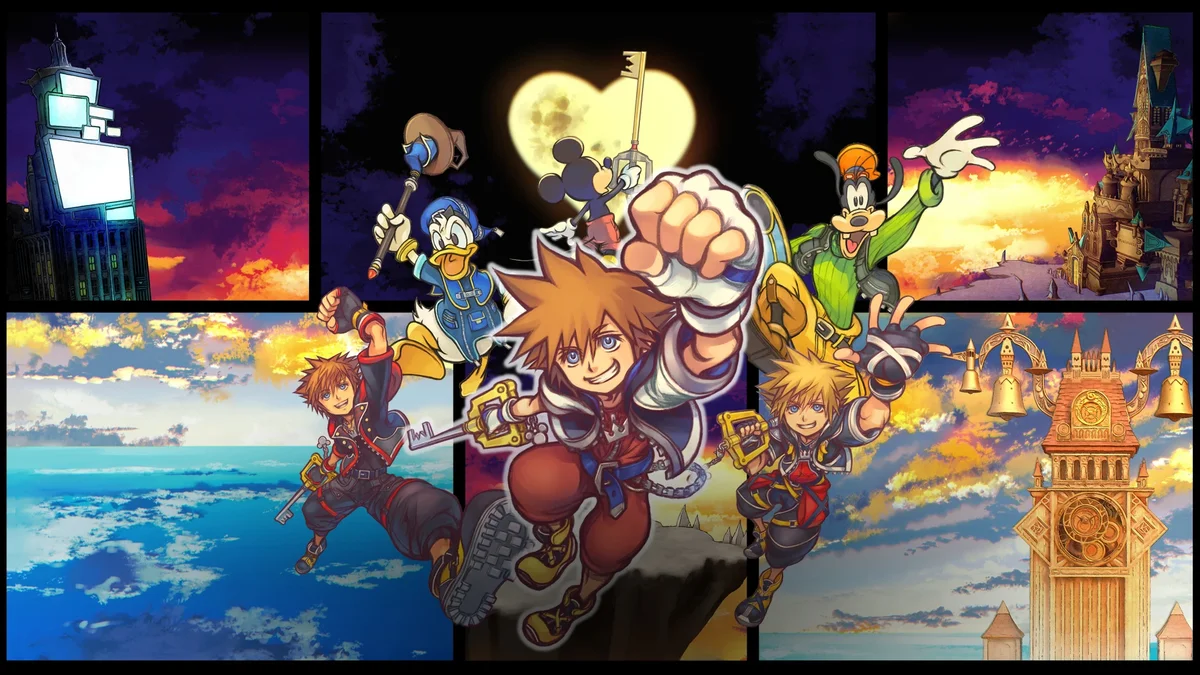
Kingdom Hearts occupies a particularly unusual place in gaming culture. Few franchises can combine globally recognizable animated characters, original Japanese RPG heroes and an elaborate mythology about hearts, identity and memories.
When the first game appeared in 2002, the concept was surprising. Over time, it developed its own internal consistency, surviving multiple console generations and changes in visual presentation.
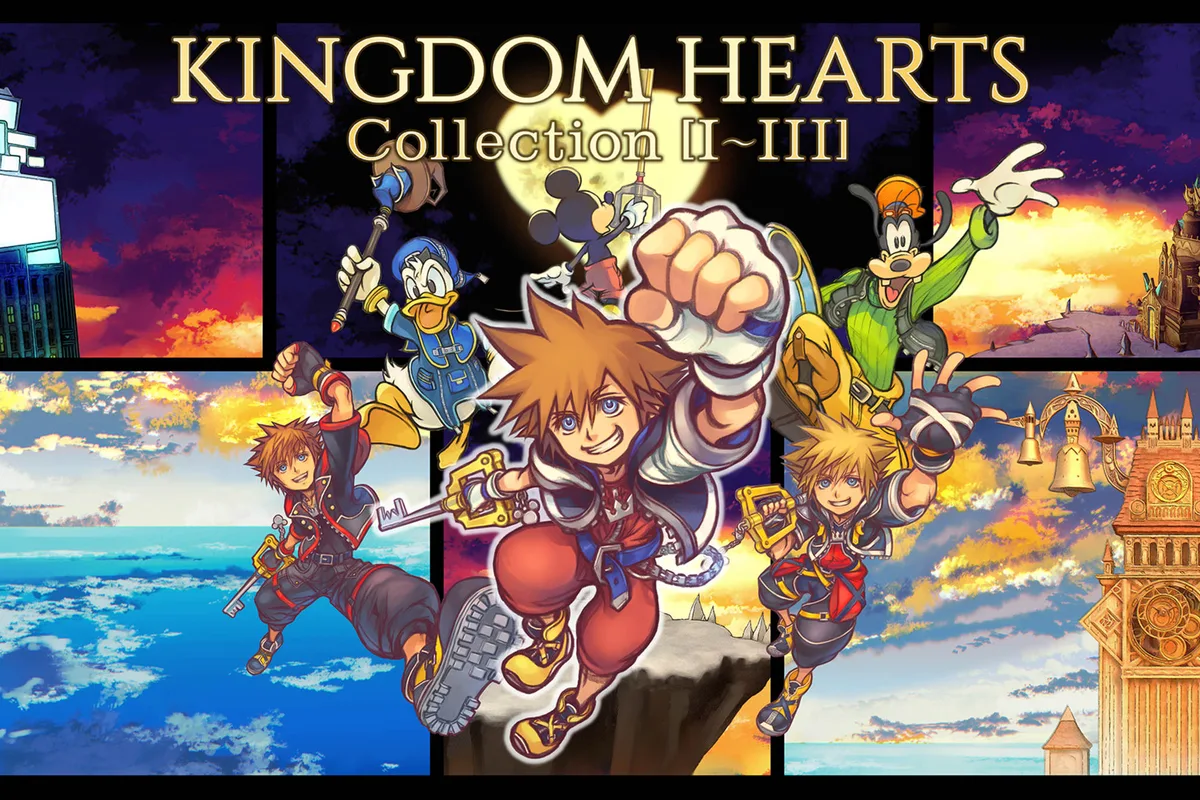
The arrival of Kingdom Hearts Collection [I~III] on Nintendo Switch 2 on October 8, 2026, is not the launch of a new numbered adventure. Instead, it makes a substantial part of this history available through native editions on Nintendo's latest console.
Disney Worlds Are More Than Familiar Backdrops
The original premise remains easy to explain. Sora carries a mysterious weapon called the Keyblade and travels between worlds alongside Donald and Goofy.
The locations draw from Disney and Pixar films, while the wider story follows its own conflicts between light and darkness.
The franchise's distinctive quality comes from treating those settings as more than opportunities for recognizable character appearances.
They become stages of a coming-of-age journey. Sora meets people from different fictional worlds, and each experience contributes to his understanding of friendship, trust and separation.
That approach gives Kingdom Hearts an emotional tone that can be innocent, deeply sentimental and unexpectedly melancholic.
A Hero Defined Through His Relationships
Sora is a protagonist whose strength comes less from isolation than from the relationships he builds.
The series repeatedly returns to bonds between friends, memories of absent companions and the hope of reuniting with people separated by difficult circumstances.
Those themes help explain why the Disney crossover works beyond the novelty of combining recognizable franchises.
Disney stories also frequently explore family, friendship, loss and reunion.
Square Enix gradually constructed a more elaborate mythology around these ideas. Characters such as Roxas, Aqua, Ventus and Xion expanded the narrative beyond Sora's immediate perspective.
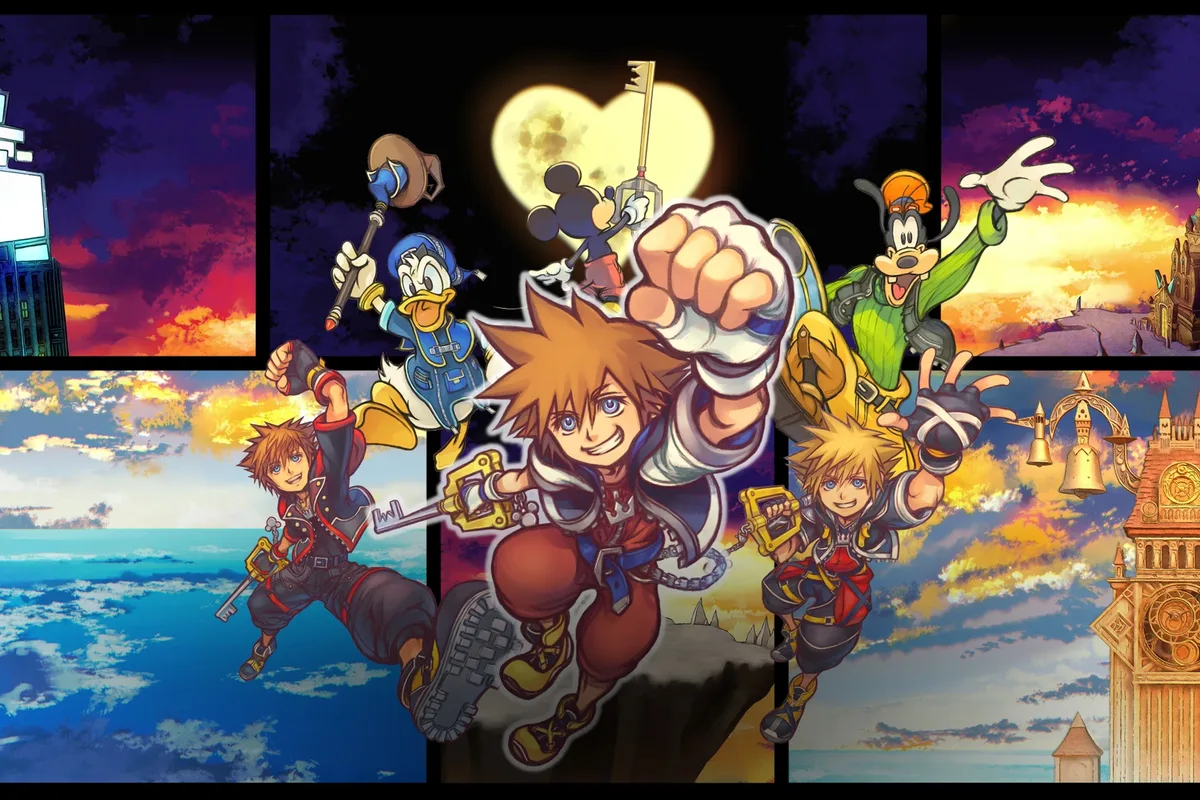
The Switch 2 collection revisits these storylines, demonstrating that Kingdom Hearts is not merely a sequence of visits to famous fictional settings.
A Story Larger Than Its Numbered Games
One of the franchise's best-known challenges is its narrative structure.
Unlike a conventional trilogy whose three main installments contain everything needed to understand the plot, Kingdom Hearts distributed important developments across numerous releases.
Chain of Memories, Birth by Sleep and Dream Drop Distance contribute meaningful narrative material rather than functioning solely as optional spin-offs.
The combined HD 1.5+2.5 ReMIX, HD 2.8 Final Chapter Prologue and Kingdom Hearts III + Re Mind package brings many of those stages together.
It does not make every historical installment fully playable. Titles such as 358/2 Days and Re:coded appear as cinematic compilations.
That arrangement is a reminder that Kingdom Hearts is also a cultural object shaped by changing platforms and distribution formats.
From Final Fantasy to Pixar
Another distinctive feature of the series is the balance between guest universes and original creations.
Final Fantasy characters contributed significantly to the appeal of the earlier games, while Disney worlds gave the franchise immediate recognition among a broader audience.
Over time, Kingdom Hearts' original characters became important enough to carry increasingly elaborate stories of their own.
The crossover evolved beyond a commercial arrangement between established brands into an independent fictional universe with its own history and conventions.
Kingdom Hearts III extended that approach through worlds inspired by Pixar films, illustrating how the franchise could develop alongside its partners' changing catalogs.
The combination remains strange, but that strangeness is now an essential part of its identity.
Preserving Games Means Preserving Access
The Switch 2 release also raises a question of cultural preservation.
Video games are not simply narratives or images. They depend on hardware, operating systems, storefronts and sometimes remote servers.
Kingdom Hearts' history on the original Switch provides a clear example. Its cloud editions allowed players to access several games, but their operation relied on remote infrastructure.
The new native collection changes that relationship. Gameplay is processed by the console itself rather than requiring a continuous streamed execution environment.
Square Enix has also announced the end of sales for the older cloud editions and a defined period during which existing customers can continue accessing them.
The transition illustrates how preserving interactive works also depends on their technical distribution models.
Recovering Memories in More Ways Than One
The ability to transfer cloud saves to the new native versions has an obvious practical benefit.
It also feels particularly appropriate for Kingdom Hearts, a franchise whose stories repeatedly explore memory and continuity.
Players who began an adventure on the original Switch can potentially restore their progress on Switch 2, subject to the relevant conditions.
This is not an unconditional free upgrade. Existing customers generally need to purchase new licenses, although eligible owners can receive a 50 percent discount.
Nevertheless, the transition does not necessarily require abandoning everything accomplished in earlier versions.
A Gateway Before the Next Chapter
The compilation arrives as Kingdom Hearts approaches its twenty-fifth anniversary in 2027.
Square Enix has also shared new information about Kingdom Hearts IV, which remains a separate future installment.
Collection [I~III] does not include that next game. Instead, it offers a substantial journey through the storylines that precede it.
For newcomers, the sheer volume of material may appear intimidating. The mythology is complicated, the cast is large and some releases combine interactive and cinematic content.
Yet that complexity is part of the series' identity. Kingdom Hearts asks players to invest time in its characters and the relationships connecting them.
Its Switch 2 release does not rewrite that history. It gives the existing saga another platform and another audience. More than two decades after its creation, Sora running between worlds with a Keyblade remains a remarkably distinctive image in gaming.