

An independent film festival makes its mark in Pune
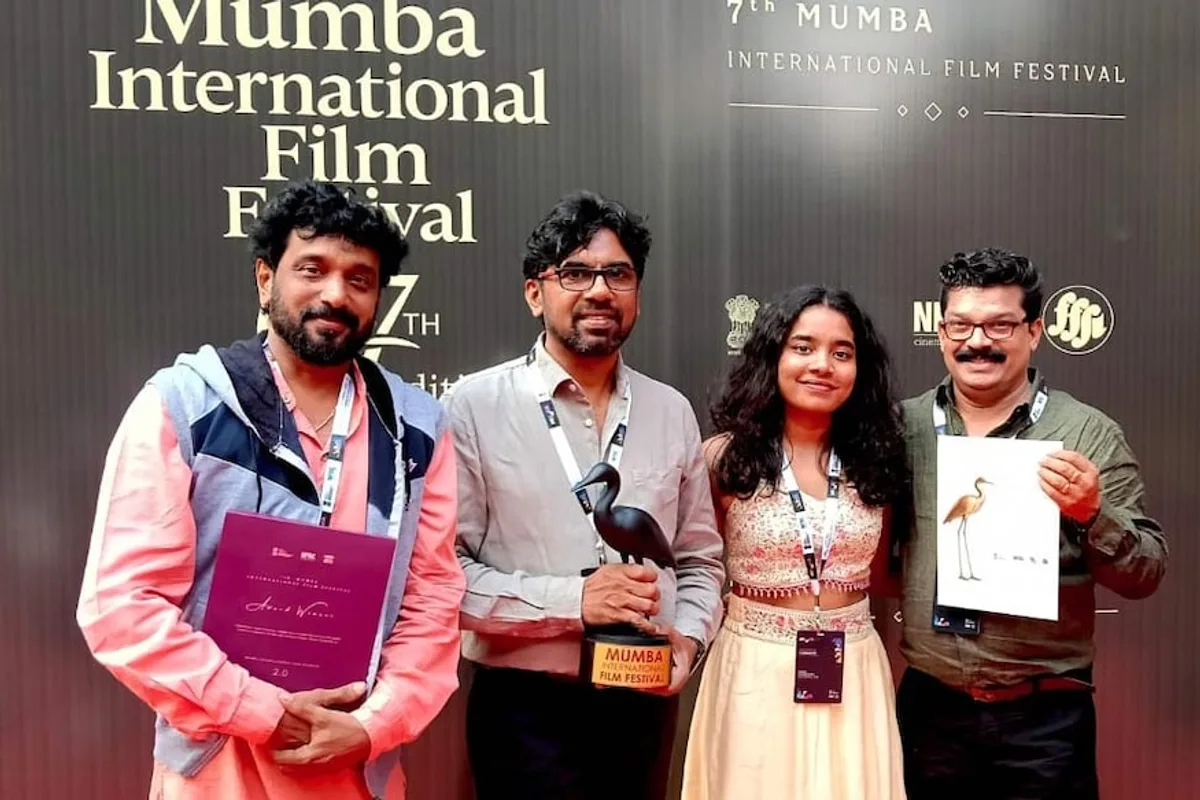
The seventh Mumba International Film Festival took place from October 6 to October 10, 2026, at the National Film Archive of India in Pune, Maharashtra. Organized by the Mumba Film Foundation, the event brings together short films, documentaries and feature productions, emphasizing independent filmmaking and emerging creative voices.
The Indian Express reported on October 12 that Halgi and Malavazhi were among the festival's notable winners. Regional newspaper Malayala Manorama separately identified Malavazhi, directed by Boban Govindan, as the recipient of the Best Film award.
An important distinction concerns the event's identity. The Mumba International Film Festival in Pune is not the Mumbai International Film Festival, commonly known as MIFF. The latter is a separate event whose nineteenth edition took place in June 2026.
Confusing the two would misrepresent the recognition received by Malavazhi. The Pune festival has its own organizers, schedule and awards program, and its achievements should be considered within that specific context.
Malavazhi tells the story of a threatened cultural inheritance
Boban Govindan's film is a Malayalam-language drama set in Kerala, in southwestern India. It follows Manikyan, a traditional performer from an economically disadvantaged background who struggles to preserve a cultural practice threatened by changing social and environmental conditions.
According to the film's description at the Bengaluru International Film Festival, the story centers on Muniyattukunnu, a mountain whose exploitation becomes part of a broader conflict involving cultural heritage, environmental protection and economic interests.
Manikyan is connected to Parayan Kali, a traditional performance practice associated with the Paraya community. His struggle is therefore about more than protecting an artistic tradition. It also concerns a community's ability to preserve its history, maintain meaningful places and resist pressures that threaten its continued existence.
The film also explores financial hardship within the family. Information recorded by India's Central Board of Film Certification describes Manikyan as a performer whose meager earnings place pressure on his household. His wife Yasodha must work to support the family, and the couple's difficulties contribute to domestic tensions.
These different concerns intersect. Cultural preservation becomes difficult when the people responsible for maintaining a tradition cannot earn enough to support themselves. The film presents heritage not as an isolated artistic category but as something connected to livelihoods, social conditions and access to land.
Govindan directs from a screenplay by Rajesh Kurumali, with cinematography by Madhu Ambat. The production is associated with Lee Gold Films, and its cast includes Devadasan Cheravath, Siji Pradeep, Guru Somasundaram and I. M. Vijayan.
The project belongs to a broader tradition of regional Indian cinema in which a local story becomes a means of examining social questions. In Malavazhi, marginalization, disappearing cultural practices and environmental pressures are presented as connected aspects of the same transformation.
Another award in an expanding festival journey
Malayala Manorama reported that Malavazhi was selected from a field of 958 competing works. The newspaper also stated that the film had accumulated 56 awards across more than forty festivals.
Those figures describe the festival history reported by the regional publication. They should not be mistaken for a fully independently audited list of every prize received. Film awards differ significantly in the scale of their competitions, selection procedures and categories.
Nevertheless, the film's record at the Bengaluru International Film Festival confirms participation in multiple events. Its profile mentions recognition associated with the Kashmir World International Film Festival, the Bollywood International Film Festival and the Asian Talent International Film Festival.
For an independent production, this circulation has practical value. Festivals provide opportunities to screen work, meet programmers and industry professionals, and build a reputation that may support further distribution efforts.
Yet repeated festival selections do not automatically result in a major commercial release. A film can travel widely between events without securing a substantial national theatrical run or immediate access to international streaming platforms.
The verified sources used for this article do not establish a specific worldwide streaming release for Malavazhi. Its awards recognition should therefore not be confused with confirmed global commercial availability.
Halgi and the importance of shorter filmmaking formats
Malavazhi was not the only film to attract attention at the event. The Indian Express also identified Halgi among the recognized works, reflecting the festival's interest in productions beyond conventional feature filmmaking.
The available verified reporting does not establish every detail required for a complete profile of Halgi, including a securely attributed director, running time and specific prize category. Assigning those details without sufficient evidence would risk introducing inaccuracies into the record.
What is clear from the closing ceremony is the importance that participants attached to short filmmaking. Dheeraj Singh, vice-chancellor of the Film and Television Institute of India, described the enthusiasm surrounding the event as an encouraging sign for the sector.
His remarks reflected concern that the momentum of short-film production appeared to have weakened. They should be understood as an industry observation rather than as a verified national statistic demonstrating a measurable collapse in output.
Short films remain essential to filmmaking culture. They provide opportunities for emerging directors, offer room for experimentation and allow creators to develop stories that may not require feature-length treatment.
For some filmmakers, the format serves as an introduction to longer productions. For others, it is a distinct art form whose limitations encourage unusually concentrated storytelling.
Regional festivals fill a gap left by mainstream distribution
Filmmaker and producer Kedar Shinde, who attended the closing ceremony, emphasized the value of festivals dedicated to independent cinema and documentaries. Although much of his career has been connected to commercial filmmaking, he argued that such platforms are important for emerging storytellers.
His observations point toward a characteristic of Indian cinema that international coverage frequently overlooks. India does not have a single unified film industry. Alongside Hindi-language production are significant filmmaking communities working in Malayalam, Tamil, Telugu, Kannada, Marathi, Bengali and numerous other languages.
Each operates within its own cultural environment, commercial structures and audience expectations. Regional filmmaking should not automatically be equated with independent filmmaking, since several regional industries produce major mainstream hits of their own.
Malavazhi, however, illustrates a category of projects whose international visibility may depend more heavily on film festivals than on expensive commercial campaigns.
For films with specific cultural subjects, limited promotional resources or uncertain distribution prospects, a festival can provide an introduction to audiences and professionals who might otherwise never encounter the work.
That opportunity has limits. An award can strengthen a film's reputation and encourage programmers to consider it, but it does not replace distribution financing, publicity or access to theaters.
How a deeply local story can travel internationally
Malavazhi is particularly interesting because its subject is rooted in a specific cultural and geographical environment. It introduces viewers to a performance tradition, an endangered landscape and the pressures experienced by a community in Kerala.
Yet its larger concerns extend well beyond that region. The disappearance of cultural traditions, conflicts over natural resources and the marginalization of vulnerable communities are issues that appear in different forms throughout the world.
This relationship between local specificity and international relevance can be one of independent cinema's greatest strengths. A film need not erase its cultural identity to appeal to audiences elsewhere. That identity may instead provide the very experience that makes it distinctive.
The Mumba International Film Festival seeks to participate in that circulation. Its official program includes categories for features, shorts, documentaries, animation and student productions, while its organizers promote professional encounters and opportunities for filmmakers to connect.
None of this automatically makes the festival a leading force in the global film business. Its more immediate contribution is to create opportunities for recognition and screening at a scale accessible to smaller productions.
An award is a beginning, not a distribution guarantee
With another distinction in Pune, Malavazhi continues to build a festival presence for Boban Govindan and his collaborators. The recognition offers an additional credential when approaching other events, programmers and potential distributors.
It would nevertheless be premature to claim that the award guarantees a substantial theatrical release. The available information does not establish a confirmed international distribution schedule.
This is one of the persistent contradictions facing independent cinema. Festivals can give filmmakers professional recognition without necessarily providing access to a much broader audience. The journey between winning a prize and finding a sustainable commercial life can remain difficult.
The latest Mumba International Film Festival awards will not transform the Indian film industry on their own. They do, however, underline a basic reality that often disappears beneath discussion of blockbuster revenues: India's cinematic voices extend far beyond its largest studios, and stories worthy of international attention do not always arrive with the biggest marketing budgets.