
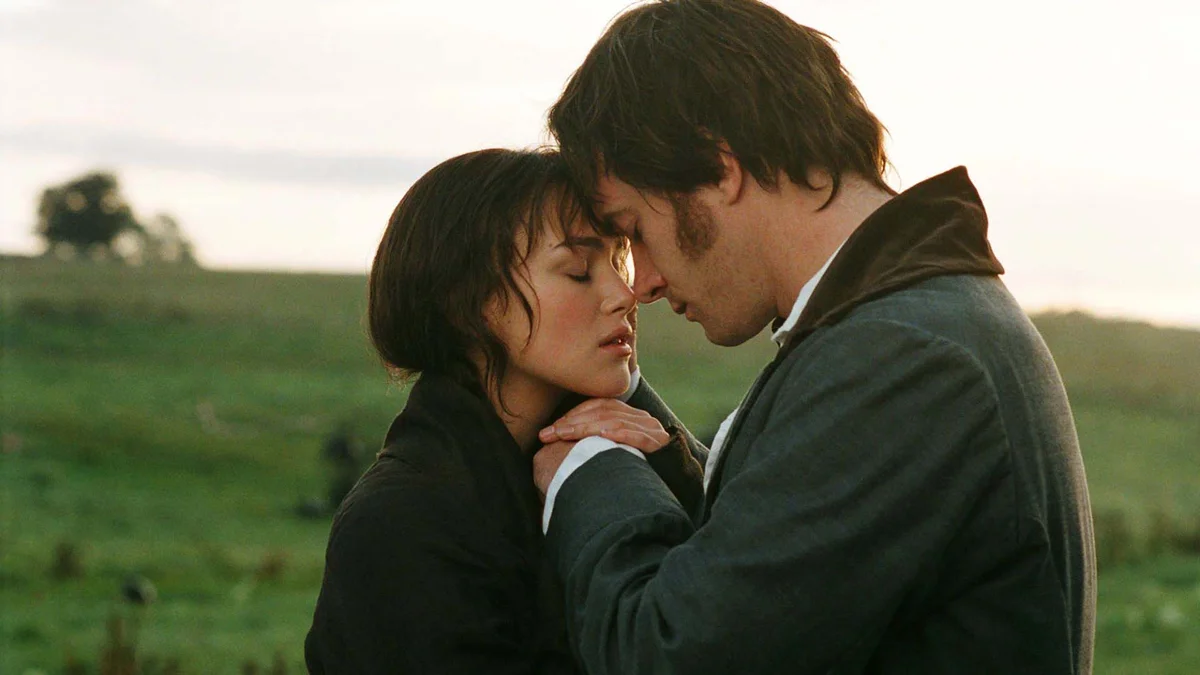
Mrs. Bennet has five daughters to marry, a husband who would rather read his newspaper and seemingly endless opportunities to embarrass everyone around her.
Those familiar ingredients are prominent in the full trailer for Netflix's new Pride and Prejudice, released on October 28, 2026. Olivia Colman's Mrs. Bennet provides much of the family comedy, while the romantic tension belongs to Emma Corrin and Jack Lowden.
Their characters, Elizabeth Bennet and Fitzwilliam Darcy, have spent more than two centuries misunderstanding one another across the pages of Jane Austen's novel and its many adaptations. The challenge for the new production is not to surprise viewers with what happens, but to make those emotional reversals feel compelling again.
Netflix previously shared a teaser and additional cast photography, including a substantial collection of character images in September. The new trailer offers a fuller look at the relationships, family conversations and romantic encounters that will shape the six episodes.
It also confirms the adaptation's traditional setting. Rather than transplanting the story into contemporary life, Alderton and Lyn have chosen to preserve its historical world while emphasizing the emotions that continue to make it relevant.
Emma Corrin and Jack Lowden take on an enduring literary couple
Elizabeth Bennet is intelligent, outspoken and increasingly aware that her future is being measured against the expectations of her family and society.
In early nineteenth-century England, the arrival of wealthy bachelors offers the Bennet sisters a potential route toward financial security. Their mother considers those possibilities an urgent family matter.
Jane Bennet becomes interested in Charles Bingley, while Elizabeth encounters Bingley's friend, the apparently proud and reserved Fitzwilliam Darcy.
Their early interactions establish a mutual misunderstanding. Elizabeth dislikes what she perceives as Darcy's arrogance. Darcy struggles to reconcile his growing feelings with his assumptions about her family and social position.
The novel's romantic trajectory depends on both characters recognizing the limitations of their initial judgments. The trailer leans into that process through charged conversations, restrained glances and scenes of emotional vulnerability.
Corrin, who attracted international attention as Princess Diana in The Crown, brings experience in period drama to Elizabeth. Yet Austen's heroine requires a different energy, combining a quick mind, a talent for observation and a willingness to question the people around her.
Lowden, known for his work in Slow Horses, portrays Darcy. His performance will need to make the character's reserve convincing without entirely concealing the feelings gradually emerging beneath it.
The relationship is familiar, but the new pairing offers viewers a different interpretation of two personalities who are attracted to one another long before they fully understand each other.
Olivia Colman leads a lively Bennet household
Pride and Prejudice is often remembered as a great romantic story, but it is also a family comedy with a substantial ensemble cast.
Olivia Colman plays Mrs. Bennet, whose anxiety about her daughters' marriages governs much of the family's daily life. Rufus Sewell portrays Mr. Bennet, whose dry humor and preference for detachment frequently leave his wife exasperated.
The five sisters are played by Corrin, Freya Mavor as Jane, Hopey Parish as Mary, Hollie Avery as Kitty and Rhea Norwood as Lydia.
The trailer offers glimpses of their shared domestic world, emphasizing conversation, sibling differences and the occasional disorder that results from living together under intense social pressure.
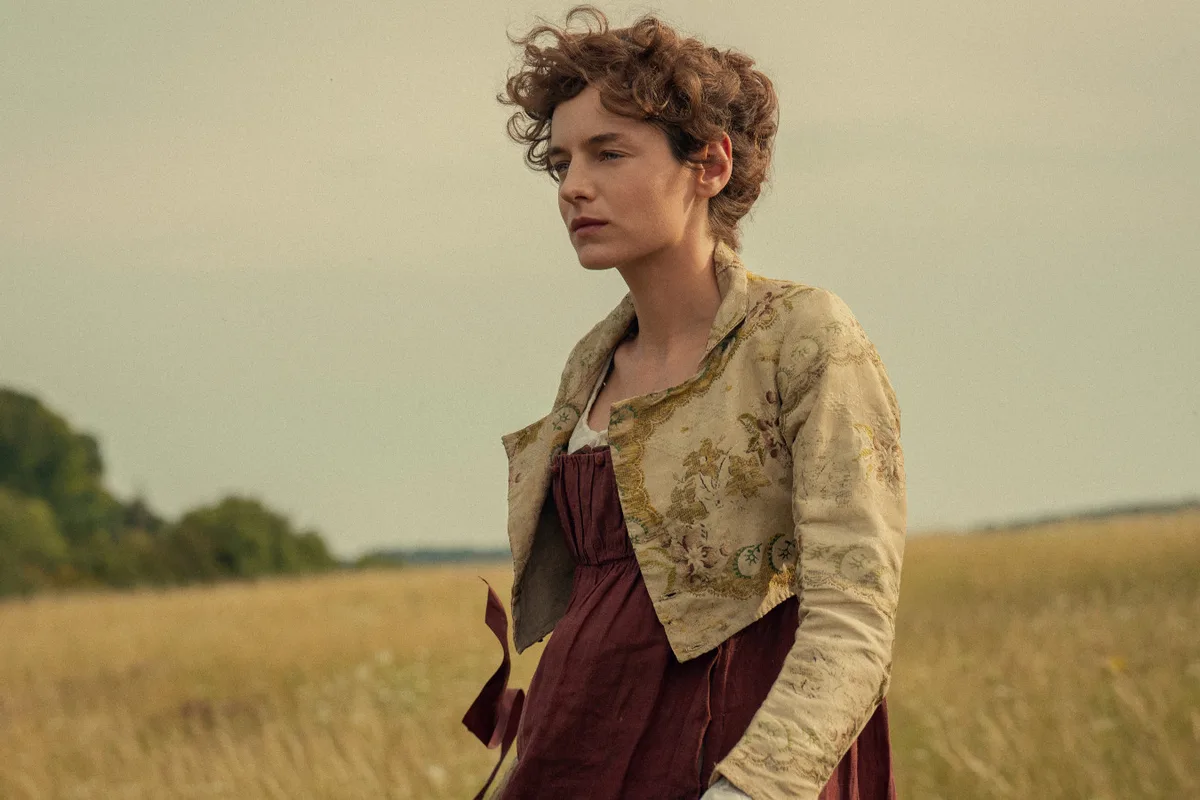
The relationships between the sisters matter beyond the comedy. Each responds differently to a society where marriage plays an enormous role in determining a woman's financial and social future.
Jane is more reserved, Elizabeth more skeptical, and the younger sisters bring their own ambitions and vulnerabilities to the family.
Mrs. Bennet's behavior can be ridiculous, but her anxiety is not entirely irrational. The family's circumstances create genuine uncertainty about the daughters' futures, even when her attempts to solve the problem produce embarrassment.
The six-part format may allow those tensions to develop more fully than in a conventional feature-film adaptation.
Dolly Alderton sees a modern emotional truth in Austen
Dolly Alderton wrote all six episodes of the new series. The author of Everything I Know About Love and Good Material has spoken openly about the pressure involved in adapting a novel with such a large and devoted readership.
In an interview published by Netflix on October 28, Alderton recalled initially feeling overwhelmed by the responsibility. Pride and Prejudice is not simply a famous novel; for many readers, it is a deeply personal favorite.
Her approach has been to focus on the emotional experiences that make Austen's characters recognizable to contemporary audiences.
The embarrassment caused by family members, uncertainty about the future, fear of being misjudged and the discomfort of realizing that one's own assumptions were wrong are not confined to the Regency period.
Alderton argues that those feelings explain why the story continues to resonate, regardless of the historical distance separating readers from its original setting.
That does not mean the adaptation has been modernized through changes to the period or the characters' basic circumstances.
Netflix describes the project as faithful to Austen's novel and attentive to historical accuracy. The intention is to retain the original social environment while allowing the performances and dialogue to communicate its emotional immediacy.
Alderton also plans to use the longer format to explore certain supporting characters and subplots that receive less attention in shorter versions.
A supporting cast full of familiar characters
The trailer gives audiences additional opportunities to see several characters whose actions complicate Elizabeth and Darcy's relationship.
Daryl McCormack plays Charles Bingley, the wealthy bachelor whose growing affection for Jane Bennet initially raises the family's hopes.
Louis Partridge appears as George Wickham, a charming officer whose account of his history with Darcy influences Elizabeth's opinion of the latter.
Jamie Demetriou plays Mr. Collins, whose awkward behavior and interest in marriage provide some of the novel's sharpest comic situations.
Fiona Shaw portrays Lady Catherine de Bourgh, an aristocratic figure whose certainty about class and social authority creates further obstacles. Siena Kelly plays Caroline Bingley, while Jasmine Blackborow appears as Charlotte Lucas.
These characters are essential to the story's broader social portrait.
The central romance is repeatedly influenced by wealth, family relationships, reputation and the expectations attached to different positions in society.
A successful adaptation needs more than a compelling pair of leads. It also needs to establish why Elizabeth and Darcy's choices carry consequences for the people around them.
Euros Lyn directs the six-part production
Euros Lyn directs the entire limited series, following previous television work that includes Heartstopper and Doctor Who.
The trailer emphasizes rural landscapes, country houses, formal gatherings and carefully detailed period interiors. The visual approach appears intended to preserve the story's historical atmosphere while giving the characters' interactions a sense of intimacy.
Lookout Point, the British production company associated with Gentleman Jack and other period dramas, produces the adaptation.
Alderton and Lyn serve as executive producers alongside Laura Lankester, Will Johnston and Louise Mutter. Emma Corrin also receives their first executive producer credit on the project.
The creative team's stated ambition is not to reinvent the premise through a radical change of setting. Instead, the adaptation aims to make the language, social pressures and romantic uncertainty of Austen's world compelling for a new television audience.
That is a demanding task because the audience already has numerous well-regarded interpretations against which to compare this version.
The inevitable comparisons with 1995 and 2005
For many viewers, the definitive screen versions of Pride and Prejudice belong to two different decades.
The BBC's 1995 television adaptation, starring Jennifer Ehle and Colin Firth, used an extended format to explore the novel's family relationships, social hierarchy and romantic misunderstandings.
Joe Wright's 2005 feature film took a more concentrated cinematic approach, with Keira Knightley and Matthew Macfadyen as Elizabeth and Darcy.
The new Netflix adaptation returns to a six-episode structure, potentially allowing Alderton to devote more attention to the wider ensemble than a feature film could accommodate.
A longer running time does not guarantee a stronger interpretation, however. The success of the production will depend on its performances, dialogue, direction and ability to establish its own emotional rhythm.
The October trailer suggests that Netflix is emphasizing romance and family humor rather than a radical reinterpretation.
Elizabeth and Darcy remain the principal attraction, but the Bennet sisters and the eccentric characters surrounding them are being given a visible role in the promotional material.
Pride and Prejudice premieres December 3 on Netflix
Netflix has confirmed that Pride and Prejudice will debut on Thursday, December 3, 2026.
The production consists of six episodes, with Alderton writing the full adaptation and Lyn directing.
The latest official announcement does not provide individual episode runtimes or a detailed episode-by-episode release schedule.
The full trailer is now available, giving audiences their clearest look yet at the Bennet family, the principal romantic pairings and the visual style of this new interpretation.
For Corrin and Lowden, the task is straightforward to describe and difficult to achieve: make Elizabeth Bennet and Mr. Darcy feel like living characters rather than another repetition of a celebrated love story.
Audiences will be able to judge that interpretation when the series arrives in December.