

Waititi confirms that his Star Wars feature is on hold
The latest update comes directly from the filmmaker rather than from an anonymous source familiar with Lucasfilm's development plans.
During an interview with Inverse promoting Klara and the Sun, Taika Waititi confirmed that his proposed Star Wars movie had been set aside.
He explained that he and Tony McNamara were instead collaborating on another project.
When the conversation turned toward that new production, Waititi's publicist prevented him from revealing more details.
The director also indicated that he had several other films he wanted to pursue.
This does not sound like a minor scheduling adjustment.
Waititi is describing a significant change of creative priorities rather than a production delayed by a few weeks.
Nevertheless, the distinction between suspension and cancellation remains important.
He has not announced that the movie will never happen.
Nor has he offered a timetable for its revival.
As of October 19, 2026, the most accurate description is that the project is on hold, with no confirmed filming schedule, release date or replacement director.
Lucasfilm announced the movie in May 2020
The project's long development history begins on May 4, 2020.
Lucasfilm officially announced that Taika Waititi would direct and co-write a new Star Wars theatrical feature.
Krysty Wilson-Cairns, known for her work on 1917, was initially announced as his screenwriting collaborator.
The news arrived on Star Wars Day, giving the project a prominent place among the studio's future plans.
In December 2020, then-Lucasfilm president Kathleen Kennedy continued to describe the production as an original addition to the franchise.
She highlighted Waititi's humor and distinctive creative approach as reasons audiences should expect something different.
The decision made sense in the context of his career.
Thor: Ragnarok had demonstrated his ability to bring an unmistakable comic personality to a major Disney franchise.
Jojo Rabbit had also earned him an Academy Award for adapted screenplay, reinforcing his reputation for combining comedy with serious themes.
However, attaching a filmmaker to a property is only one stage in producing a major studio movie.
Scripts must be developed, schedules coordinated and financing and production plans approved.
Six years later, the distance between the original announcement and an actual production has become the defining feature of the story.
Aiming to recover the spirit of the original Star Wars films
Waititi had spoken publicly about his intended approach before the latest suspension.
Earlier in 2026, he described wanting to recover some of the enjoyment and adventurous spirit he remembered from the original Star Wars movies.
That did not mean he wanted a comedy without dramatic consequences.
His stated interest was in combining meaningful stakes with a sense of playfulness and discovery.
He also wanted to explore a narrative space relatively separate from the many familiar stories already being developed within the franchise.
The distinction mattered.
Star Wars has spent years balancing stories connected to established characters with attempts to introduce new periods and perspectives.
A Waititi film could potentially have offered an adventure more closely defined by its filmmaker's personality.
That remained a creative ambition rather than a verified description of a finished screenplay.
Lucasfilm had not officially disclosed the movie's cast, complete synopsis or place within the Star Wars chronology.
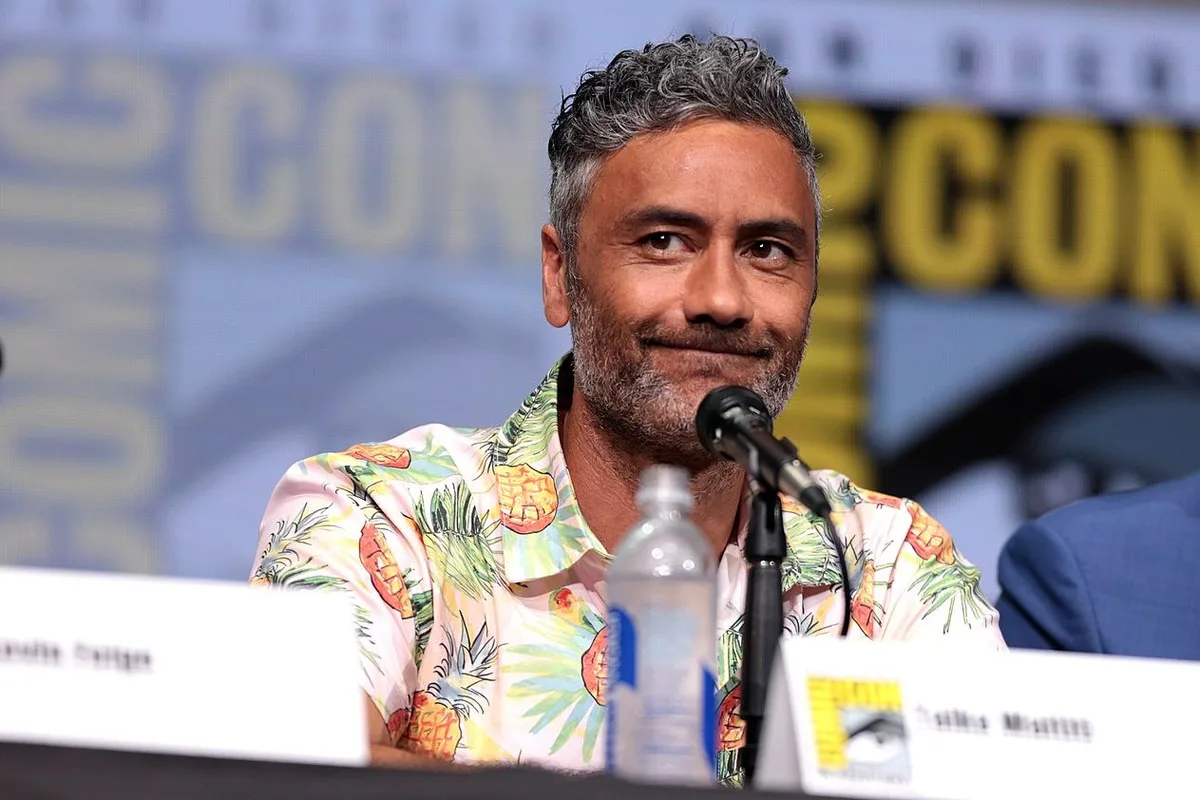
The movie did not even have an announced title.
It would therefore be misleading to describe the latest development as the cancellation of a specific story already introduced to audiences.
What has been suspended is the prospect of a creative proposal becoming an actual theatrical film.
Tony McNamara and Waititi are still working together
One of the more revealing details in the Inverse interview concerns Tony McNamara.
The Australian screenwriter is known for projects including The Favourite, Poor Things and the television series The Great.
Industry reporting had connected him to Waititi's Star Wars project after its initial development with Krysty Wilson-Cairns.
The new interview makes clear that the two filmmakers are still collaborating.
They are now concentrating on another project whose title and subject have not been disclosed.
That distinction matters when interpreting what has happened.
The suspension should not automatically be presented as evidence of a creative disagreement between Waititi and McNamara.
Their working relationship appears to be continuing in a different context.
Movie development can change direction for numerous reasons, including scheduling, creative priorities and studio planning.
Waititi has not provided sufficient detail to identify one specific cause for the Star Wars suspension.
Claims that Lucasfilm rejected a particular script or that a dispute caused the project to collapse would therefore go beyond the confirmed information.
Waititi has already worked inside the Star Wars universe
Waititi was not an entirely new creative presence for Lucasfilm when the theatrical project was announced.
He had already contributed to The Mandalorian, the Disney+ series created by Jon Favreau.
He directed Chapter 8: Redemption, the first season finale, and provided the voice of the droid IG-11.
Both contributions demonstrated his familiarity with the franchise's production environment.
They also showed how his comedic sensibility could coexist with the action and dramatic stakes associated with Star Wars.
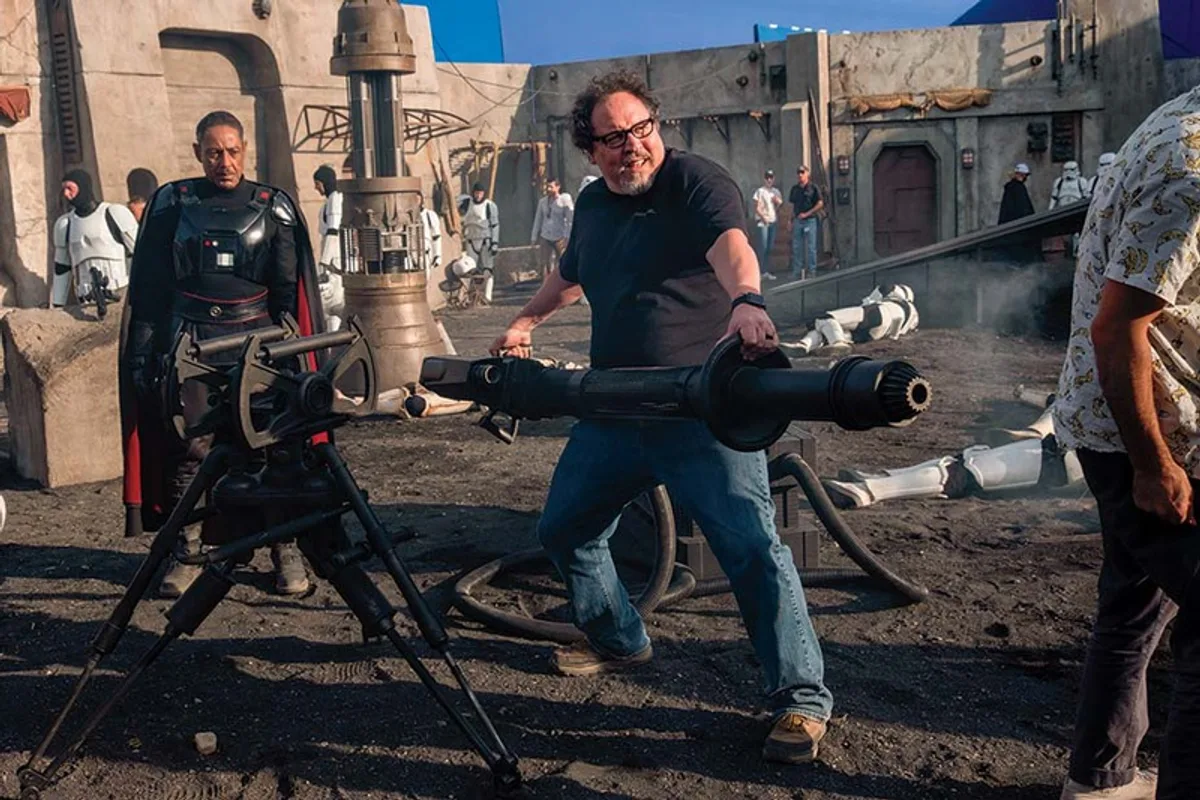
His Mandalorian finale combined large-scale conflict with humor arising from the behavior of supporting characters.
That experience did not guarantee that his theatrical feature would follow the same creative approach.
It did, however, establish an existing working relationship with Lucasfilm.
The stalled film is therefore more significant than a speculative proposal from a director who had never worked with the studio.
Waititi had already demonstrated his ability to contribute to an established Star Wars production.
Lucasfilm's leadership changed in January 2026
The news also arrives during a significant period of transition at Lucasfilm.
On January 15, 2026, the studio confirmed that Kathleen Kennedy was stepping down as president after fourteen years.
Kennedy moved back into producing, while Dave Filoni assumed the position of president and chief creative officer.
Lynwen Brennan became co-president.
The new leadership structure gives the studio an opportunity to reconsider its creative priorities.
But the timing does not establish that the transition caused Waititi's movie to be suspended.
No verified public statement demonstrates that Filoni or Brennan personally ordered the project to be placed on hold.
The confirmed facts are narrower.
The film has spent years in development, Lucasfilm has undergone a leadership change, and Waititi is now concentrating on other work.
Any more specific causal explanation would require evidence that has not been made public.
Still, the studio's transition provides important context for the future of its film slate.
New leadership must decide which projects should progress beyond development and which should remain ideas for a later date.
Star Wars has a problem with announcing movies too early
Waititi's situation belongs to a broader pattern in Lucasfilm's theatrical development history.
Over the past several years, multiple filmmakers have been associated with Star Wars movies that were subsequently delayed, revised or abandoned.
Projects involving directors such as Patty Jenkins and James Mangold have experienced substantial changes between announcement and production.
Each situation has its own circumstances, and it would be inaccurate to treat them as identical failures.
Collectively, however, they reveal a communication challenge.
Audiences often interpret the announcement of a prominent director as a promise that a movie will soon arrive.
A studio may intend something much narrower: confirmation that a project has entered development.
Development can last years without producing a film.
That is not unusual in Hollywood.
The difference with Star Wars is the extraordinary level of attention attached to every announcement.
The franchise has a global audience deeply invested in its characters, mythology and creative direction.
Every announced filmmaker creates expectations that may remain unresolved for a very long time.
Waititi's movie demonstrates that gap between creative intention and production reality particularly clearly.
Other Star Wars theatrical projects remain separate
The suspension of one film does not mean Lucasfilm has abandoned its theatrical strategy.
The studio continues to distinguish projects with different production statuses.
The Mandalorian and Grogu and Star Wars: Starfighter were among the theatrical productions identified in Lucasfilm's January 2026 leadership announcement.
Neither has been officially described as a replacement for Waititi's movie.
There is no verified evidence that a release slot or production budget previously reserved for his project was reassigned to either film.
The productions also serve potentially different purposes within the franchise.
Some Star Wars films extend stories already familiar to audiences, while others introduce different characters and settings.
The Waititi suspension therefore represents one fewer project moving toward production in the immediate future, not the disappearance of Lucasfilm's wider cinematic ambitions.
The essential challenge remains deciding which ideas are ready to become finished movies.
That decision requires considerably more than attaching a recognizable director.
Klara and the Sun is the filmmaker's immediate focus
Waititi is continuing to work on other productions.
His latest remarks emerged during the promotional campaign for Klara and the Sun, an adaptation of Kazuo Ishiguro's novel.
The film stars Jenna Ortega alongside performers including Amy Adams and explores relationships involving an artificial companion designed for human connection.
Its themes include technology, loneliness and emotional attachment.
The project offers another example of Waititi's interests beyond established superhero and science fiction franchises.
He has also spoken about several other films he hopes to develop.
Inverse identifies multiple adaptations and projects connected to earlier creative collaborations.
Those possibilities should not be mistaken for confirmed shooting schedules.
What the interview establishes is a change of immediate priority.
Waititi remains active as a filmmaker, but Star Wars no longer occupies the central position it once appeared to hold in his development plans.
A project on ice is not necessarily a project that can never return
It would be tempting to declare Taika Waititi's Star Wars movie dead.
That conclusion goes beyond what the director actually confirmed.
He has acknowledged a substantial suspension and explained that his attention has moved to other projects.
He has not ruled out returning to the idea at some point.
However, the absence of a definitive cancellation should not be used to manufacture expectations of an imminent revival.
No verified announcement establishes when or whether development might resume.
The present situation is straightforward: a film announced in 2020, never confirmed to have entered principal photography, has been placed on hold.
For Lucasfilm, the episode raises a practical communication question.
Should a studio announce major filmmakers at the earliest development stages, accepting that many projects may never materialize?
Or should it wait until a screenplay and production schedule are sufficiently advanced to support a credible release plan?
For audiences, the difference matters.
An admired screenplay is not a finished movie.
An attached director does not mean filming is scheduled.
And an indefinite pause should not become a definitive cancellation unless the evidence supports that conclusion.
Waititi's Star Wars has joined the growing collection of stories Lucasfilm might have told.
It is too early to say that it never will. But after six years in development, audiences will have to wait much longer to discover what the filmmaker imagined for a galaxy far, far away.