
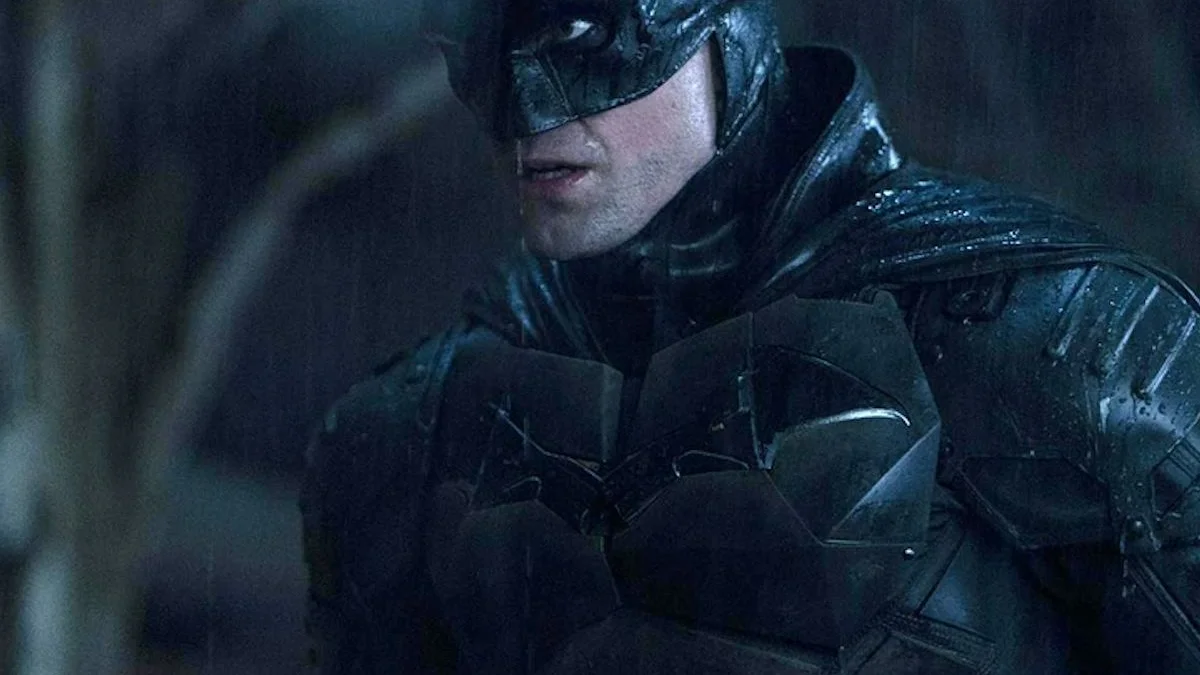
Robert Pattinson is preparing to return to Gotham.
After a temporary halt in production on The Batman Part II, the actor is expected to complete his remaining scenes under an unusual arrangement.
Steven Soderbergh, director of Traffic, Ocean's Eleven and Erin Brockovich, has agreed to supervise the final stages of principal photography.
Matt Reeves is temporarily away from the production because of a family matter.
The solution has been presented as cooperation rather than a change in creative leadership.
Reeves retains responsibility for the film's artistic direction.
Soderbergh is helping him complete the footage needed to move into post-production.
Pattinson praises Soderbergh's selfless gesture
During an interview with GamesRadar+ promoting Primetime, Robert Pattinson was asked about Soderbergh joining the Batman production.
His response was strongly positive.
The actor described Soderbergh's decision as extraordinarily generous.
He emphasized that the filmmaker was approaching the project with genuine consideration for Matt Reeves.
Pattinson believes Soderbergh's primary objective is not to impose a different artistic vision.
Instead, he wants to work with Reeves and help bring the already established production to completion.
That distinction matters to the actor.
Reeves has invested considerable time in the screenplay and in the material already filmed.
Bringing another director into the final weeks of principal photography could theoretically create questions about consistency.
Pattinson sees the arrangement differently.
He believes an experienced filmmaker working specifically to protect the original director's intentions offers a valuable solution.
For him, Soderbergh's involvement is an act of professional support.
Why did Matt Reeves step away from filming?
Production on The Batman Part II began in the United Kingdom in spring 2026.
The project had been filming for several months when a personal matter required Matt Reeves to step away temporarily.
On October 5, Warner Bros. announced a production pause.
The studio explained that Reeves needed to attend to a family matter.
No further details about those circumstances have been publicly disclosed.
The absence of information should not be filled with speculation about the filmmaker's private life.
The announcement nevertheless raised understandable questions about the production's immediate future.
The sequel had already experienced a lengthy development process.
Its schedule remained important to Warner Bros. and DC Studios.
But the interruption never established that Reeves had permanently left the movie.
The studio made that distinction explicit when Soderbergh's involvement was subsequently announced.
Soderbergh approached Reeves with an offer to help
On October 15, DC Studios announced an unusual arrangement for completing the movie.
Steven Soderbergh had approached Matt Reeves and offered to finish the remaining principal photography.
According to the studio, the initiative came from Soderbergh himself.
It was not presented as a replacement imposed by executives.
Warner Bros. and DC Studios supported the proposal.
The two filmmakers are expected to coordinate closely with the actors and production crew.
The goal is to capture the remaining material without changing the film's established creative direction.
This allows Reeves to continue attending to his personal situation while remaining responsible for the project.
Soderbergh is not beginning the sequel from scratch.
He is joining a production whose visual and narrative foundations have already been established.
Matt Reeves remains the film's director
The announcement initially led to confusion among some viewers.
The presence of another established director could easily be interpreted as a permanent change.
Reeves addressed the situation directly.
In a message published on X, he clarified that he was not leaving The Batman Part II.
He also expressed gratitude to Soderbergh for assisting him during a difficult period.
James Gunn, co-head of DC Studios, reinforced the same position.
Gunn stated that Reeves remains the sequel's director and will continue in that role.
The distinction has practical importance.
Large film productions frequently involve directors of additional photography, second-unit teams and specialists supervising particular sequences.
Their participation does not automatically replace the project's principal director.
Soderbergh's responsibility is unusually substantial because he is completing the final stage of principal photography.
Nevertheless, DC Studios has not announced a permanent transfer of directing credit.
Reeves remains the creative lead.
Pattinson suggests production is already restarting
The October 26 interview also provides an update on the shooting schedule.
Asked when filming would resume, Pattinson indicated that he believed production was already underway again.
He added that he expected to return personally within a few days.
His answer suggests the new arrangement is moving beyond the planning stage.
However, the actor's wording was cautious.
He did not provide an exact date for the return of every production unit.
Nor did he confirm that all shooting activities had resumed simultaneously.
His comments should therefore be understood as a progress update rather than a comprehensive official schedule.
There is also no confirmed final date for the completion of principal photography.
The remaining scenes still need to be filmed before the production can complete its post-production work.
Soderbergh intends to preserve The Batman's visual identity
One of the central challenges is visual continuity.
The first The Batman established a distinctive atmosphere.
Dark photography, urban lighting, rain-soaked streets and strong color contrasts helped create an oppressive version of Gotham City.
The filmmaking also emphasized Batman's role as a detective.
Crime investigations and Bruce Wayne's psychological condition were essential parts of the story.
These elements contributed to the identity of Matt Reeves' interpretation.
Soderbergh has acknowledged their importance.
In his statement following the October announcement, he praised the precision and coherence of Reeves' work.
He explained that his objective was to create footage that would integrate naturally with material already filmed.
Camera positions, lighting and performance continuity will therefore be particularly important.
That does not mean the production is operating under two independent artistic visions.
Soderbergh's publicly described responsibility is to support the existing one.
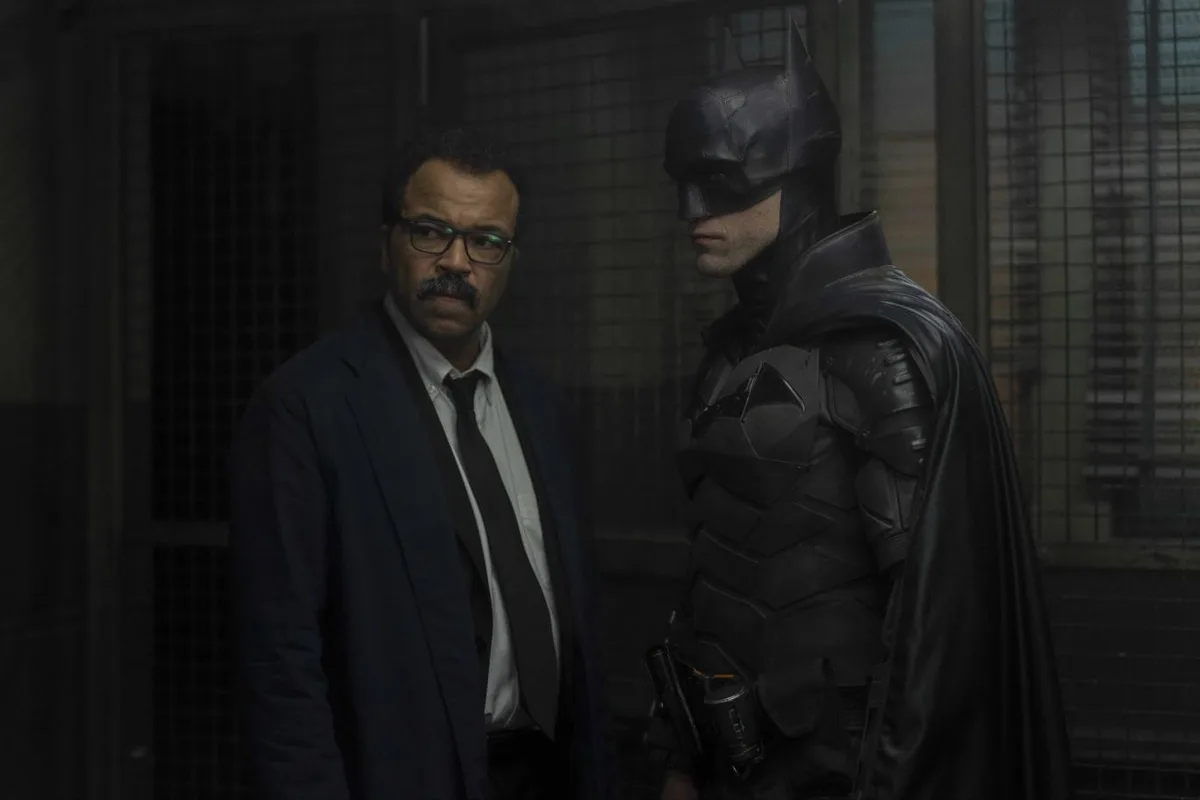
Two directors with very different filmmaking backgrounds
The combination of Matt Reeves and Steven Soderbergh is particularly interesting because of their different careers.
Reeves has directed Cloverfield, Dawn of the Planet of the Apes and War for the Planet of the Apes.
His films often emphasize detailed world-building, morally complicated characters and the emotional consequences of violence.
The Batman brought those interests into a crime-thriller interpretation of the superhero.
Soderbergh has worked across a considerably wider variety of genres.
His filmography includes Sex, Lies, and Videotape, Traffic, Erin Brockovich, Contagion and Ocean's Eleven.
He is also known for technical efficiency and his willingness to experiment with digital filmmaking.
Those skills may be especially valuable when finishing an established production under time constraints.
But the contrast between their styles does not mean audiences should expect a hybrid of two distinct visions.
Soderbergh has explicitly stated that his work is intended to remain consistent with Reeves' film.
Continuity presents challenges for actors and crew
Completing a movie under another director's supervision requires careful coordination.
Actors establish working relationships with directors over the course of production.
Notes about character motivation, emotional rhythm and performance must remain consistent with scenes already filmed.
Technical departments face similar challenges.
Costumes, sets, props and lighting need to match existing footage.
Continuity becomes particularly important when scenes filmed weeks apart are intended to appear as part of a single uninterrupted sequence.
Soderbergh has one important advantage.
He is not entering a project without established visual references.
Much of the film has already been shot.
He can study the material, work with the existing crew and coordinate with Reeves.
DC Studios has specifically described the arrangement as a collaborative process.
That structure is intended to reduce differences between the earlier footage and the remaining photography.
The screenplay remains Reeves' project
Pattinson also emphasized Matt Reeves' involvement in writing the sequel.
Reeves developed the screenplay with Mattson Tomlin.
That work formed a substantial part of the film's lengthy preparation.
The narrative relationship between The Batman and its sequel therefore remains grounded in the original creative team's intentions.
There has been no official announcement that Soderbergh's arrival involves rewriting the screenplay.
No new storyline or major structural change has been confirmed.
It would consequently be premature to assume that additional villains, action sequences or plot twists have been introduced because of the change in shooting supervision.
The publicly announced responsibility is more specific.
Soderbergh is helping capture the footage needed to finish principal photography.
Reeves is expected to continue overseeing editing and subsequent work.
The movie remains conceived as the second chapter of his Batman universe.
Robert Pattinson returns with an expanded cast
Robert Pattinson reprises the role of Bruce Wayne.
His portrayal in the 2022 movie emphasized a relatively young Batman still developing his understanding of Gotham and his own responsibilities.
The character operated primarily as a detective while confronting the consequences of his personal trauma.
Several actors from the original film are returning.
Jeffrey Wright reprises James Gordon.
Andy Serkis returns as Alfred Pennyworth.
Colin Farrell is back as Oswald Cobb, also known as the Penguin.
The sequel also introduces new performers.
Scarlett Johansson, Sebastian Stan, Charles Dance and Brian Tyree Henry are among the announced additions.
Their involvement confirms that the ensemble has expanded.
However, the full narrative has not been publicly disclosed.
Casting announcements alone do not establish the ending or the precise relationships between every character.
Plot speculation should therefore remain separate from confirmed production information.
The sequel remains separate from the main DC Universe
The Batman Part II occupies a distinctive place within DC Studios' strategy.
Matt Reeves' version of Gotham is not part of the primary shared DC continuity overseen by James Gunn and Peter Safran.
That separation allows Robert Pattinson's Batman to continue his own narrative without requiring immediate integration with other DC films.
The Batman and the television series The Penguin belong to the same fictional setting.
Their stories explore a city shaped by corruption, organized crime and the consequences of Batman's actions.
The sequel is expected to continue developing that world.
Soderbergh's temporary involvement does not officially change this structure.
There has been no announcement that The Batman Part II is being incorporated into the main DC Universe.
Nor has the shooting arrangement been described as a reason to alter the franchise's continuity.
The film remains associated with the universe established by Reeves.
Is the February 2028 release date at risk?
The interruption in filming naturally raised questions about the theatrical release.
Warner Bros. had already revised the movie's schedule during its extended development.
The currently announced United States release date is February 18, 2028.
As of October 27, 2026, the studio has not officially announced another delay following Soderbergh's involvement.
However, it would be premature to guarantee that the date cannot change.
A production of this size requires significant editing, visual-effects work, sound design and distribution preparation.
Resuming principal photography is an encouraging development.
It does not automatically establish that every subsequent production stage will follow the original timetable.
The confirmed position is that Warner Bros. continues to list February 18, 2028, as the American theatrical date.
The movie is scheduled for release, not currently available.
A collaboration, not a directorial replacement
The most significant element of Pattinson's comments may be the way he describes Soderbergh's intentions.
He does not present the filmmaker as a new director taking over an artistically troubled project.
Instead, he emphasizes the offer of assistance made to Reeves under exceptional personal circumstances.
That characterization matches statements from the studio, Reeves and Soderbergh himself.
Reeves remains responsible for The Batman Part II's identity.
Soderbergh is helping complete the scheduled photography.
Pattinson expects to return to the set shortly.
The arrangement is unusual, but its public framework is sufficiently clear to distinguish it from the more dramatic interpretation of a permanent replacement.
There has been no announcement of a new version of the movie.
Nor is the production restarting from the beginning.
It is completing a film that is already substantially underway.
Gotham is still waiting for its next chapter
The Batman Part II remains one of Warner Bros. and DC Studios' most closely watched upcoming films.
Matt Reeves' visual approach, Robert Pattinson's interpretation and the emphasis on Gotham's criminal underworld continue to define the project.
Steven Soderbergh's temporary involvement adds an unexpected chapter to its production history.
But the October 26 interview does not indicate a break with what has already been established.
Instead, it confirms the team's intention to preserve the original creative direction.
Filming appears to be resuming, according to Pattinson, and the actor expects to return in the coming days.
The official release schedule remains February 2028.
Matt Reeves continues as the director despite his temporary absence.
The relevant question is therefore no longer whether another filmmaker has permanently replaced him.
It is whether Soderbergh can complete the remaining footage so seamlessly that audiences will never know which scenes were filmed under his supervision.