Brolin has described arriving on the production and finding far less conventional rehearsal than he expected. Scott talked, the actors worked, and the machinery around them moved quickly. Brolin initially read that looseness as a warning sign rather than a plan.
A day or two later, his view had changed. Scott showed him footage from a scene with Jacob Elordi, and the apparent lack of safety began to make sense as a way of keeping performances alive. Brolin ultimately described the experience as one of the more creatively satisfying projects he had joined.
Scott's cameras are there before the actors settle down
A new 20th Century Studios feature released around the film's London world premiere makes the system easier to understand. Scott says he likes using several cameras because an actor can move through the scene without being forced to reproduce the same performance for a succession of setups.
It also lets him keep filming when something goes slightly wrong. A movement that misses its expected mark or an unplanned reaction does not automatically kill the take. If the accident is useful, Scott would rather see where it goes.
That sounds like a speed trick, and Scott is certainly famous for moving quickly. It is also an acting choice. Multiple angles captured at the same time mean the editor can retain spontaneous behavior instead of asking performers to manufacture it again from another camera position.
The apocalypse is unusually interested in company
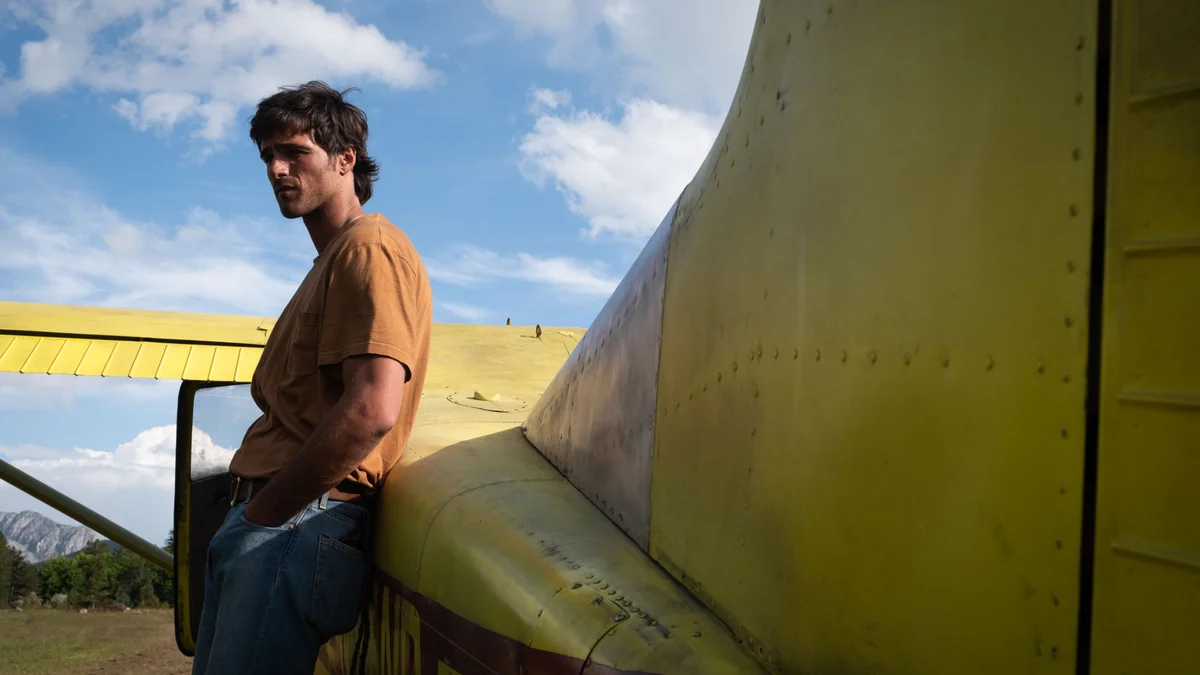
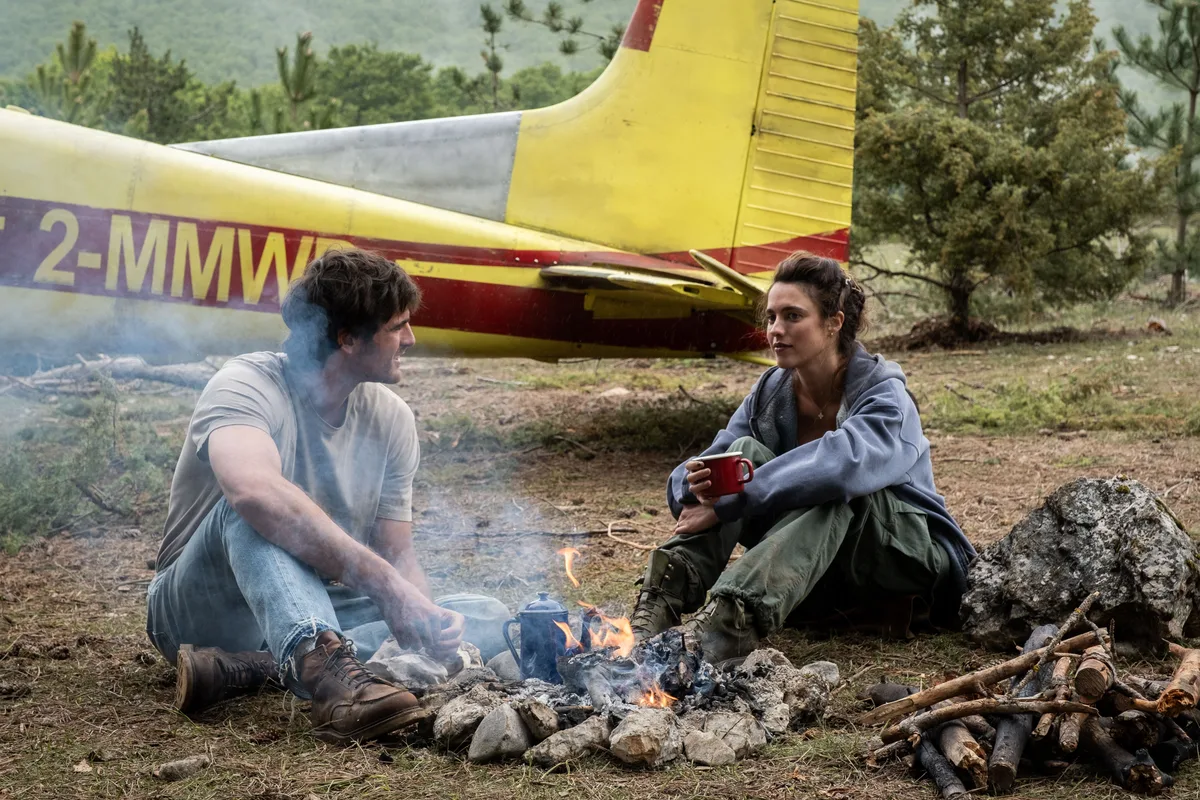
The Dog Stars begins in territory that could easily produce a much harsher film. Hig, played by Elordi, has survived a pandemic that destroyed most of society. He lives around an abandoned airfield with his dog and Bangley, the heavily armed survivalist played by Brolin. Their arrangement works because it is controlled.
Then Hig hears a fragmented radio transmission and takes his old plane beyond the boundaries of that life. Margaret Qualley plays Cima, with Guy Pearce, Benedict Wong and Allison Janney also among the ensemble.
Scott has been unusually clear about what he does not want from the premise. Speaking at the London premiere, he pointed out that the film has no zombies and said optimism was essential to his approach. Producer Michael Pruss has similarly framed Peter Heller's story around isolation and the possibility of reconnecting with people and the natural world.
The ruins are still there. The film simply appears more curious about what a survivor might want after survival itself has stopped being enough.
A science-fiction return built outdoors
Much of the production was shot on location in Italy, according to Reuters. Elordi described the scale as characteristically large for Scott, who returns here to science fiction after a gap of nearly a decade. The actor also spent substantial time working opposite Rak Jasper, one of the dogs used for Hig's companion.
The screenplay comes from Mark L. Smith and adapts Peter Heller's 2012 novel. Scott has said the script immediately caught his attention because the science-fiction premise worked for him on the page before cameras entered the equation.
France gets the film first
French audiences will see The Dog Stars in theaters on August 26. 20th Century Studios lists the U.S. release for August 28.
By then, Scott's production method will be visible where it actually matters: in whether those deliberately unprotected moments survived the edit.