
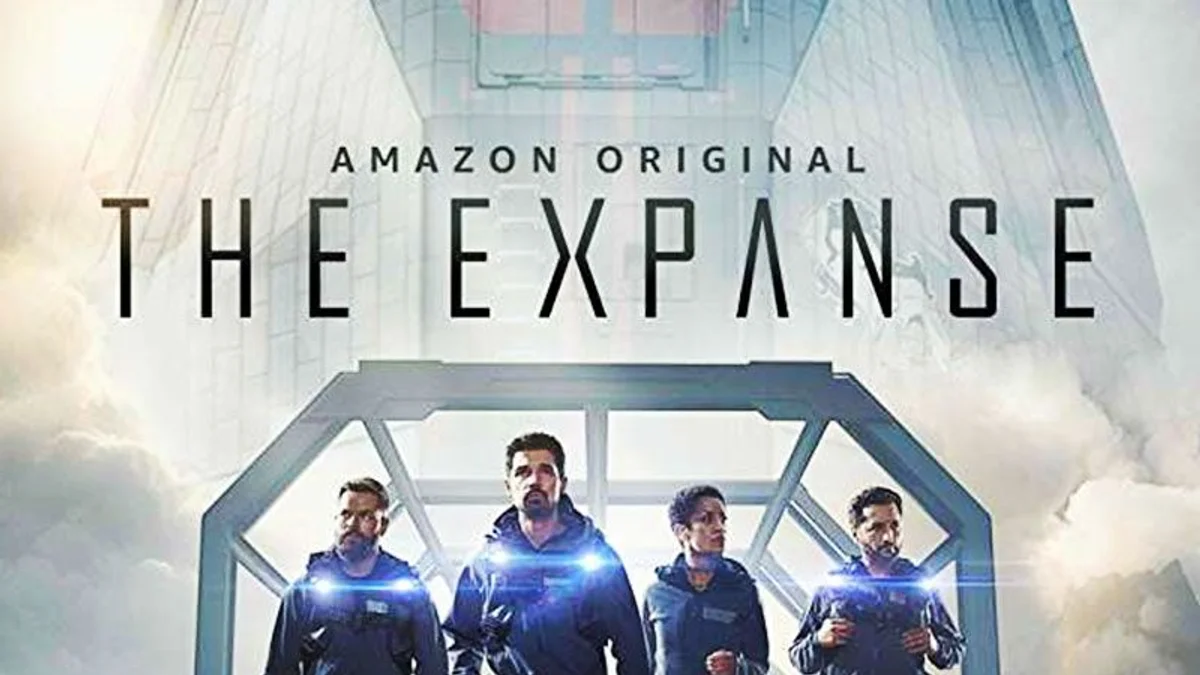
A science fiction epic that begins as a mystery and becomes a story about civilization
The Expanse initially resembles a space-set detective story.
A young woman disappears, a weary investigator follows the clues, and a spaceship crew becomes involved in events far beyond its understanding.
Humanity has colonized the solar system. Mars has become an independent military power, while the inhabitants of the Asteroid Belt depend on resources and institutions largely controlled by the inner planets.
The series developed by Mark Fergus and Hawk Ostby, with Naren Shankar serving as showrunner, builds an enormous political and science fiction narrative from these foundations.
What first appears to concern a handful of individuals gradually reveals conflicts involving governments, corporations and alien technology capable of transforming civilization.
The scale is impressive, but size alone is not what makes The Expanse exceptional.
Its strongest achievement is creating a world where political, economic and technological developments feel connected.
The show does not simply imagine spectacular spaceships and distant settlements.
It asks how human societies might actually function after generations of life away from Earth.
The resulting conflicts are grounded in competing material needs and historical identities rather than arbitrary disputes invented to generate action.
This gives the setting an identity beyond the adventures of the central characters.
The universe continues to feel alive even when the Rocinante is not at the center of the action.
Earth, Mars and the Belt form a remarkably convincing political system
The Expanse's political worldbuilding is among the strongest elements identified across its critical reception.
Earth remains humanity's historical and demographic center, with powerful institutions responsible for a vast population and competing interests.
Mars has developed around a different collective ambition: transforming a hostile planet into a habitable world.
That project has shaped a disciplined, militarized society whose citizens regard their mission as fundamental to their identity.
The Belters occupy another position entirely.
Their labor supports mining and transportation throughout the solar system, but their access to essential resources such as air and water is frequently controlled by others.
The show never presents these populations as entirely homogeneous.
Compassionate, ambitious, ruthless and self-serving individuals exist within every faction.
Political circumstances explain motivations without automatically excusing harmful actions.
Belter anger emerges from recognizable injustice, but that does not legitimize every act of violence committed in the Belt's name.
Earth and Mars possess legitimate security concerns, yet their institutions can also perpetuate harmful structures.
The Ringer's examination of the finale emphasizes the show's ability to create genuine sympathy for opposing factions while recognizing their contradictions.
This complexity gives its conflicts emotional and intellectual weight.
When fleets clash or civilian populations face danger, the consequences matter because the audience understands the political world in which those events occur.
The Rocinante becomes the heart of the story
The Rocinante crew provides an essential counterpoint to the series' enormous geopolitical scope.
James Holden, Naomi Nagata, Amos Burton and Alex Kamal gradually become a group whose differences make their relationships more compelling.
They come from different backgrounds, possess different beliefs and approach authority in different ways.
Yet the emergencies they face force them to develop trust across precisely the divisions shaping the wider solar system.
Steven Strait's Holden embodies an idealism that can be admirable and exasperating in equal measure.
He believes that revealing the truth and making morally correct decisions should help resolve conflicts.
Much of The Expanse is devoted to demonstrating why good intentions are not enough.
Releasing information can provoke a war.
Saving one group of people can destabilize an already fragile political arrangement.
An individual act of conscience can produce consequences beyond its author's control.
These contradictions make Holden more interesting than a hero whose ethical instincts are always vindicated.

The spaceship itself becomes increasingly important as a physical expression of the crew's shared identity.
It is not merely an efficient military vessel.
It is a place where people from opposing cultures establish relationships based on experience and personal commitment.
Within a solar system organized around inherited divisions, the crew offers a smaller example of a different kind of community.
That intimate emotional foundation allows the series to remain accessible even as its plot expands across vast distances.
Naomi and Amos give the ensemble its greatest complexity
Although Holden occupies the conventional leading-man position, some of the series' richest character work belongs to the supporting ensemble.
Dominique Tipper's Naomi Nagata has a complicated relationship with her Belter identity and personal history.
Her technical skills make her indispensable aboard the Rocinante, but the character is never defined solely by her ability to repair machines.
Her personal loyalties, painful memories and earlier decisions continue to influence her actions.
The storylines involving Marco Inaros and Filip connect the Belt's political conflicts to intimate family relationships.
Those episodes also reveal a weakness in the series' pacing.
The accumulation of emotional suffering and repeated confrontations can make parts of Naomi's later storyline feel less dynamic than the political and military developments surrounding it.
That criticism does not undermine the character's importance.
Naomi repeatedly demonstrates that collective identity does not fully determine individual responsibility.
Wes Chatham's Amos Burton explores an entirely different moral contradiction.
Amos is capable of extreme violence but often relies on the ethical judgment of people he trusts.
His directness can be frightening, unexpectedly funny and strangely moving.
The show avoids treating his effectiveness as proof of moral superiority.
Amos knows how to survive.
Understanding how to live well with other people is a more difficult question.
His relationships across the series develop that tension without transforming him into a conventional virtuous hero.
Avasarala and Drummer turn politics into memorable drama
Chrisjen Avasarala and Camina Drummer are among the series' most compelling characters.
Shohreh Aghdashloo gives Avasarala formidable authority.
The character combines political intelligence, sharp humor and a detailed understanding of the compromises required by government.
She is neither an entirely cynical operator nor a naive idealist.
Her greatest strength is recognizing how political power works while remaining conscious of the human consequences of exercising it.
The series also allows her calculations to fail.
Her decisions can create problems, and her assumptions must sometimes be reconsidered.
Cara Gee's Camina Drummer represents a different kind of authority.
Drummer belongs to a population historically forced to negotiate with institutions controlled by others.
Her loyalties, personal relationships and understanding of freedom are constantly challenged by changing political circumstances.
Together, the characters give the show's political conflicts a personal dimension.
Leadership is not reduced to making impressive speeches or ordering fleets into battle.
It also requires knowing when power should be shared and when a compromise is necessary.
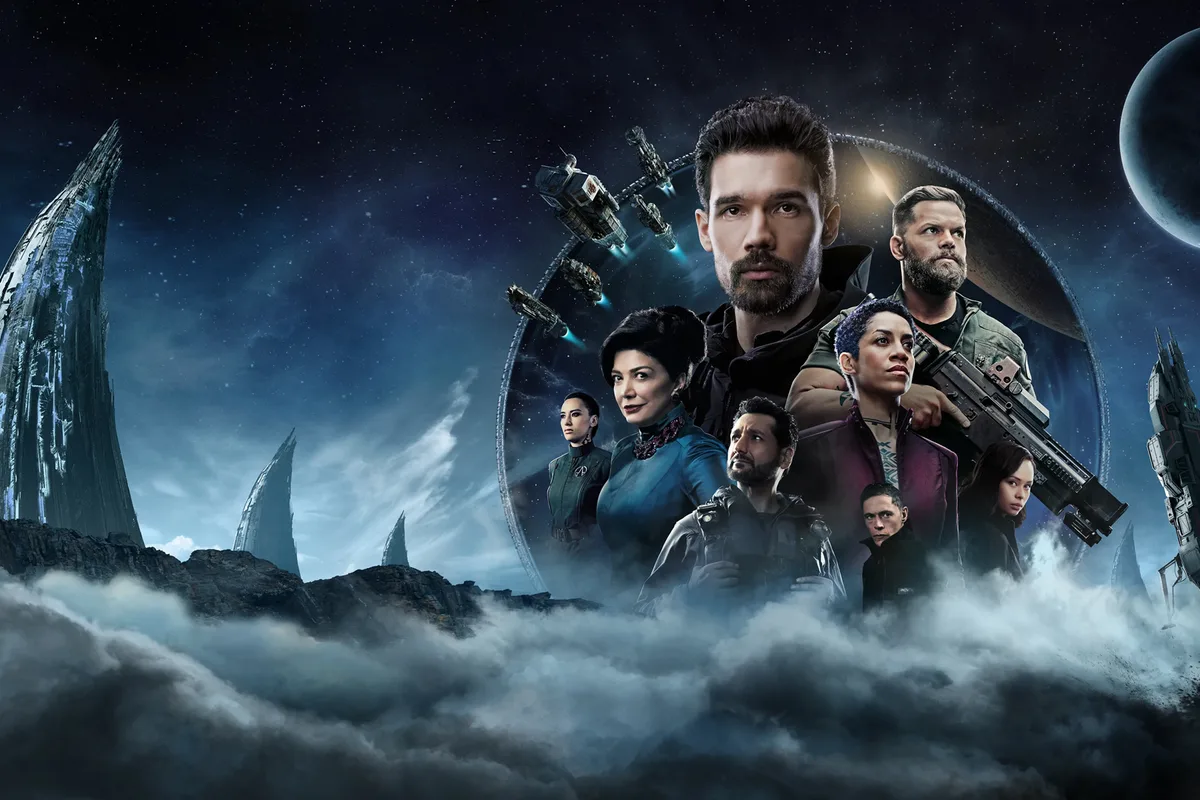
Their storylines help explain why the show's larger political developments feel earned.
Institutional change becomes meaningful when it emerges from characters whose beliefs have been tested over several seasons.
The science gives the spectacle credibility
The Expanse also stands out for taking the physical conditions of space travel unusually seriously.
Its spacecraft are not simply airplanes flying against a background of stars.
Acceleration, momentum, changing gravitational conditions and the demands of survival frequently shape the action.
Maneuvers have physical consequences.
Human bodies respond to changes in acceleration, and essential supplies cannot be treated as infinite.
The space battles benefit enormously from that approach.
They are not simply atmospheric dogfights transferred into orbit.
Positioning, distances, inertia and tactical decisions help create tension.
The Expanse remains fictional, and its technologies do not constitute a complete scientific simulation.
Nevertheless, the production establishes consistent rules that make the environment feel believable.
Those rules also give the alien elements greater impact.
When the protomolecule introduces phenomena beyond human understanding, the contrast is unsettling precisely because the audience has learned how the ordinary world operates.
The extraordinary is more effective when the surrounding universe already makes sense.
The protomolecule expands a detective story into cosmic mystery
The series' early plot follows recognizable investigative conventions.
Thomas Jane's Detective Miller searches for a missing young woman, gradually discovering connections to events surrounding Holden and his crew.
Miller brings elements of film noir to the science fiction setting.
He is a weary investigator whose private obsessions lead him toward a conspiracy far larger than the case that initially occupied him.
The first season is demanding.
Several groups of characters follow separate paths, political terminology is dense, and the audience receives substantial information before the connections become clear.
It is understandable that some viewers struggle with the early episodes.
The subsequent seasons reward that patience as the storylines begin converging.
The protomolecule allows the series to expand its universe without abandoning the human conflicts that defined its opening.
Discovering an extraordinarily powerful alien technology does not suddenly convince Earth's, Mars's and the Belt's leaders to cooperate.
Instead, they seek ways to use the discovery to further their own interests.
That response gives the speculative element a clear narrative purpose.
The mystery is not merely about understanding what the technology can do.
It is also about what humans will do with a power they cannot properly control.
Six seasons with different strengths and pacing problems
The Expanse is remarkable across its complete run, but its quality is not perfectly even.
The first season establishes the atmosphere and political universe effectively while requiring considerable patience during its exposition-heavy opening.
Seasons two and three become increasingly confident as their central storylines converge.
The balance between investigation, action and political maneuvering becomes more effective.
Season four shifts the narrative toward new territories and introduces a different sense of scale.
The change is refreshing, although some developments temporarily reduce the momentum of the ensemble narrative.
Season five places additional emphasis on personal relationships, particularly Naomi's history and the growing conflict between the solar system's factions.
That focus gives the drama emotional weight but also creates moments of uneven pacing.
Season six attempts to resolve the war against Marco Inaros while preserving the mystery surrounding events beyond the Ring Gates.
The result is satisfying in some respects and frustrating in others.
The show's political ideas and character development remain intact.
But six episodes are a limited amount of time in which to conclude a narrative of this scale.
The critical consensus on Rotten Tomatoes reflects that tension.
The final season is praised for honoring the series' characters and themes, while its shortened format remains a recurring qualification.
The finale resolves a war, not every mystery
The ending is the most significant limitation of The Expanse as a complete television experience.
The problem is not that every fictional mystery requires an explicit explanation.
Ambiguity can be dramatically effective.
The difficulty here is that some elements are introduced as major future developments before the adaptation concludes without resolving them.
The sequences on Laconia and the emerging implications of the protomolecule suggest a much larger story.
However, the television series primarily adapts the first six novels of a nine-book literary saga.
The conflict involving Marco Inaros and the future political structure of the solar system receives a meaningful narrative conclusion.
The larger alien mysteries do not receive the same treatment.
The Ringer's analysis of the January 2022 finale draws precisely this distinction.
The political resolution works, while the developments on Laconia point toward material the television series never adapts.
This incompleteness matters because the show spent years establishing the alien technology as one of its central mysteries.
Readers can continue through the novels, but that possibility does not eliminate the frustration of viewers who experience the story exclusively through television.
The final episode remains emotionally effective without providing closure to every major strand.
A series that survived cancellation and changed networks
The production history helps explain the shape of The Expanse.
It premiered on Syfy in December 2015.
After three seasons, the network declined to continue the series.
A substantial fan campaign drew attention to its future, and Amazon ultimately brought the production back for three additional seasons.
The arrangement allowed an ambitious adaptation to continue when its original broadcaster had stopped supporting it.
Alcon Television Group remained the principal production company.
Naren Shankar continued as showrunner, while novelists Daniel Abraham and Ty Franck, writing under the shared name James S. A. Corey, were involved in the television adaptation.
That creative continuity helped preserve the show's identity through the transition from Syfy to Prime Video.
The production grew visually more ambitious, but its central concerns remained consistent.
The initial cancellation and eventual rescue also illustrate that critical acclaim does not guarantee uninterrupted television production.
The Expanse received an opportunity that many ambitious genre series never get: enough additional seasons to bring a substantial part of its central story to a conclusion.
Understanding those circumstances makes the compressed ending more understandable, although it does not make every unresolved storyline artistically satisfying.
Verdict: An exceptional achievement with an incomplete destination
The Expanse deserves its reputation as a major science fiction television achievement.
Not because it is flawless, but because it sustains an extraordinary level of ambition across six seasons.
Its political universe is unusually coherent.
Its characters develop through difficult choices rather than arbitrary revelations.
Its scientific concerns enrich the drama instead of overwhelming the human stories.
Most importantly, the show refuses to treat technological progress as a solution to the problems of civilization.
Humanity has colonized the solar system, constructed extraordinary spacecraft and discovered technology beyond its understanding.
Yet the central questions remain familiar.
Who controls essential resources?
Who has the authority to make decisions for others?
How can lasting peace emerge between communities that have spent generations distrusting one another?
The first season demands patience, the pacing occasionally falters, and the final season leaves a larger fictional universe unfinished.
Nevertheless, few television productions have combined space adventure, political analysis and character development with comparable consistency.
The Rocinante travels enormous distances, but the series never loses sight of the people inside it.
That is what makes The Expanse extraordinary.