
Sharing a Story Is Different From Sharing an Action Game
Supermassive's horror adventures occupy a distinctive space between cinema and videogames.
They tell carefully staged stories through character performances while asking players to make decisions that can change the outcome.
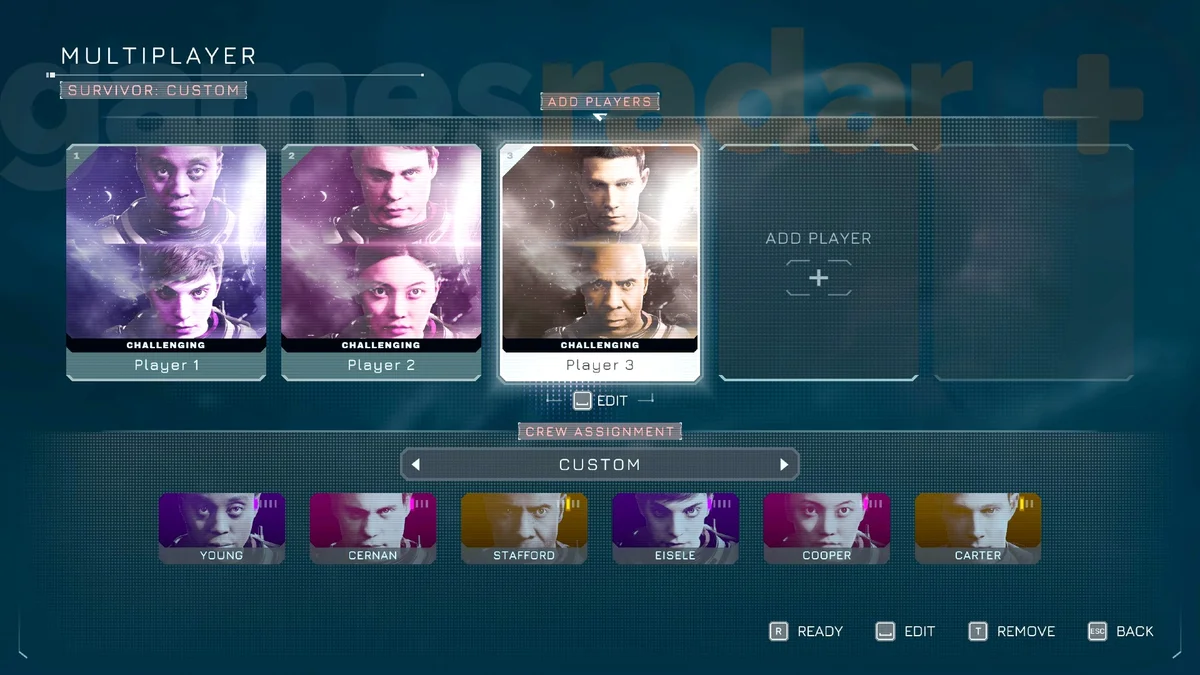
Movie Night already allowed several people to share that responsibility in one room.
Since October 19, Directive 8020 has extended the same concept online.
Up to five participants can experience the story together without gathering around the same screen.
The significance extends beyond convenience.
Turning an individual adventure into a collectively discussed experience changes how players relate to its characters.
Directive 8020 Is Already Built Around Distrust
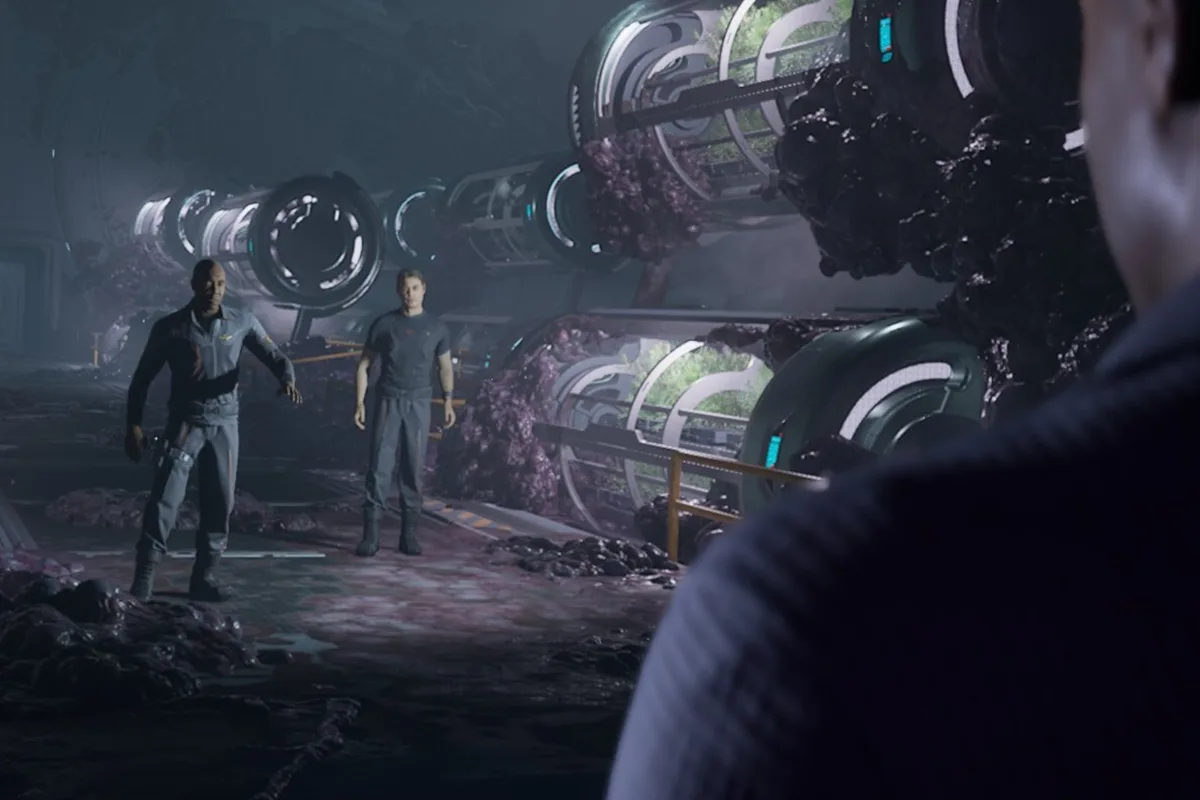
The crew of the Cassiopeia faces a threat unusually suited to multiplayer discussion.
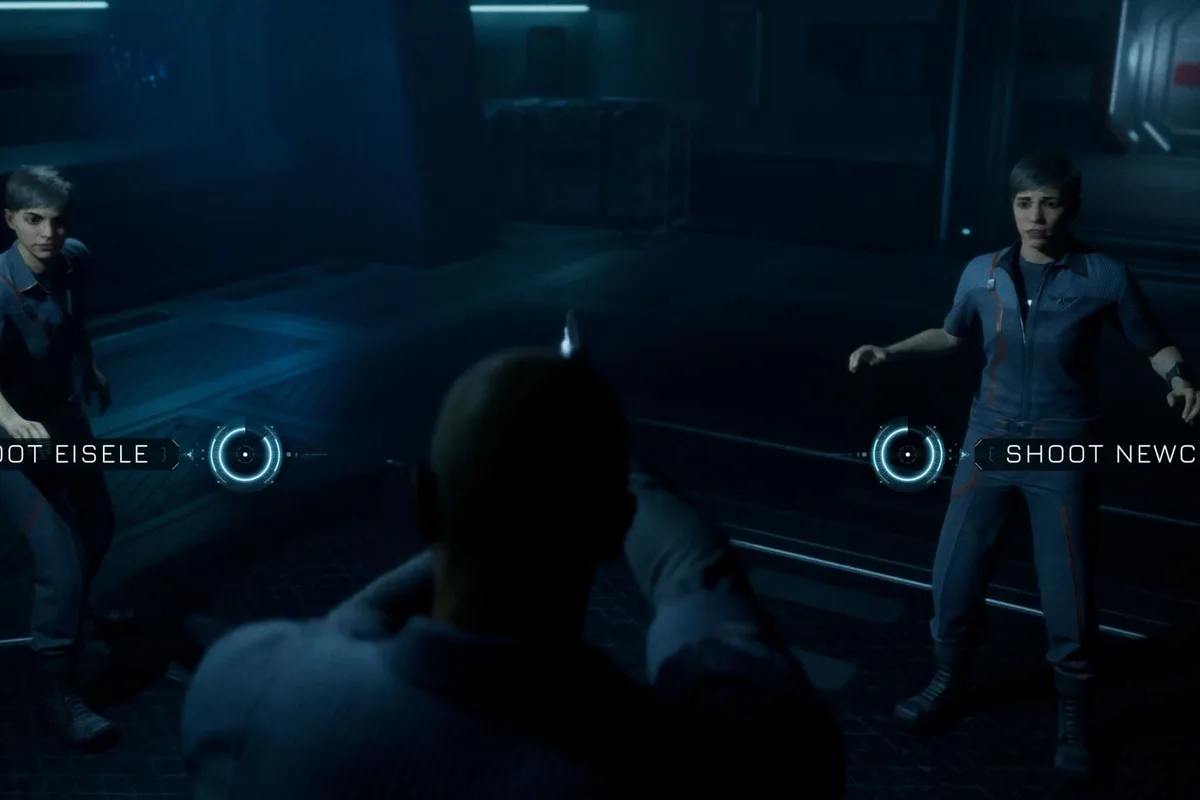
An alien organism can imitate human beings.
Survival therefore involves more than escaping an openly hostile creature.
Players must decide whether someone is genuinely who they claim to be.
That uncertainty naturally creates disagreement.
One participant may interpret an action as evidence of deception while another considers it perfectly understandable.
Online multiplayer does not necessarily alter the campaign's events.
It multiplies the perspectives through which those events are interpreted.
Custom Mode Encourages Character Attachment
In Custom mode, participants receive assigned characters.
When the story returns to one of those characters, the corresponding player takes control.
The structure resembles an interactive movie where each spectator is responsible for part of the cast.
That responsibility can encourage attachment.
A player may become determined to protect their character even when doing so conflicts with the group's apparent interests.
Someone observing from a different perspective may be more comfortable accepting a sacrifice.
Character assignments therefore expose different emotional priorities.
A seemingly simple narrative decision can become a debate about loyalty.
Round Robin Replaces Attachment With Uncertainty
Round Robin operates differently.
Characters are no longer permanently assigned to individual players.
Control passes between participants at defined intervals.
This produces another form of tension.
No participant permanently owns one character's perspective.
A player may inherit the consequences of a decision made by someone else.
They may also find themselves controlling a character they would never have chosen.
The system encourages a more collective experience but may weaken the individual attachment created by Custom mode.
Neither structure is inherently superior. They create different relationships between participants and the story.
Choice Voting Makes Disagreements Visible
Choice Voting may be the most interesting narrative addition.
When the game presents a decision, participants can indicate their preferred outcome.
The interface displays individual votes.
Everyone can see whether a majority is emerging.
However, majority support does not automatically determine the final action.
The player responsible for making the decision can choose to disagree.
That preserves an important distinction between advice and responsibility.
Imagine a scene where someone asks to open a door behind which an alien threat may be waiting.
Three participants prefer refusing, while another argues that the door should be opened.
If the active player opens it anyway, they become responsible for the narrative consequences.
The vote did not eliminate the risk. It made the disagreement explicit.
That is a particularly effective setup for interactive horror.
Conversations Become Part of the Experience
In a solo adventure, players usually consider possible outcomes privately.
In a group, those thoughts become a discussion.
One participant may remember a clue from several scenes earlier.
Another may trust a character for emotional reasons.
Someone else may simply want the most dangerous outcome.
Choice Voting organizes these disagreements without replacing conversation itself.
Supermassive's announcement emphasizes experiencing the story together without requiring everyone to agree.
The quality of each session may therefore depend as much on group dynamics as on the game's systems.
Premonitions Introduce Another Source of Debate
The update adds thirteen collectible Premonitions.
They provide glimpses of possible future events.
The feature is familiar to Dark Pictures players, where it often serves as an indirect warning.
In solo play, a discovery might cause someone to reconsider their next decision.
In multiplayer, the same information may produce competing interpretations.
An image suggesting danger might seem obvious to one player and misleading to another.
It does not impose one unavoidable future because the story remains affected by player choices.
These new discoveries can therefore enrich discussion without requiring an additional campaign.
Interactive Horror Does Not Become Conventional Cooperative Action
The update should not be confused with traditional cooperative action gameplay.
Directive 8020 does not turn its campaign into missions where five independently controlled characters explore the Cassiopeia simultaneously.
Participants take turns controlling playable scenes.
The rest of the group observes, discusses and contributes to decisions.
That distribution of responsibility is essential to the design.
It resembles collective interactive cinema more closely than a survival horror game featuring several characters fighting side by side.
Presenting the update as a complete genre transformation would therefore be misleading.
Platform Restrictions Still Matter
Supermassive offers flexible geographical arrangements.
Participants can join from five different locations or combine local and remote attendance.
However, each online participant must own Directive 8020.
Cross-play is unavailable.
That limitation matters for groups whose members play on different platforms.
A successful remote horror night therefore remains dependent on certain technical and commercial requirements.
The update simplifies sharing without eliminating every barrier.
A New Way to Experience the Same Fear
The update's central value does not lie in adding more monsters or new endings.
Instead, Supermassive offers another way to experience its existing story.
Custom encourages attachment to particular characters.
Round Robin distributes control among participants.
Choice Voting turns difficult decisions into moments of debate and sometimes conflict.
Together, these features extend a familiar Supermassive idea: in interactive horror, making a decision can matter as much as what happens afterward.
Aboard the Cassiopeia, the threat may wear the face of a fellow traveler. Now the person challenging your judgment might also be a friend connecting from hundreds of miles away.
And when the consequences arrive, it will be difficult to claim that nobody expressed an opinion.