
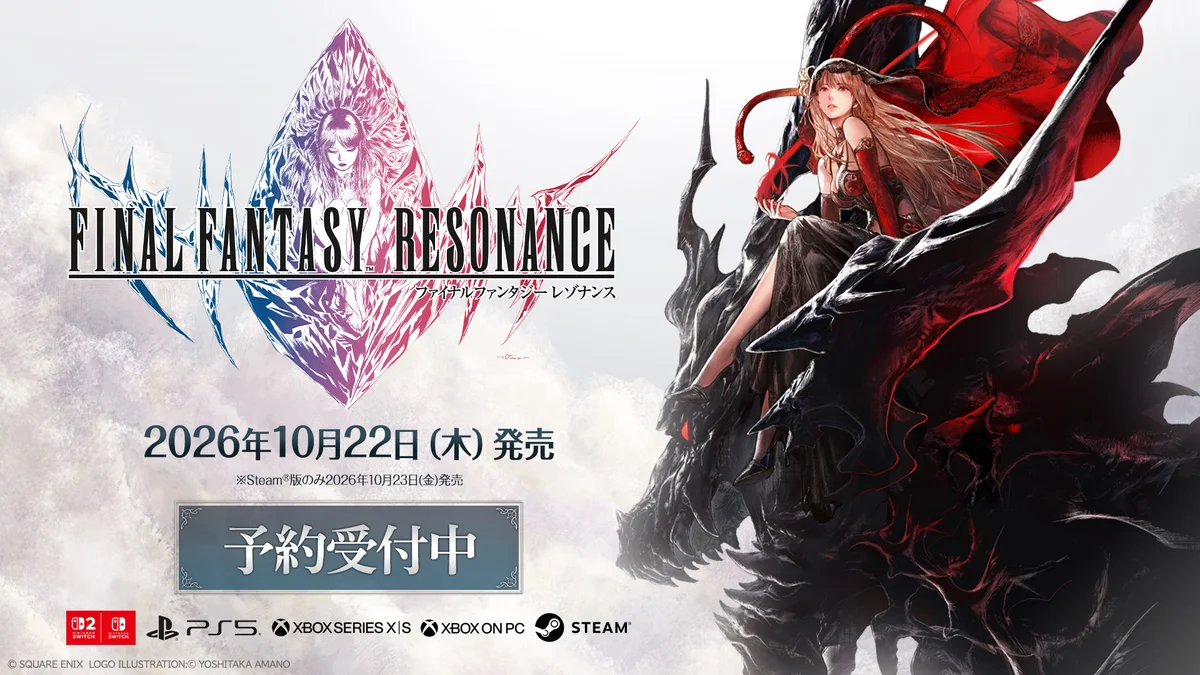
What would Final Fantasy look like if the series had continued to develop pixel art instead of moving toward increasingly realistic 3D characters? Square Enix has built Final Fantasy Resonance around that question.
The new RPG uses HD-2D to combine the visual language of the early games with contemporary lighting, environments and cinematic techniques. It also draws on a less expected part of the franchise's past: Final Fantasy Brave Exvius.
Resonance is based on the mobile game's first story arc, but Square Enix describes the console release as an extensively rebuilt adventure rather than a direct conversion.
The story of Rain and Lasswell returns
Rain is a young knight of Grandshelt, entrusted with leading an airship squadron despite his age. His childhood friend Lasswell serves as his deputy.
The opening adventure sends them to investigate the weakened magical protection surrounding the Earth Shrine. Their encounter with Veritas of the Dark ends in defeat and the destruction of the Earth Crystal.
The two knights begin a larger journey to protect the remaining Crystals. Fina, a mysterious young woman who has lost her memories, becomes one of their travelling companions.
This storyline provides an opportunity for players who never experienced Brave Exvius to discover its characters through a self-contained console RPG.
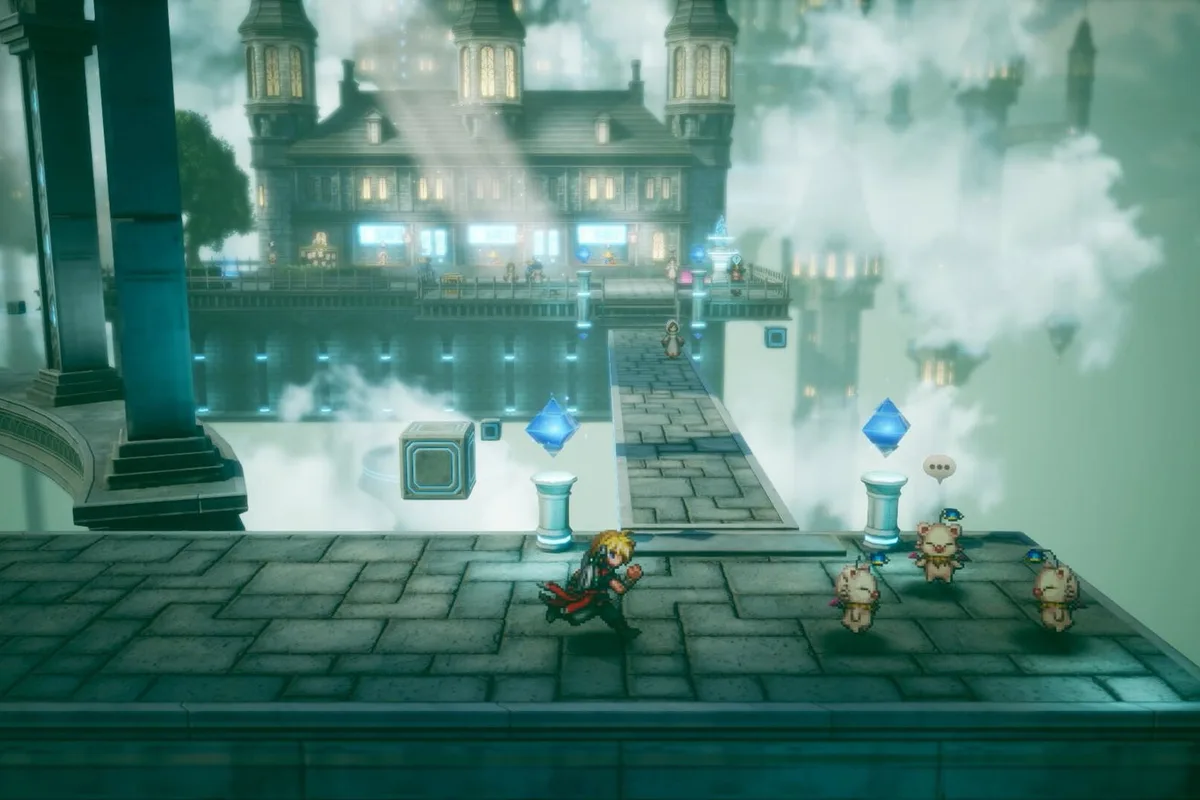
An alternative evolution of pixel art
Resonance's visual design imagines a continuation of the franchise's early artistic language. Characters retain the exaggerated proportions and recognisable silhouettes associated with pixel art, while environmental depth and lighting create a more contemporary presentation.
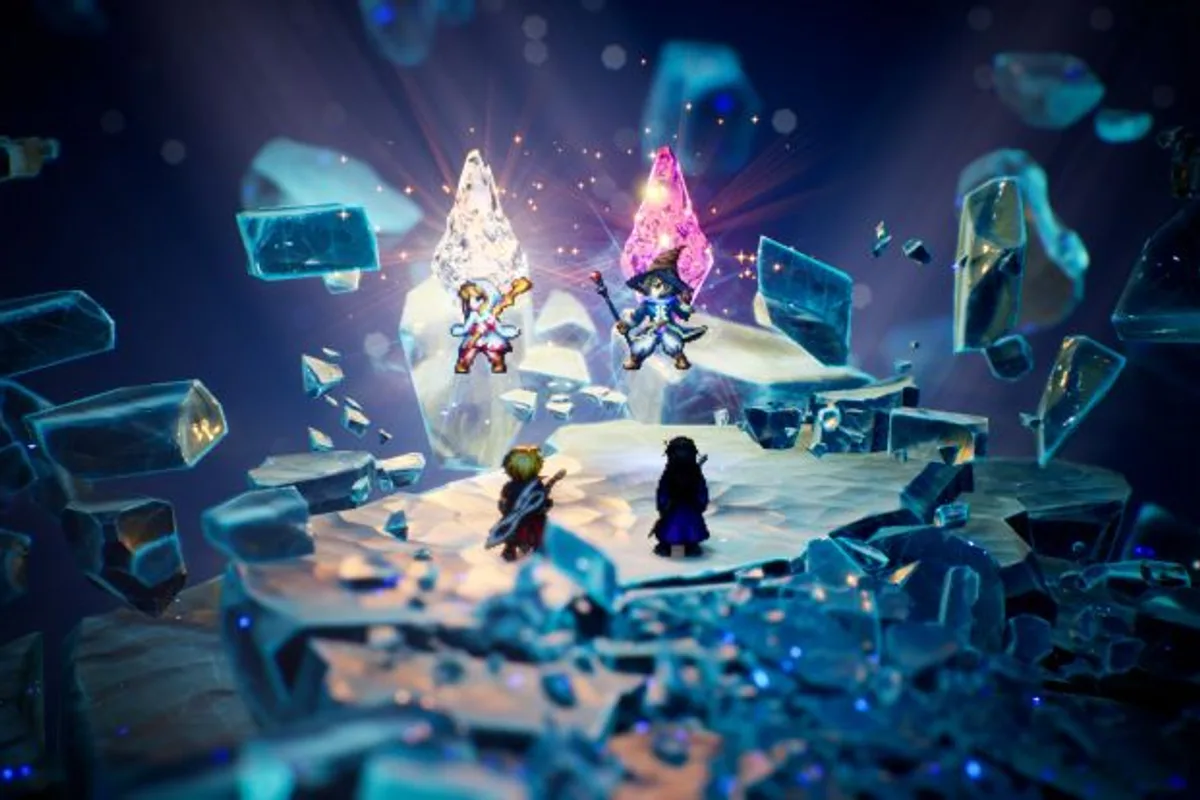
Certain cinematics use a technique that renders 3D computer graphics in pixel form. The intention is to preserve the identity of pixel-based imagery while allowing more dynamic camera work and animation.
This brings several periods of Final Fantasy history into the same visual space. Rather than recreating the graphical limitations of the past, Resonance treats pixel art as a style capable of continuing to evolve.
Familiar heroes become part of the combat system
The Vision system brings celebrated Final Fantasy characters into the adventure as sources of special abilities.
Cloud, Tidus and the Warrior of Light are among the announced heroes, while Sephiroth appears as an optional opponent.
Equipped Visions allow party members to learn abilities and create combinations that extend beyond one character's original skill set.
This gives the crossover elements a practical role in party development. The appearances are not limited to cameos or promotional artwork.
At the same time, Rain, Lasswell and Fina remain the central characters of the narrative. Their own conflicts provide the framework that holds the broader franchise references together.
A return to strategic turn-based combat
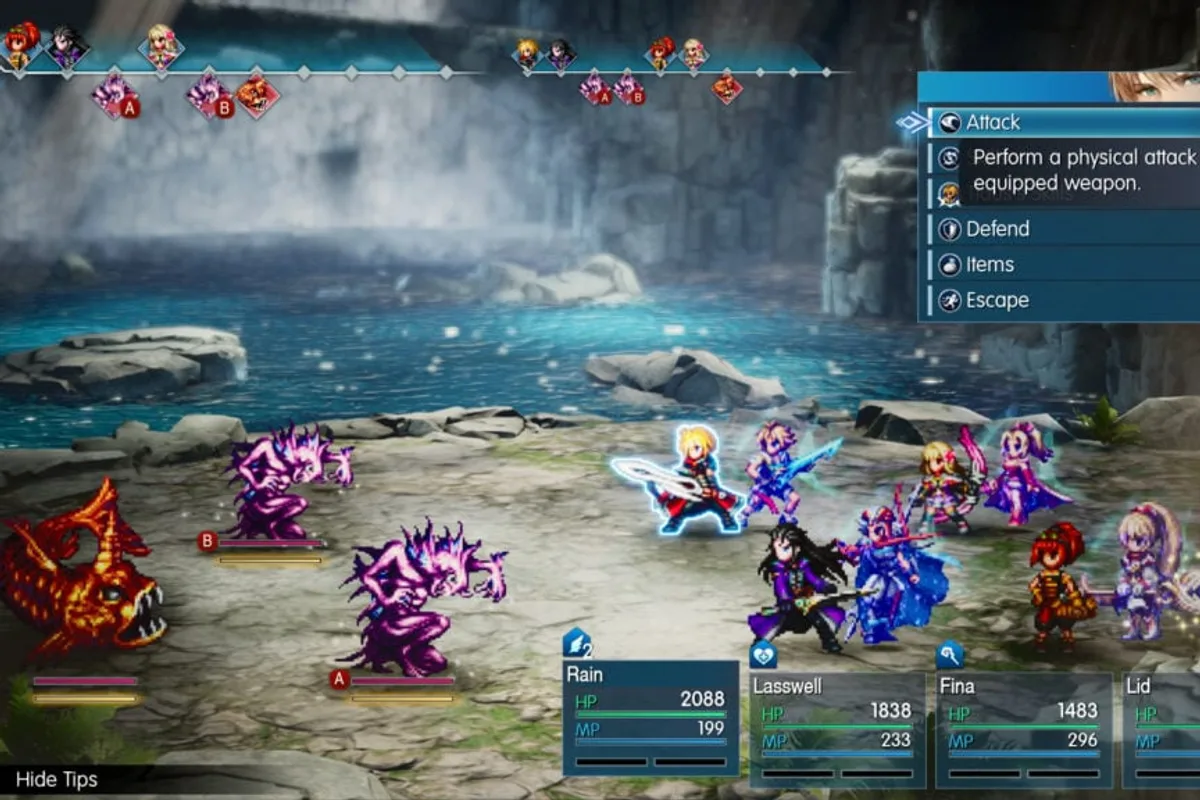
The battle system uses familiar commands but introduces a visible timeline, elemental weaknesses and Stagger mechanics that can interrupt enemies and create additional actions.
Espers can be summoned to fight alongside the party for three turns, followed by a finishing move. Special Resonance abilities add another layer to the Vision system.
Square Enix has also confirmed optional content including the Colosseum, the Chamber of Arms and an Ultima Weapon encounter.
The free demo covers the first chapter, with approximately three to five hours of content according to the publisher. Progress carries over into the complete adventure.
Final Fantasy Resonance launched on October 22, 2026, across PS5, Nintendo Switch, Nintendo Switch 2, Xbox Series X|S and PC.
Its most distinctive idea may be the way it places an old mobile storyline inside an imagined continuation of classic Final Fantasy's visual tradition, allowing the past of the franchise to become the starting point for something newly constructed.