
Elizabeth Banks has already seen the next Hunger Games movie, and she appears to be delighted with what Lionsgate has made.
The actress spoke to Variety at the Airbnb.org Gala in Los Angeles on Wednesday, October 28, sharing her impressions of The Hunger Games: Sunrise on the Reaping.
Banks described the film enthusiastically and offered particular praise for Joseph Zada, who stars as a young Haymitch Abernathy.
Her assessment is significant because she played Effie Trinket throughout the original four-film series and worked alongside Woody Harrelson, whose portrayal of Haymitch became one of the franchise's defining performances.
The remarks were published as the new movie began generating positive reactions following its London premiere.
Several critics and invited attendees have praised the film's emotional intensity, its depiction of the Capitol's brutality and Zada's central performance.
The comments are encouraging for Lionsgate, but they are still preliminary.
Full reviews have not yet been released, and the film's wider theatrical opening remains scheduled for November 20, 2026.
Elizabeth Banks approves of the new Haymitch
Taking over the role of Haymitch Abernathy presents Joseph Zada with a particular challenge.
In the original films, Woody Harrelson portrayed the character as a former Hunger Games winner who had become deeply cynical, alcoholic and emotionally damaged.
Haymitch served as a mentor to Katniss Everdeen and Peeta Mellark, helping them navigate a competition he understood far too well.
His biting humor and apparent indifference often concealed the trauma of his own experiences.
Sunrise on the Reaping moves backward in time to explore the events responsible for that transformation.
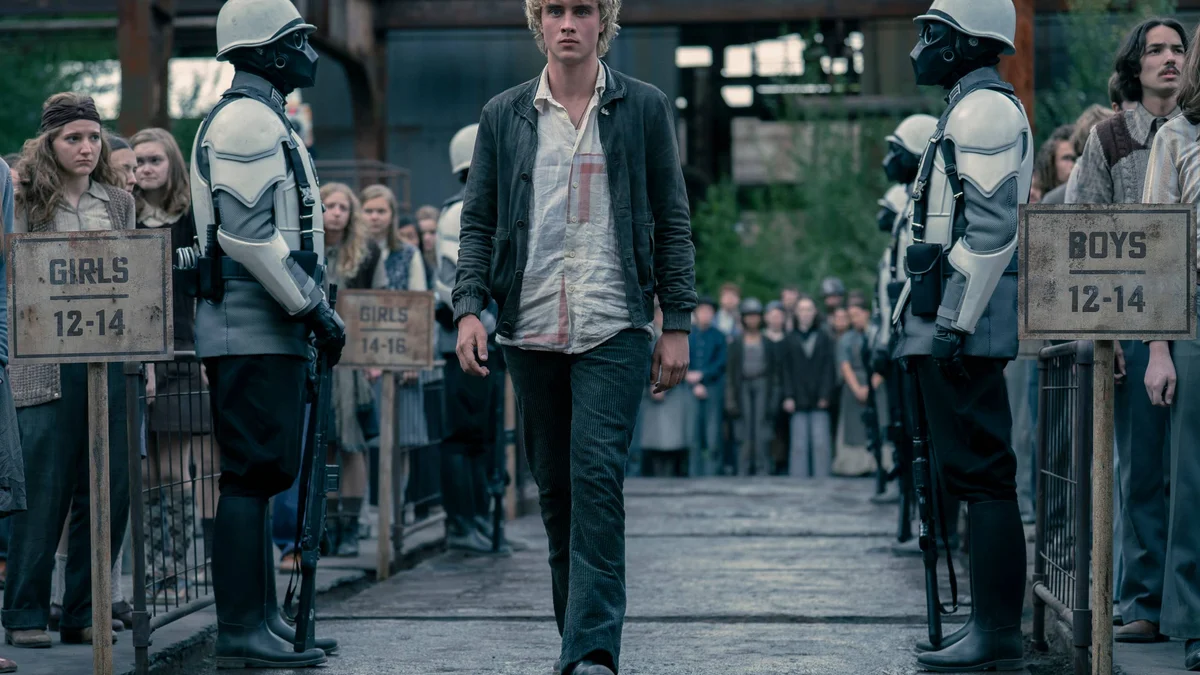
Zada plays Haymitch as a teenager from District 12, before he has experienced the horrors of the 50th Hunger Games.
The performance must therefore feel like an earlier version of a familiar person without becoming a simple imitation of Harrelson.
Banks' response suggests that she believes the casting accomplishes that task.
Her opinion carries weight because of her longstanding association with the franchise.
It should not, however, be confused with an independent critical consensus.
She is a former cast member offering a personal reaction, rather than a reviewer presenting a detailed assessment of the film.
Elle Fanning takes over Effie Trinket
Haymitch is not the only familiar character receiving a younger incarnation.
Elle Fanning portrays Effie Trinket in the new film, stepping into the role previously associated with Banks.
Effie became one of the original series' most visually memorable characters through her elaborate costumes, dramatic hairstyles and almost theatrical devotion to Capitol etiquette.
The new prequel takes place twenty-four years before Katniss Everdeen's story, making a younger interpretation appropriate to its chronology.
Fanning's casting allows the franchise to explore Effie at an earlier point in her life.
Official promotional photographs have already introduced her version of the character.
Her visual presentation retains the flamboyance associated with the Capitol while reflecting a different period in Panem's history.
Banks' enthusiastic response to the new film is therefore noteworthy for another reason.
She is praising a production that also reinterprets one of her own most recognizable roles.
The full extent of Fanning's performance will become clear when the film reaches theaters.
London premiere reactions are unusually enthusiastic
The new movie premiered in London on October 28.
Following the screening, Lionsgate allowed invited critics and attendees to share limited reactions on social media.
Those comments were reported by Variety, TheWrap, NME and Radio Times.
The initial response has been overwhelmingly favorable, with many viewers highlighting Zada's performance as a major strength.
Some have praised the movie's visual design and emotional impact, while others have emphasized the brutal nature of the 50th Hunger Games.
Critic Griffin Schiller compared the film's approach to Rogue One and Andor within the Star Wars franchise.
The comparison suggests a prequel focused on the human cost of resistance and the tragic circumstances that shape a larger story.
Other attendees have described the film as particularly effective in its final act.
These are meaningful early responses, but the context matters.
The impressions come from a limited group of people attending advance screenings.
They do not yet establish how the entire critical community or general audience will respond.

The 50th Hunger Games change the rules
Sunrise on the Reaping takes place twenty-four years before the original Hunger Games story.
Its central character is Haymitch Abernathy, a young resident of District 12 whose life changes when he is selected to compete in the 50th Games.
That edition is known as the Second Quarter Quell.
The Quarter Quells introduce special rules every twenty-five years, reinforcing the Capitol's power over the districts.
For the 50th Games, the government doubles the number of tributes.
Instead of twenty-four teenagers, forty-eight are sent into the arena.
Each district must provide two boys and two girls.
The change makes the competition even more dangerous while amplifying its function as a spectacle of political domination.
Haymitch enters the Games without the cynicism and experience that will eventually define him.
His story is therefore not simply about surviving a dangerous competition.
It concerns the circumstances that turn an ordinary teenager into a traumatized survivor.
Readers of Suzanne Collins' novels already know the broad outcome.
The dramatic question is how that result is achieved and what it costs.
Joseph Zada faced an intimidating first day on set
Earlier in October, Zada discussed his experience filming the prequel in an interview with Variety.
He explained that his first day involved the Cornucopia, one of the most important and dangerous locations in the Hunger Games arena.
The sequence required him to perform alongside dozens of young actors representing the other tributes.
A large drone was used to capture the scene, creating an imposing environment for a young performer beginning his first day on the production.
Zada recalled feeling considerable nervousness before the cameras rolled.
He believed that anxiety helped his performance because Haymitch was also confronting a terrifying situation.
The actor also spoke positively about working with Jesse Plemons and Glenn Close.
His comments offer a glimpse of the scale of the production and the emotional demands of the role.
Haymitch must appear frightened, resourceful and increasingly determined as the circumstances around him deteriorate.
The encouraging early reactions suggest that Zada may have succeeded in making those qualities compelling.
A complete evaluation will have to consider the performance across the entire film.
Francis Lawrence returns to Panem
Francis Lawrence directs Sunrise on the Reaping, continuing a long relationship with the franchise.
He previously directed Catching Fire, both parts of Mockingjay and The Ballad of Songbirds & Snakes.
That experience provides continuity in the visual presentation of Panem and its elaborate systems of control.
Lawrence is familiar with staging the Games, depicting Capitol society and balancing large-scale action with the characters' personal suffering.
The new story creates a different kind of narrative challenge.
Because audiences already know Haymitch survives, the central suspense cannot depend entirely on whether he wins.
Instead, the film must make the process of survival emotionally and dramatically important.
The screenplay is written by Billy Ray, adapting Suzanne Collins' novel published in 2025.
The book expands a period of Panem's history that had previously been known largely through references in the original series.
The movie now has an opportunity to give that history a physical and emotional identity.
An ensemble led by major international performers
The film features an extensive cast of established actors and younger performers.
Ralph Fiennes plays President Coriolanus Snow, taking over the role associated with Donald Sutherland in the original films.
Jesse Plemons portrays Plutarch Heavensbee, while Kieran Culkin plays television host Caesar Flickerman.
Mckenna Grace appears as Maysilee Donner, another District 12 tribute.
Whitney Peak plays Lenore Dove Baird, an important figure in Haymitch's personal life.
Glenn Close joins the ensemble as Drusilla Sickle.
The cast also includes Maya Hawke as Wiress, Kelvin Harrison Jr. as Beetee and Billy Porter.
The combination introduces younger versions of familiar figures and new characters connected to the 50th Games.
It also expands the portrayal of Capitol culture at a period that falls between the two previous timelines explored by the films.
The challenge for the filmmakers is to ensure that the large cast serves the story rather than overwhelming its central protagonist.

The original stars are also expected to return
Reports surrounding the production have confirmed the involvement of Jennifer Lawrence, Josh Hutcherson and Woody Harrelson in the roles of Katniss, Peeta and Haymitch.
Their appearances would connect the events of the 50th Hunger Games with the later experiences of the characters.
Collins' novel includes an epilogue taking place after the original trilogy.
That structure provides a narrative opportunity to revisit the surviving characters in another period of their lives.
The precise construction of the relevant scenes has not been fully detailed in the available promotional material.
It is therefore premature to describe specific conversations or interactions as confirmed.
What matters most is the relationship between Zada's portrayal and the older Haymitch played by Harrelson.
The earlier story provides the experiences that explain the later character's behavior.
That connection is fundamental to the emotional purpose of the prequel.
Panem's violence remains political
The Hunger Games has always used its dystopian setting to examine political authority, propaganda and the transformation of suffering into entertainment.
The Capitol forces children to fight while presenting their deaths as a carefully produced televised event.
Costumes, interviews, sponsorships and elaborate arenas turn violence into a spectacle consumed by an audience.
The 50th Games intensify that contradiction by doubling the number of competitors.
The Quarter Quell becomes both a punishment imposed on the districts and a major entertainment occasion for the Capitol.
The Ballad of Songbirds & Snakes explored an earlier period in which the Games and their political significance were still developing.
Sunrise on the Reaping examines a later moment when the system has become firmly established.
Haymitch's experiences allow the narrative to explore the personal consequences of that institution.
The comparison with Andor and Rogue One reflects this emphasis on individuals whose sacrifices form part of a larger struggle.
Whether the finished movie develops those themes as effectively as the initial reactions suggest will become clearer after broader critical screenings.
Early praise is not the same as a critical consensus
The reaction to the London premiere is undoubtedly encouraging for the studio.
Joseph Zada's performance has attracted repeated praise, and several attendees have described the film as one of the franchise's strongest installments.
But those assessments remain preliminary.
Social-media reactions published immediately after a premiere are not equivalent to full-length reviews.
They tend to emphasize memorable performances, emotional moments and general impressions rather than offer comprehensive analysis.
The embargo on complete reviews also limits what critics can currently discuss.
Elizabeth Banks' enthusiasm should be understood in the same context.
Her long connection to the franchise makes her opinion interesting, but not definitive.
The first wider assessment will emerge when journalists can publish their full reviews and audiences begin seeing the film in theaters.
Sunrise on the Reaping arrives November 20
Lionsgate has scheduled The Hunger Games: Sunrise on the Reaping for theatrical release in the United States on Friday, November 20, 2026.
The film is also planned for IMAX screenings.
International dates may differ depending on local distributors.
The London premiere was an advance screening, not the start of its general theatrical run.
The positive early response gives Lionsgate an important promotional opportunity ahead of release.
It also raises expectations for Zada, whose performance must connect an inexperienced teenager with one of the original franchise's most recognizable characters.
Banks believes he has met that challenge.
Several of the first London viewers appear to agree.
The wider audience will decide for itself on November 20, when the Second Quarter Quell finally reaches theaters.