
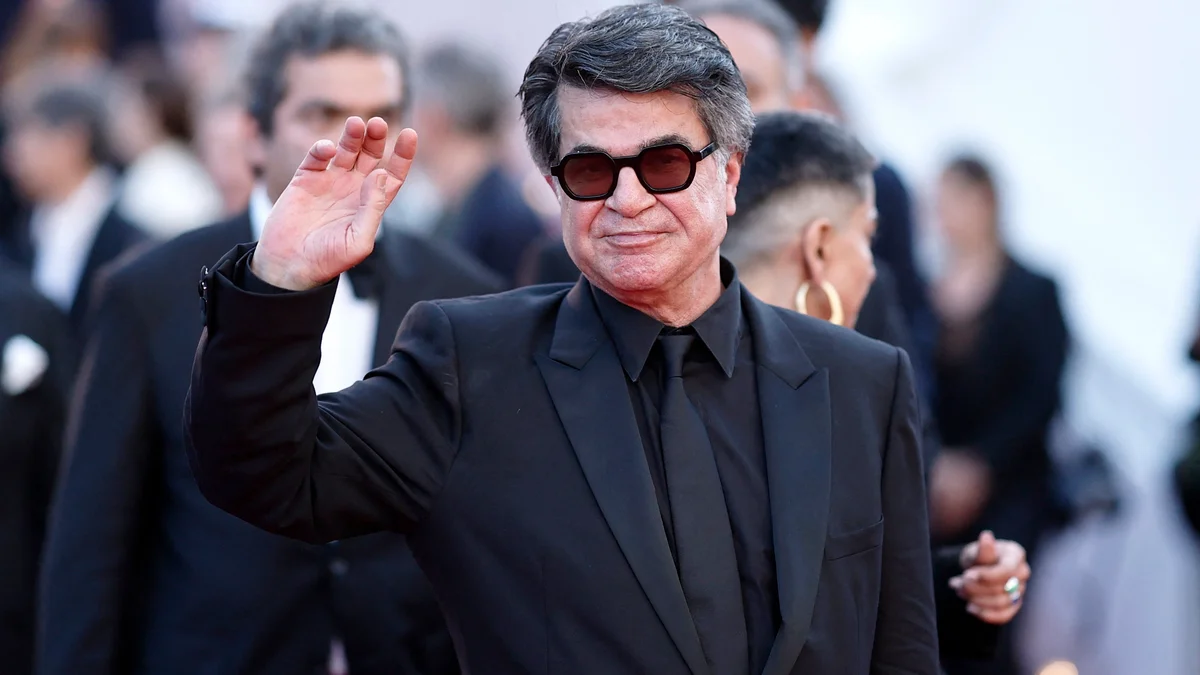
The latest legal development involving Jafar Panahi came to light through an unusual discovery: his bank accounts had been frozen.
According to statements from his lawyer, Mostafa Nili, inquiries with judicial authorities in Tehran revealed that a new prison sentence had been issued against the filmmaker.
Reuters, Associated Press, Variety and Screen International reported the development on October 28, 2026.
The ruling, attributed to Branch 26 of Tehran's Revolutionary Court, imposes a sentence of five years and one month in prison.
The court also reportedly ordered the seizure of Panahi's assets, a two-year travel ban and a two-year restriction on social-media activity.
Nili says the decision was issued without his client being notified of the hearing.
An important distinction is necessary. The existence of a prison sentence does not mean that Panahi has already been imprisoned under the new ruling.
Associated Press reported that the director had not been detained when news of the decision emerged. The sentence can be appealed, and the precise circumstances of its implementation remain unresolved.
How the lawyer discovered the ruling
The procedural circumstances are among the most significant elements of the case.
According to Nili, Panahi learned that his bank accounts had been blocked during the previous week.
The lawyer then approached the relevant authorities in Tehran to determine why the restrictions had been imposed.
During those inquiries, he says he discovered a new conviction that had been handed down without Panahi being informed of the court hearing.
Reports citing the defense indicate that the judicial documents described Panahi as being outside Iran and difficult to contact.
His lawyer disputes that account.
Panahi returned to Iran on March 30, 2026, following an extended period abroad promoting his films. Euronews also reported that he had appeared before an investigative authority in August in connection with another proceeding.
These details come from statements attributed to his legal representative and subsequent reporting. They should not be confused with an independent judicial determination about whether procedural rules were violated.
Nevertheless, the circumstances raise substantial questions about the opportunities Panahi was given to defend himself.
The additional asset-confiscation order could also have significant consequences if implemented, extending the impact of the ruling beyond his freedom of movement.
A separate sentence from the 2025 conviction
The newly reported sentence is not the first recent ruling against the filmmaker.
In December 2025, Panahi received a one-year prison sentence in absentia over allegations of propaganda against the Iranian political system.
That earlier ruling also included travel restrictions and was subsequently upheld on appeal, according to multiple reports.
The five-year-and-one-month sentence reported in October 2026 concerns a separate proceeding.
It would therefore be misleading to automatically combine the sentences and state that Panahi must serve six years and one month in prison.
The existence of different convictions does not, by itself, establish the rules governing how their terms may be implemented or combined.
Nili has also referred to several legal proceedings involving his client.
The complete details of those cases have not been made public in the available reporting.
Most importantly, the specific allegations underlying the newest conviction remain unclear.
The sentence has been reported consistently by major international news organizations, but its legal basis should not be presented as established when the charges themselves have not been publicly explained.
A Palme d'Or winner facing renewed legal pressure
The new ruling arrives less than eighteen months after one of the most celebrated moments of Panahi's filmmaking career.
In May 2025, his film It Was Just an Accident won the Palme d'Or at the Cannes Film Festival.
The film follows a group of people who encounter a man they suspect of having participated in their detention and abuse.
As their suspicions grow, the characters confront questions about responsibility, revenge and the uncertainty of identifying someone who may have committed serious acts of violence.
The film's moral dilemmas carry an obvious resonance with Panahi's own experiences of imprisonment.
It Was Just an Accident was shot clandestinely in Iran with a small crew, continuing the director's long history of making films under restrictions.
His appearance at Cannes in 2025 marked a significant return to the international festival circuit after years in which he had been unable to travel freely.
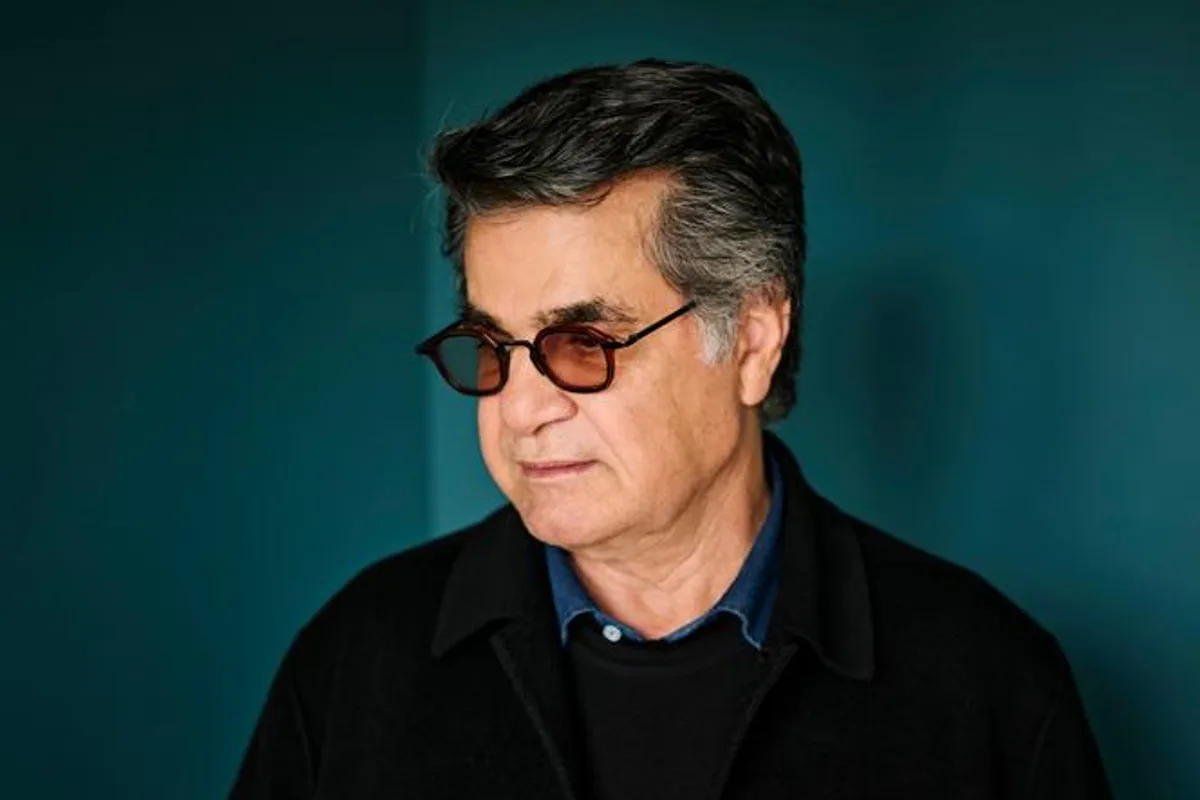
The Palme d'Or brought worldwide recognition to the film, but it did not end the legal difficulties facing its creator.
The contrast is striking. An artist recognized by one of cinema's most influential institutions is again threatened with imprisonment in his own country.
That contrast should not be taken as proof that the latest sentence was imposed specifically because of the Cannes-winning film.
The allegations behind the new ruling have not been publicly clarified, and the available evidence does not establish such a direct connection.
Panahi returned to Iran despite the existing risks
The director returned home on March 30, 2026, after months of international travel connected to It Was Just an Accident.
At the time, he was already facing the earlier one-year sentence.
His return therefore took place under circumstances involving significant legal uncertainty.
The decision also coincided with a period of heightened political and military tensions affecting Iran.
It would be speculative to assign a precise personal motivation to his return without a corresponding statement from Panahi himself.
What is established is that he chose to return while an existing conviction remained part of his legal situation.
That decision now matters because he is physically present in the country where the additional ruling has been issued.
Associated Press reported that an activist and acquaintance who had spoken with the filmmaker after the sentence was issued said he had not been taken into custody at that point.
The report establishes his status at the time of that conversation, rather than guaranteeing that the situation cannot change.
A filmmaking career shaped by restrictions
Panahi's conflict with Iranian judicial authorities extends back many years.
In 2010, he received a prison sentence accompanied by significant restrictions on his ability to direct films, travel and participate in public activities.
Rather than ending his work, those limitations contributed to the development of increasingly resourceful filmmaking methods.
This Is Not a Film, made with Mojtaba Mirtahmasb and released internationally in 2011, examined his restricted circumstances while challenging the distinction between documenting daily life and creating cinema.
Its very title became part of that artistic response.
Taxi, which won the Golden Bear at the Berlin International Film Festival in 2015, followed Panahi as he drove through Tehran and encountered different passengers.
The film used a deliberately limited setting to open conversations about everyday life and social tensions.
Other important works include The Circle, Offside and No Bears, films that demonstrate how his interest in personal freedom and social restrictions has evolved across different narrative forms.
In 2022, the filmmaker was arrested again.
He spent approximately seven months in custody before being released in February 2023 after beginning a hunger strike.
The experience preceded the production of It Was Just an Accident and provided important personal context for its exploration of detention, responsibility and revenge.
The implications for artistic freedom
The latest ruling raises questions that extend beyond one filmmaker's professional future.
Restrictions on travel can affect a director's ability to participate in film festivals, attend production meetings and communicate with international collaborators.
For a filmmaker whose work regularly circulates internationally, those consequences are practical rather than merely symbolic.
A ban on social-media activity can also restrict communication about artistic projects and public statements.
An asset-confiscation order, if enforced, has the potential to affect financial stability and the resources needed for future work.
Taken together, the reported measures could significantly constrain Panahi's ability to continue making and presenting films.
At the same time, it is essential to distinguish the wider debate over artistic freedom from the legal facts of this specific proceeding.
The reported court decision, its accompanying restrictions and the defense lawyer's account are identifiable elements of the case.
The precise charges, the reasoning behind the ruling and the future handling of the proceedings have not been fully established in the public record available through international reporting.
That uncertainty makes careful attribution especially important.
What happens next remains uncertain
As of October 29, 2026, the new sentence against Panahi remains subject to potential appeal.
The reported measures include more than five years in prison, asset confiscation and two-year restrictions on foreign travel and social-media use.
The exact legal grounds for the new conviction have not been publicly clarified.
Nor has it been established how the latest sentence would interact with the earlier one-year term.
The filmmaker was not reported to be in custody when the first accounts of the ruling emerged.
For the international film community, the case comes at a particularly consequential moment.
Panahi returned to Cannes in 2025 with a work that examined how people respond to violence and the temptation of revenge.
Now the director faces another legal decision that could remove him from the public and professional life of cinema for an extended period.
His career has repeatedly demonstrated that filmmaking can continue under severe constraints. The new ruling, however, threatens to make those conditions more difficult once again.