
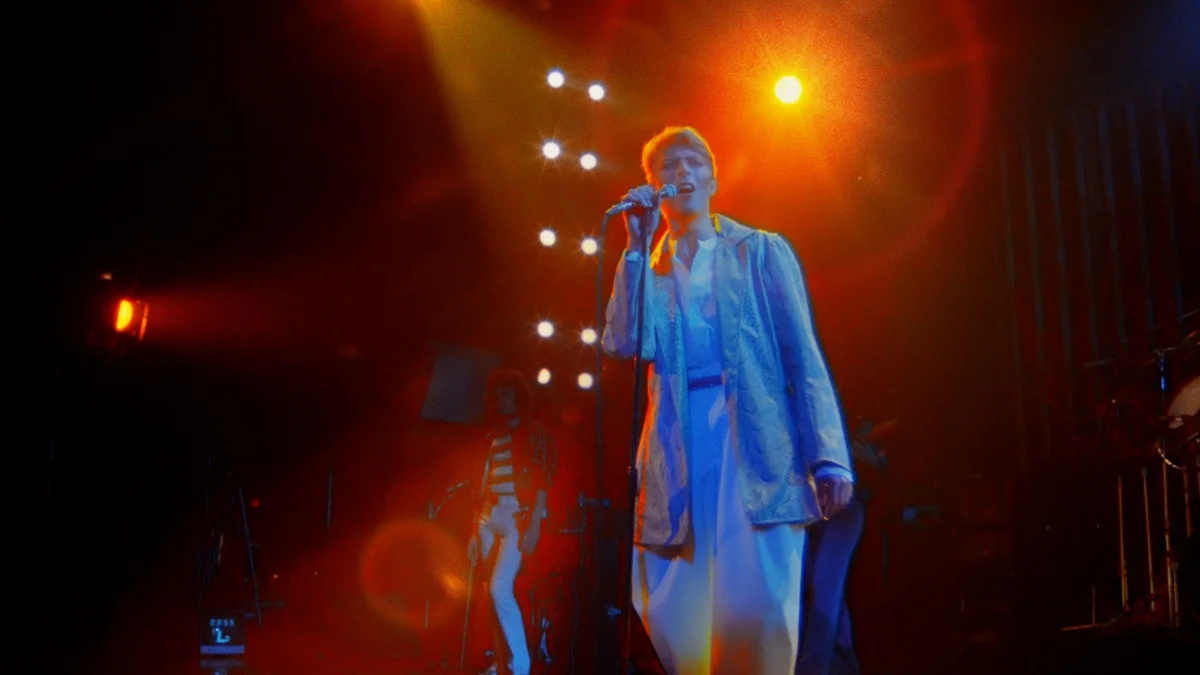
Almost fifty years ago, David Bowie arranged for his performances at London's Earls Court to be filmed.
The concerts took place during his 1978 Isolar II tour, as he performed music from Low and "Heroes" alongside earlier material from his extensive catalog.
The recordings were intended to become a concert film, with actor and filmmaker David Hemmings directing the production.
But Bowie was dissatisfied with the result, and the proposed film never received its planned release.
The footage remained in his archives as his career continued through further musical reinventions.
On October 27, 2026, the David Bowie Estate and Wonderworld announced that the material had become the foundation for a new audiovisual production called David Bowie "Stage".
The experience has been developed with Brett Morgen, the filmmaker behind Moonage Daydream, and will receive its world premiere at Berlin's Uber Arena on February 14, 2027.
The event forms part of the 77th Berlin International Film Festival and is designed to occupy a space somewhere between theatrical cinema and a major live concert presentation.
The archive discovery behind Stage
Morgen encountered the original concert footage while researching Moonage Daydream, his 2022 documentary about Bowie's creative life.
That film was built around archival performances, interviews and audiovisual experimentation rather than a conventional chronological biography.
During his research, Morgen discovered material from the Earls Court concerts that had remained largely unseen since 1978.
The recordings offered an opportunity to examine Bowie during one of his most adventurous musical periods, performing with a remarkable touring band.
Some footage from the same archival material contributed to Moonage Daydream, but Morgen recognized the possibility of a much larger project dedicated to the concerts themselves.
Discussions about a new presentation began with the Bowie Estate in 2018.
The idea developed gradually. In 2024, the involvement of Rob Hallett, former president of AEG International and founder of Wonderworld, helped establish the framework for a large-scale touring experience.
Rather than simply preparing the film for a conventional cinema release, the creative team began designing a presentation that could occupy major indoor arenas.
That change in scale distinguishes Stage from an ordinary archival documentary.
Bowie's 1978 tour deserves a closer look
The Isolar II tour took place at a crucial moment in Bowie's musical development.
He had moved beyond the theatrical identities that dominated his early success and was exploring new musical directions shaped by his work with Brian Eno and Tony Visconti.
Low and "Heroes" introduced a sound that blended rock with electronic experimentation and instrumental compositions.
The 1978 performances brought that material into a concert setting alongside songs audiences already knew.
The set included tracks such as Rebel Rebel, Fame, The Jean Genie, Suffragette City and Ziggy Stardust, as well as work from his more recent albums.
The band was an essential part of the experience.
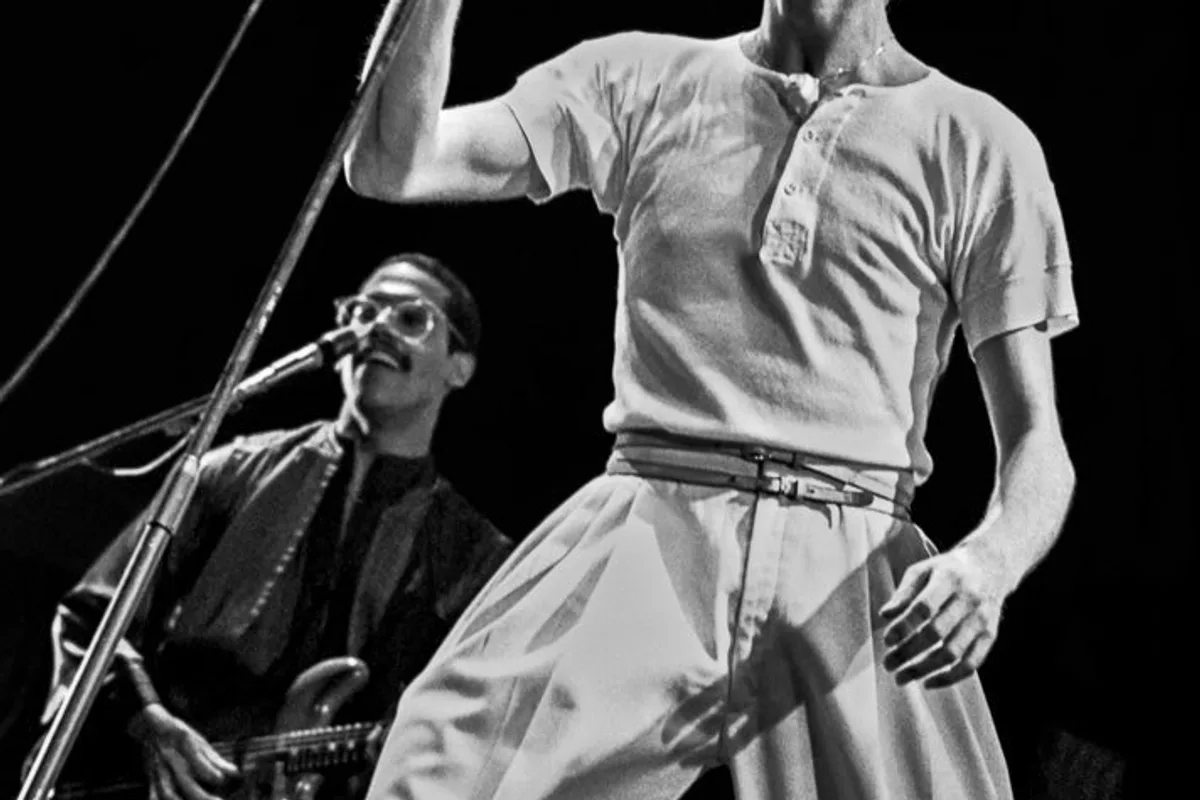
Adrian Belew played lead guitar, Carlos Alomar handled rhythm guitar and musical direction, George Murray played bass and Dennis Davis performed on drums.
Roger Powell contributed keyboards and synthesizers, Sean Mayes played piano and Simon House performed on electric violin.
Together, they allowed Bowie's songs to move between atmospheric electronic passages and powerful rock performances.
The newly restored footage therefore preserves more than the image of a famous singer.
It documents a specific group of musicians interpreting an important body of work during a period of considerable experimentation.
More than a concert film on a large screen
The producers of Stage are not proposing an ordinary theatrical screening.
The presentation uses multiple projection surfaces, including transparent LED displays, integrated with a large-scale lighting system.
The aim is to create the impression that Bowie and his musicians are occupying the stage in front of the audience.
That approach requires the images to function as part of a physical performance environment rather than as a single rectangle at the front of a cinema.
Lighting designer Patrick Woodroffe is responsible for the visual lighting concept. His previous work includes major concert productions for the Rolling Stones and Elton John.
Oscar-winning sound engineer Paul Massey, whose credits include Bohemian Rhapsody and Moonage Daydream, is responsible for the immersive audio design.
The system includes a 7.1 surround mix and spatial audio techniques developed for large venues.
Wonderworld describes the production as scalable for auditoriums and arenas accommodating at least 5,000 people.
The use of multiple screens also changes the relationship between the audience and the footage.
A conventional concert film usually directs the viewer's attention through editing. With several images distributed across a large performance space, spectators may have greater freedom to decide where they look.
The result is intended to feel closer to attending a live performance, although the images and music remain historical recordings rather than a new concert by Bowie.
Brett Morgen's restoration is also an act of filmmaking
Preparing the original material required substantially more than cleaning and transferring old film.
Morgen has spent years restoring the images, adjusting their colors, reconsidering the editing and adapting the footage to a new presentation format.
The production announcement describes extensive color work and manual interventions designed to recover detail and achieve a consistent visual result.
The filmmaker has also emphasized longer uninterrupted takes.
That choice allows viewers to spend more time observing Bowie and the musicians as they perform, rather than experiencing the music through a continuous sequence of rapid edits.
It reflects an important difference between concert filmmaking and many conventional music documentaries.
A documentary may use a brief performance excerpt to support a biographical argument. Stage is intended to make the musical performance itself the principal subject.
The final presentation draws from concerts recorded at Earls Court, so it should not automatically be understood as an untouched chronological record of a single evening.
Morgen is assembling a new work from historical material.
The distinction matters when evaluating the project. It promises an authentic record of Bowie's performances, but the finished audiovisual structure is a contemporary artistic interpretation.
Why Berlin is the right place for its premiere
The recordings were made in London, but the first public presentation will take place in Berlin.
The city has an important place in Bowie's biography.
During the late 1970s, he lived in Berlin and explored new musical approaches through collaborations with Eno and Visconti.
The albums Low and "Heroes" emerged from that period, helping reshape his artistic identity.
Returning the music of the Isolar II tour to Berlin therefore connects the concert performances with the environment that influenced much of their material.
The Berlin International Film Festival confirmed the world premiere for February 14, 2027, during its 77th edition, which runs from February 10 through February 21.
Festival director Tricia Tuttle has welcomed the project as an example of how cinema, music and new forms of audiovisual storytelling can intersect.
Morgen is also expected to participate in the European Film Market's talks program, with further details still to be announced.
The premiere will take place at the Uber Arena rather than a traditional festival cinema, reinforcing the unusual scale and format of the presentation.
The expanding market for archival performances
Stage also reflects a broader interest in finding new formats for historically important music performances.
Restored concert films, immersive exhibitions and digitally mediated live events provide opportunities for audiences to revisit recordings that were previously difficult to experience outside home viewing.
The Bowie production differs from projects built around newly created digital performers.
Its central attraction is the original filmed performance.
The creative team is using contemporary technology to change how those recordings are displayed and heard, not to present a completely new performance invented decades after the artist's death.
That approach raises questions about the relationship between preservation and artistic transformation.
Restoring a concert can reveal details lost through deteriorated film or outdated presentation technology.
But choosing new edits, altered colors and spatial arrangements also changes the experience of the performance.
The producers emphasize their commitment to Bowie's legacy. Whether the presentation achieves the desired balance between archival authenticity and theatrical spectacle will become clearer when the work is shown.
At this stage, the official announcement establishes the technology and creative approach, not the audience's eventual response.
Berlin tickets and the proposed international rollout
The world premiere is scheduled for Sunday, February 14, 2027 at 8 p.m. local time, with doors opening at 6 p.m., according to the Uber Arena.
Ticket presales began on October 28, 2026. General sales are scheduled for October 30 at 10 a.m. Central European Time.
Wonderworld intends to bring Stage to additional international arenas, but the initial announcement does not contain a complete confirmed tour itinerary.
The Berlin premiere is therefore the principal event with an established date and venue.
The project also arrives during preparations for Bowie80, a series of events and releases celebrating what would have been David Bowie's 80th birthday in 2027.
Bowie died on January 10, 2016.
Stage cannot recreate the experience of seeing him perform in person, and its producers are not presenting it as a newly recorded live show.
What it can offer is something different: a carefully restored record of a remarkable musician and band performing in 1978, finally presented on the scale its creators believe the footage deserves.
For those who never saw Bowie live, that may be the closest opportunity to experience the atmosphere of this particular tour. For longtime fans, it represents the long-delayed discovery of performances that remained hidden for almost half a century.