
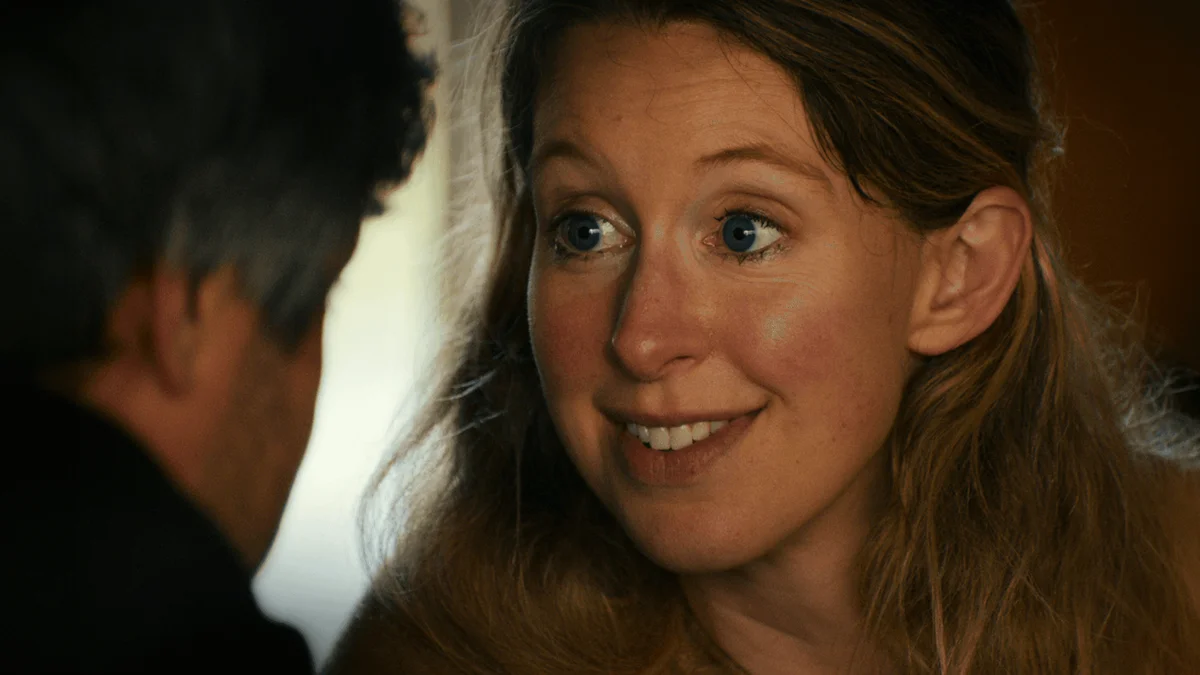
Ten days after its theatrical debut, You Can See Everything has accumulated $45.1 million at the North American box office. That would be an impressive figure for many independent films. For a documentary running almost three hours, it is exceptional.
The film earned an estimated $19.5 million between October 23 and October 25, according to box office figures compiled by The Numbers. That represents a roughly 25% increase from its $15.6 million opening weekend.
It finished second on the weekend chart behind Clayface, the DC Studios horror movie that opened with approximately $24 million domestically.
The contrast between the two films highlights the unusual nature of A24's success. Clayface draws from a familiar comic-book property. You Can See Everything examines a disgraced Silicon Valley entrepreneur whose criminal case has already been explored extensively in books, television and journalism.
Yet the documentary is generating enough theatrical interest to compete with a much more conventional genre release.
The theater expansion explains part of the surge
A24 released You Can See Everything in 855 North American theaters on October 16. The film earned approximately $15.6 million during its opening weekend, giving it a remarkable average of more than $18,000 per theater.
For the second weekend, the distributor expanded its footprint to 2,655 locations. The additional 1,800 theaters dramatically increased access to the documentary.
This distinction is essential when interpreting its box office growth. A 25% increase in total revenue does not mean that ticket sales at existing theaters rose by the same amount.
In fact, the average weekend gross per location fell to approximately $7,350. That decline is consistent with a large expansion into additional markets.
What makes the performance unusual is the film's ability to increase overall earnings rather than experience the substantial second-weekend drop more commonly associated with wide releases.
The documentary has also become one of the year's most discussed specialty releases, giving A24 a commercially significant success beyond its conventional scripted-film slate.
What happens when a convicted fraudster controls the camera access?
The documentary begins 34 days before Elizabeth Holmes enters federal prison in May 2023.
Holmes invites Nathan Fielder and Lance Oppenheim to film her life with her partner Billy Evans and their children during the final weeks before her sentence begins.
She had founded Theranos, a company that claimed its technology could conduct extensive medical blood testing using extremely small samples. Investigations later exposed serious problems with the company's technology and the reliability of its testing claims.
In 2022, Holmes was convicted on charges relating to fraud against investors. She received a prison sentence exceeding eleven years. Her former business partner, Sunny Balwani, was also convicted in connection with the company's conduct.
The criminal judgment is established. The filmmakers' challenge is different: determining how much can be understood about Holmes through the private world she chooses to show them.
According to Associated Press reporting, Fielder stayed in a guest house at the family's California property during the project. The film eventually developed into a three-year undertaking that extends beyond the initial period before Holmes's imprisonment.
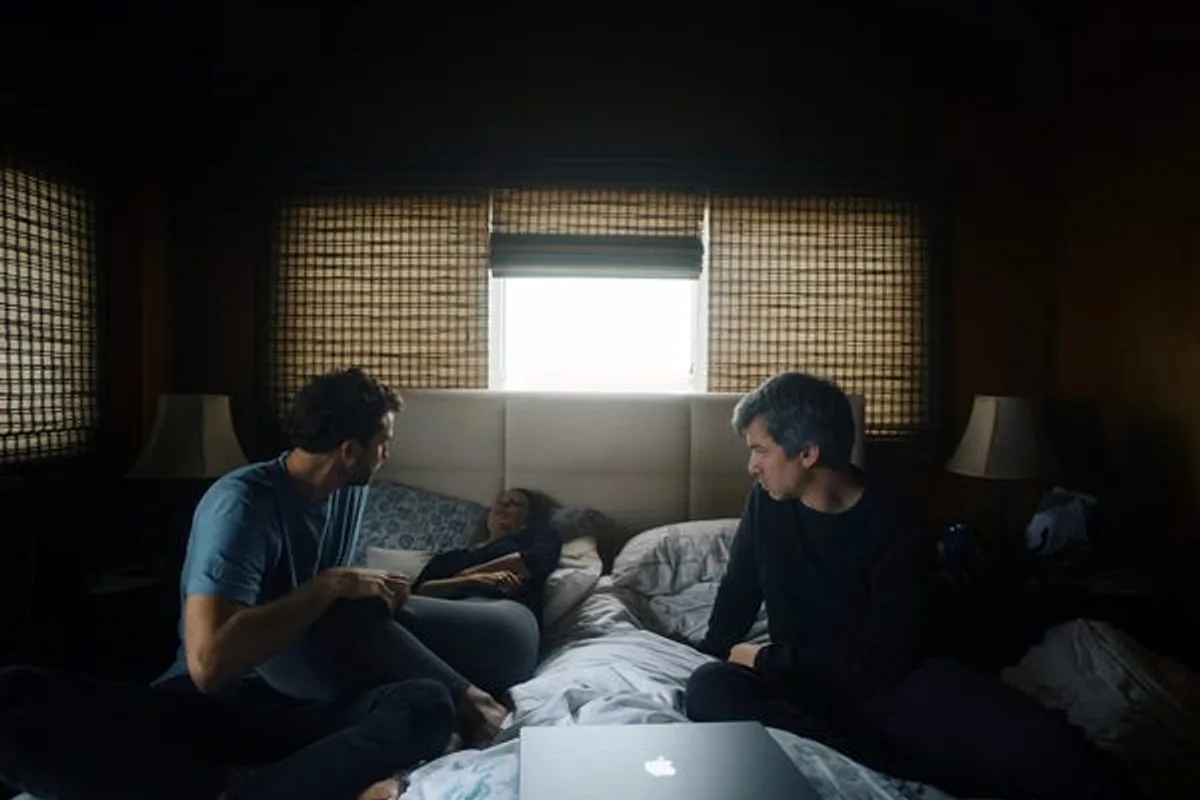
Its storytelling incorporates constructed situations and recreations alongside documentary observation, complicating the distinction between recorded events and deliberately arranged scenes.
That combination is part of the film's identity rather than a conventional attempt to reconstruct the chronology of the Theranos scandal.
Nathan Fielder brings an unusual filmmaking method
Fielder's previous work helps explain why this project has generated such intense curiosity.
In Nathan for You and The Rehearsal, he explored the uncomfortable relationship between reality, performance and carefully designed social situations. His work frequently places participants in environments where seemingly ordinary interactions become elaborate experiments.
Elizabeth Holmes presents a particularly challenging subject for that approach. Her public identity was shaped by confident claims about technological breakthroughs that were later contradicted by evidence about Theranos's actual capabilities.
The documentary therefore confronts questions about credibility, personal presentation and the limitations of observation.
A person can appear convincing on camera without being truthful. Equally, a filmmaker's skepticism does not automatically provide an objective interpretation of everything being recorded.
Fielder and Oppenheim had to navigate those problems while working with someone whose financial and personal history was already the subject of intense public scrutiny.
Oppenheim revealed in an interview discussed by Variety that Fielder negotiated a provision allowing the filmmakers to abandon the project if they failed to discover a sufficiently original approach.
That uncertainty was understandable. The Theranos story had already inspired numerous accounts, including Alex Gibney's documentary The Inventor and Hulu's The Dropout, in which Amanda Seyfried portrayed Holmes.
One of the biggest documentary openings in decades
Even before its second-weekend growth, You Can See Everything had achieved an important commercial milestone.
Its $15.6 million domestic debut was the largest opening weekend for a documentary in North America since Michael Moore's Fahrenheit 9/11 in 2004.
The result is especially notable because the film is not a concert documentary, a musical performance or a release supported by an enormous fan community surrounding a global entertainer.
Its subject is a financial and technological fraud case. Its running time is approximately 174 minutes, and it carries an R rating for language and some graphic nudity.
Those characteristics would ordinarily suggest a more limited theatrical audience. Instead, the documentary has become an event that attracts viewers interested in both the Theranos scandal and Fielder's distinctive storytelling style.
The project's unexpected debut at the Telluride Film Festival contributed to its initial visibility. Subsequent festival appearances and critical discussion helped establish anticipation before its October release.
The precise contribution of word of mouth to ticket sales cannot be measured from box office figures alone, but the film's growing commercial footprint shows that interest has extended well beyond its initial specialty audience.
A24 has a potential major financial winner
The Numbers lists the documentary's production budget at approximately $7 million.
Its $45.1 million North American gross already exceeds that reported production cost by a substantial margin, although the comparison should not be confused with net profit.
Theaters retain a portion of ticket receipts, while marketing and distribution expenses are separate from the production budget. The full financial return to A24 cannot be calculated solely from the publicly reported figures.
Nevertheless, the film's commercial position is considerably stronger than its modest production scale might have suggested.
In an October 26 analysis, TheWrap discussed the possibility of an $80 million domestic total and a worldwide run exceeding $100 million. These are projections, not confirmed future earnings.
Reaching such figures would place You Can See Everything among the most commercially successful documentaries in theatrical history.
Its eventual global total will also depend on international distribution. Sony Pictures is handling overseas releases in several markets under its agreement with A24.
International audiences are still waiting
You Can See Everything opened in US theaters on October 16, but the international release schedule is staggered.
Sony Pictures Germany lists December 3, 2026 as its German theatrical release date. French film listings currently schedule a December 30 premiere through Metropolitan FilmExport.
The film has therefore not yet completed its international theatrical rollout, and its current $45.1 million total largely reflects North American business.
This leaves considerable uncertainty surrounding its final worldwide gross. Its performance outside the United States will help determine whether the exceptional domestic start develops into an even larger international success.
For A24, the immediate achievement is already clear. A lengthy documentary about Elizabeth Holmes has moved from an unexpected festival premiere to a competitive theatrical release, earning more in its second weekend than it did in its first.