

Four years after Amanda Seyfried portrayed Elizabeth Holmes in The Dropout, audiences are returning to the series in unexpectedly large numbers.
The eight-episode Hulu drama, originally released in March 2022, charts the rise and collapse of Theranos, the medical technology company whose promises about revolutionary blood testing proved fraudulent.
The show has not been revived. No new episodes have appeared, and no second season has been announced.
Instead, attention has returned because another production about Holmes has become one of the most talked-about documentary releases of the year.
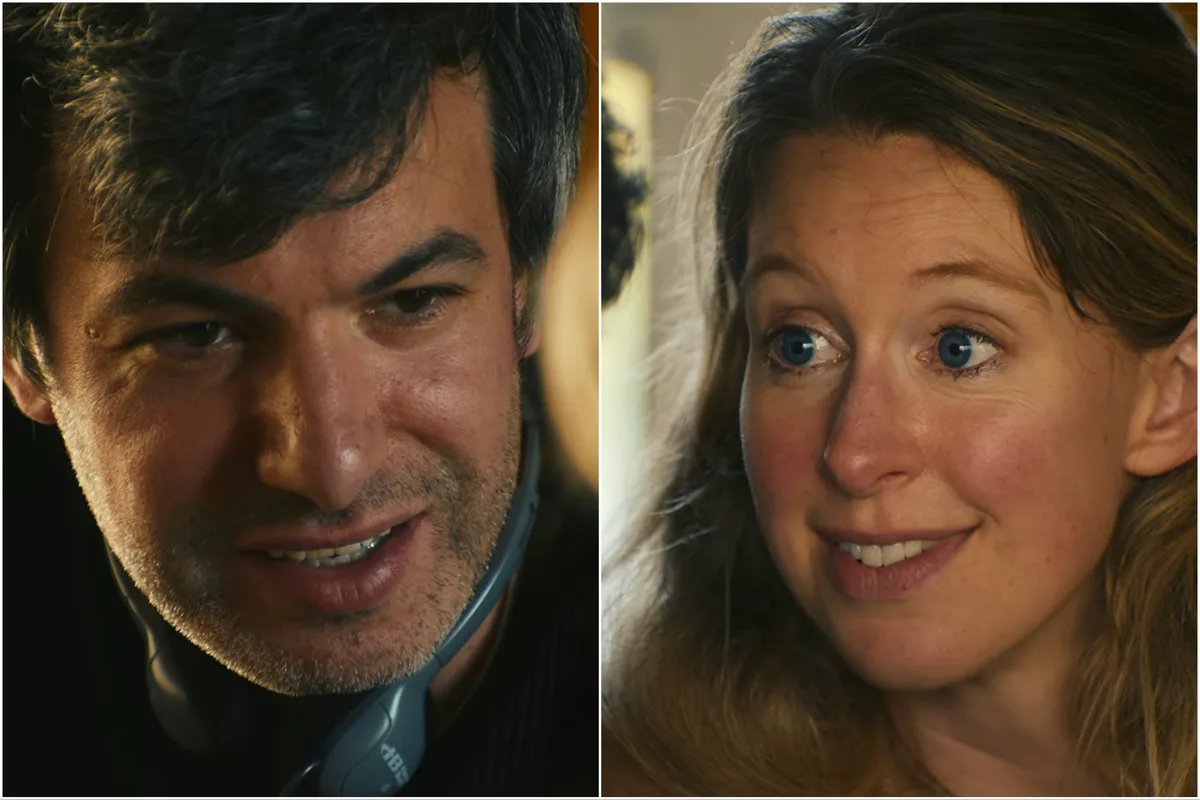
A24's You Can See Everything, directed by Nathan Fielder and Lance Oppenheim, was announced in September and opened in US theaters on October 16.
The film has generated substantial interest in Holmes, whose rise and downfall have already been explored extensively through television, journalism and books.
The resulting streaming numbers demonstrate how closely the audiences for different forms of storytelling can overlap, even when the works belong to separate companies and were released years apart.
One month transformed the series' viewing figures
The figures published by Variety are striking.
The Dropout accumulated approximately 420,000 viewing hours in August 2026.
In September, that figure rose to around 1.2 million hours, an increase of 186% according to the publication.
Variety also expressed the totals as estimated complete-series views, dividing total hours by the show's approximately seven-hour runtime.
That calculation produced approximately 62,000 equivalent views for August and 176,000 for September.
These estimates should not be mistaken for unique viewers.
An individual could watch selected episodes, complete the entire series or return to portions of it. Aggregated viewing hours do not identify precisely how many different people were responsible.
The resurgence continued in October.
During the week beginning October 12, The Dropout accumulated approximately 422,000 viewing hours, representing a 92% increase over the preceding week.
In practical terms, seven days of viewing slightly exceeded the total recorded across the entire month of August.
By the time Variety published its report, the series had accumulated roughly 997,000 viewing hours in October.
Those figures establish a significant return of attention to a show whose original release was completed several years earlier.
Not every analytics provider reports the same percentage
There is an important distinction between the figures reported by different publications.
Forbes separately cited data from Luminate, a company that tracks entertainment consumption.
Its September figures indicated approximately 36.6 million minutes viewed, compared with around 11.3 million in August.
That represents an increase of more than 220%, rather than Variety's 186%.
Both sets of measurements describe strong growth, but they should not be treated as identical data series.
The publications do not provide enough matching methodological detail to reconcile the differences definitively.
The geographical coverage, measurement conventions or datasets may differ. Without a transparent reconciliation, selecting one total and combining it with the other source's percentage would be misleading.
The most defensible conclusion is that The Dropout experienced a substantial increase in viewing activity during September, independently reflected in more than one set of reported statistics.
The 186% headline belongs specifically to the figures published by Variety on October 21.
A secretive documentary reignited the Holmes story
The timing of the increase is closely associated with the announcement of You Can See Everything.
A24 revealed the documentary in early September after it had been produced largely outside public view.
The project received a surprise presentation at the Telluride Film Festival and immediately attracted attention because of its directors and subject.
Nathan Fielder is known for projects that blur the line between staged scenarios and documentary observation, including Nathan for You and The Rehearsal.
His collaboration with Lance Oppenheim offered a potentially unusual perspective on Holmes, whose career at Theranos had already involved highly theatrical public promises.
The film follows aspects of Holmes' life before she entered prison following her conviction for fraud.
Rather than functioning merely as another chronological account of the Theranos scandal, the documentary examines how Holmes presents herself, interacts with people around her and attempts to shape perceptions of her actions.
That gives it a different perspective from The Dropout.
The Hulu drama reconstructs the company's development and collapse through scripted performances. The documentary examines the real individual at the center of the scandal through a more experimental filmmaking approach.
Audiences interested in either work may therefore become curious about the other.
However, the viewing statistics cannot prove exactly how many people followed that path or what specifically motivated them.
The documentary's theatrical success amplified the attention
You Can See Everything opened in American theaters on October 16 and delivered an unusually strong performance for a non-musical documentary.
Variety reported approximately $15 million in opening-weekend revenue from 855 theaters.
A24 also reported more than 2,000 sold-out screenings during the release period.
Those results are remarkable because documentary films generally do not reach the same opening-weekend revenues as large fictional releases.
The film's theatrical success helped sustain news coverage around Holmes well beyond the initial announcement.
That coverage included discussion of her criminal conviction, the documentary's unusual structure and the broader history of Theranos.
The Dropout became part of the renewed cultural conversation.
Still, cinema ticket sales and streaming hours measure different activities.
The documentary's box-office figures cannot be converted directly into the series' audience or used to determine how many moviegoers later watched the Hulu production.
The numbers instead reveal simultaneous commercial interest in different works centered on the same real-world subject.
Amanda Seyfried's portrayal remains the definitive fictional reference
The renewed interest also demonstrates the enduring appeal of The Dropout itself.
Created by Elizabeth Meriwether, the drama follows Holmes from her ambitions as a young entrepreneur to the eventual exposure of Theranos' fraudulent operations.
Amanda Seyfried's performance was one of the production's central attractions.
She adopted elements of Holmes' recognizable public presentation, including her distinctive voice, appearance and carefully constructed identity as a visionary technology founder.
Naveen Andrews played Sunny Balwani, whose relationship with Holmes was central to both her personal life and the operations of Theranos.
The supporting ensemble included William H. Macy, Laurie Metcalf, Elizabeth Marvel and Sam Waterston.
The series was produced by Searchlight Television and 20th Television and premiered on Hulu in the United States in March 2022.
It was also distributed through Disney+ in several international territories.
Seyfried won the 2022 Primetime Emmy Award for outstanding lead actress in a limited or anthology series or movie.
Her portrayal remains a prominent cultural representation of Holmes, making the series a natural destination for audiences encountering the scandal through the new documentary.

Search interest has risen alongside viewing
The viewing increase is only one part of the picture.
JustWatch, a service that helps users find movies and television programs across streaming platforms, also reported a significant rise in searches for The Dropout.
According to information shared with Variety, the show's search points increased by 200% week over week following the documentary's release.
The series reached tenth place in the service's contemporary streaming search rankings.
These figures measure a different type of interest from viewing hours.
A person searching JustWatch may be trying to identify where the program is available, reading basic information about it or deciding whether to watch.
The search itself does not establish that a viewing session followed.
Nevertheless, the combination of search activity and reported viewing growth suggests that the series has become more visible to audiences.
It also highlights an important aspect of contemporary streaming distribution: availability information can influence how easily renewed cultural attention turns into actual consumption.
The resurgence extends to books and podcasts
The renewed attention to Elizabeth Holmes has reached well beyond television.
John Carreyrou's 2018 book Bad Blood: Secrets and Lies in a Silicon Valley Startup documents the reporting that exposed Theranos' claims and business practices.
The book returned to bestseller discussions as the documentary attracted attention.
Forbes reported that paperback sales were up 36% year to date compared with the equivalent period the previous year, citing Circana BookScan figures.
Audio consumption has increased as well.
According to Spotify figures shared with Forbes, US streams of the Bad Blood audiobook increased by 715% between September 23 and October 13 compared with the four weeks preceding the documentary's Telluride premiere.
The Dropout podcast from ABC News also saw significant increases in listening, as did Bad Blood: The Final Chapter.
These percentages represent different time periods and measurement methods.
They cannot be combined into a single reliable estimate of total interest in the Holmes story.
They do, however, demonstrate that the documentary's arrival coincided with greater engagement across several media formats.
A contemporary theatrical release is bringing renewed attention to investigative journalism, scripted television and documentary audio produced years earlier.
Old streaming titles can become new events
For the streaming industry, The Dropout offers an unusually clear example of a catalog title finding a second period of relevance.
The miniseries has not changed. Its eight episodes remain the same story audiences could watch in 2022.
What has changed is the cultural environment around it.
A new documentary has encouraged public discussion of Holmes, making previously released accounts of her rise and fall newly relevant.
That attention has benefited an older scripted series even though the documentary was produced by a different company and released in theaters.
The phenomenon shows how individual subjects can travel across commercial and distribution boundaries.
An A24 film may raise awareness of a Hulu production, while the same public conversation can encourage purchases of an investigative book or listening to an established podcast.
For platforms with extensive libraries, that creates opportunities beyond promoting their latest original releases.
A show can receive substantial new attention years after its premiere without additional production investment in new episodes.
But the specific scale of this case should not be generalized too broadly.
Elizabeth Holmes is a widely recognizable figure. Theranos remains a notable example of Silicon Valley fraud. Seyfried's performance received major awards recognition, and Fielder's documentary has attracted unusually strong interest of its own.
The interaction among those factors is likely important, even though available data cannot determine their individual influence.
What the figures cannot establish
The increase deserves attention, but it also requires careful interpretation.
First, Variety's reported viewing hours should not automatically be labeled as global or French totals. The publicly available report does not fully establish a territory that would justify either description.
Second, total hours watched do not equal unique viewers.
Third, temporal association is not the same as proof that the documentary directly caused every additional viewing session.
News coverage, platform recommendations, social media discussions and other forms of public interest may all contribute.
Finally, the two productions offer different accounts of the same underlying events.
The Dropout is a scripted dramatization. You Can See Everything is a documentary whose creators actively explore questions of representation and trust.
Neither should be confused with a complete record of the legal proceedings or the investigative documents behind the Theranos scandal.
Audiences moving between them encounter different storytelling approaches rather than interchangeable versions of the same work.
Does the rebound mean The Dropout is getting Season 2?
No second season has been announced in connection with the new viewing figures.
The Dropout remains the completed eight-part limited series released in 2022.
Elizabeth Meriwether and Seyfried previously expressed interest in exploring further material related to Holmes, but those comments did not amount to a formal production order.
The current news concerns the resurgence of an existing show, not the development of new episodes.
The larger significance is that an older series has regained cultural relevance through a separate release.
You Can See Everything has helped put Holmes back into the entertainment conversation, and the viewing figures for The Dropout demonstrate how much interest can accumulate around a familiar story when a new perspective arrives.
Four years after its original premiere, The Dropout is not telling a different story. Audiences are returning to the same one, in much greater numbers.