

Magic: The Gathering has spent more than three decades building one of fantasy entertainment's largest fictional universes. The challenge for Hollywood is deciding where to begin. Legendary Entertainment and Hasbro Entertainment have now made an important first move in that process by bringing Maya Hawke into their planned live-action film.
Deadline broke the casting news on November 4, 2026, with TheWrap, Variety and other entertainment outlets subsequently reporting Hawke's involvement. The actress is expected to occupy a significant position in the story, which insiders describe as an ensemble feature.
Her character remains undisclosed. There is no confirmed information identifying her as an established Planeswalker or as a new protagonist created specifically for the screen.
Matt Johnson, best known for BlackBerry, is attached to direct. He will also work on the screenplay alongside Noah Gardner and Aidan Fitzgerald.
For an adaptation of a property associated with dragons, wizards, supernatural creatures and battles between entire worlds, the creative team is an interesting departure from the most predictable choices for a large fantasy production.
Maya Hawke is the first major piece of the ensemble
According to Deadline's reporting, the producers regarded Hawke as a priority and made an effort to approach her before filling many of the other roles through auditions.
That suggests the character could be central to the story, but it does not identify who she will portray.
Magic's established mythology contains numerous recognizable women, including Chandra Nalaar, Liliana Vess and Nissa Revane. Attaching Hawke to any particular character would currently be speculation.
The uncertainty is especially notable because the game does not have a single permanent protagonist. Different expansions have followed different characters and conflicts across a wide range of fictional settings.
Hawke became internationally recognizable through her role as Robin Buckley in Stranger Things, joining the Netflix series during its third season. Robin developed into a central part of the ensemble, bringing a distinctive mixture of nervous energy, dry humor and emotional vulnerability.
Her wider filmography includes Once Upon a Time in Hollywood, Asteroid City, Maestro and Do Revenge. She also voiced Anxiety in Pixar's Inside Out 2.

Those credits demonstrate her experience working within large casts while maintaining a recognizable individual presence. Her casting is therefore not necessarily a sign that the film will revolve exclusively around her character.
Hawke is also due to appear as Wiress in The Hunger Games: Sunrise on the Reaping, adding another major franchise to her developing screen career.
Magic could provide a considerably different kind of role, depending on which characters and settings Johnson chooses for the adaptation.
Matt Johnson brings an unconventional background
Johnson's involvement may be the most intriguing creative decision attached to the film so far.
BlackBerry, released in 2023, dramatized the rise and difficulties of the Canadian technology company behind the once-dominant smartphone. Its appeal depended on character relationships, corporate ambition and a sharp sense of humor rather than expensive spectacle.
Johnson also developed Nirvanna the Band the Show, a comedy project known for blurring the boundaries between scripted fiction, improvisation and documentary-style filmmaking.
Neither project obviously resembles Magic: The Gathering. Yet the director's experience could address one of the adaptation's central problems: turning a wealth of mythology into an accessible story about people.
The card game's fictional universe is already filled with spectacular imagery. What audiences will need from a movie is not simply a demonstration of how many creatures or spells can appear on screen.
A successful opening installment will have to establish characters with understandable motivations, conflicts that matter beyond the franchise's existing audience and a clear dramatic structure.
Johnson's role as a co-writer gives him a direct involvement in those decisions. Gardner and Fitzgerald are also attached to the screenplay, but the finished film's narrative approach has not been disclosed.
The filmmaker's personal familiarity with Magic offers another point of interest. In comments published alongside the casting news, Johnson recalled his competitive experiences with the game and a period when he considered pursuing professional play instead of filmmaking.
Knowing the game as a player may help him recognize what its audience values, although enthusiasm for a property does not automatically solve the problems involved in adapting it.
The multiverse is both an opportunity and a narrative obstacle
Created by Richard Garfield and introduced by Wizards of the Coast in 1993, Magic: The Gathering helped establish the modern trading card game as a major entertainment format.
Players build decks containing spells, creatures, artifacts and magical resources before competing in strategic battles. The game's identity depends on deck construction, tactical decisions and the interaction of different card abilities.
Its fictional setting has grown far beyond those rules. Over the years, Wizards of the Coast has introduced a multiverse containing numerous planes of existence, each with its own societies, creatures and conflicts.
Dominaria, Ravnica, Innistrad, Zendikar and Kamigawa are among the settings that have developed substantial histories. Some emphasize traditional fantasy, while others explore Gothic horror, political intrigue or more unusual forms of magic.
Planeswalkers, characters capable of traveling between these worlds, have provided recurring connections across the franchise's many storylines.
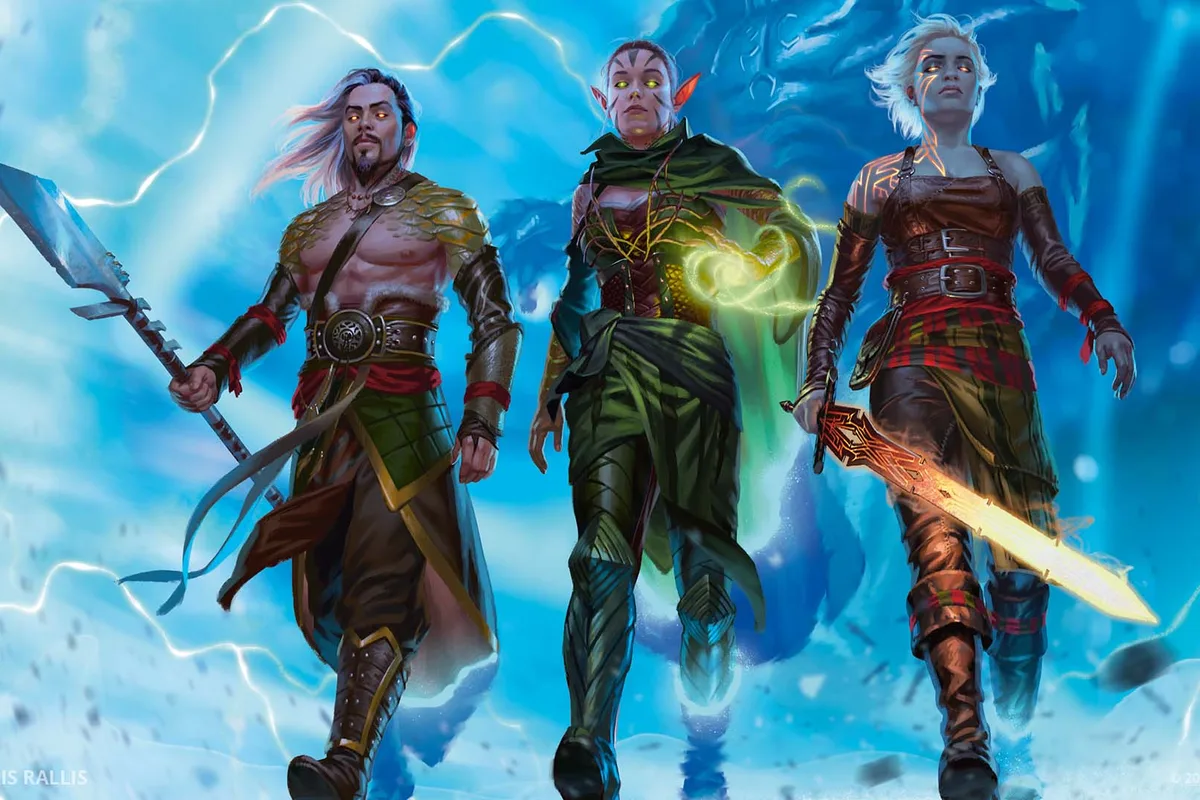
Jace Beleren, Chandra Nalaar, Liliana Vess and Ajani Goldmane are among the figures familiar to long-term followers of the game's fiction.
This flexibility gives the filmmakers an enormous amount of material. They could adapt an established storyline, concentrate on a small group of characters or introduce an original narrative designed to explain the multiverse to audiences who have never played the game.
Each approach carries advantages and risks. Established characters offer recognizable mythology, but may require considerable exposition. An original story could provide a more accessible introduction, while disappointing fans hoping to see particular elements of the source material.
Legendary and Hasbro have not revealed which direction they intend to take.
Legendary wants more than a standalone feature
The movie forms part of an agreement announced by Legendary Entertainment and Hasbro Entertainment on February 6, 2025.
The two companies outlined plans to create a live-action film and television universe, beginning with a feature film and potentially expanding into additional series and related content.
That strategy places Magic among the intellectual properties that Hollywood hopes can support multiple interconnected productions.
Legendary has experience working with major fictional worlds, particularly through Dune and the MonsterVerse. It has also participated in adaptations based on gaming properties, including Warcraft and Pokémon Detective Pikachu.
Hasbro brings ownership of the entertainment brand through Wizards of the Coast, along with experience developing familiar properties for television and cinemas.
When the partnership was announced, the companies pointed to Magic's audience of more than 50 million fans and players worldwide.
That scale explains the commercial appeal. The game has generated decades of revenue through physical cards, digital products, merchandise, publishing and organized play.
The broader entertainment opportunity is substantial, but it remains a plan rather than a completed franchise. There is no confirmation that multiple connected feature films have been produced or that subsequent television projects already have fixed release dates.
For now, the immediate priority remains the first live-action feature.
Netflix's animated adaptation is a separate project
Magic: The Gathering has another screen adaptation in development, but it should not be confused with the Legendary film.
Netflix has been working on an animated series based on the property. That project has undergone creative changes over several years, with Terry Matalas, known for his work on Star Trek: Picard, attached to guide the production.
The Netflix series and the Legendary live-action initiative are distinct projects. They originate from the same underlying franchise but have not been officially established as sharing characters, continuity or a release schedule.
Their coexistence demonstrates Hasbro's interest in expanding the property beyond tabletop and digital gaming.
It also reflects a longer history of attempts to bring Magic to cinemas. During the 2010s, 20th Century Fox developed an adaptation with producer Simon Kinberg. That version did not materialize, and the project was abandoned around the changes following Disney's acquisition of Fox.
The current Legendary partnership represents a new effort with a different industrial structure and creative team.
Hawke's reported casting is a visible step forward, but previous attempts are a reminder that a film can spend a considerable amount of time in development before reaching production.
The role, story and release date are still unknown
The known creative picture is now relatively clear. Matt Johnson is attached to direct and co-write the movie, Noah Gardner and Aidan Fitzgerald are participating in the screenplay, and Maya Hawke is reportedly joining in an important role.
Everything beyond that remains limited.
No official synopsis has been released. The studios have not announced the full cast, a production start date, a theatrical distributor or a premiere window.
There are also no official production stills or character designs from the live-action adaptation. Existing Magic artwork illustrates the source material, not the visual appearance of the forthcoming film.
The next casting announcements may offer stronger clues about the narrative. A group of established Planeswalkers would suggest one kind of adaptation, while an ensemble built around new characters could signal another.
At this stage, neither possibility has been established.
The important development is that Legendary and Hasbro are beginning to attach recognizable performers to a project that has spent years moving between different attempts at adaptation.
Magic: The Gathering has always offered more possible worlds than any single story could contain. The film's first challenge will be choosing one worth entering.