
Crime dramas often begin after the worst has already happened.
Murder in Galicia builds its premise around a more troubling possibility: an investigator believes a woman who has survived one attack may still be in immediate danger.
Netflix unveiled the official trailer for the Spanish limited series on October 22, 2026.
Known in Spain as El crimen de Pazos, the production is based on events surrounding the 2015 murder of Isabel Fuentes in Galicia.
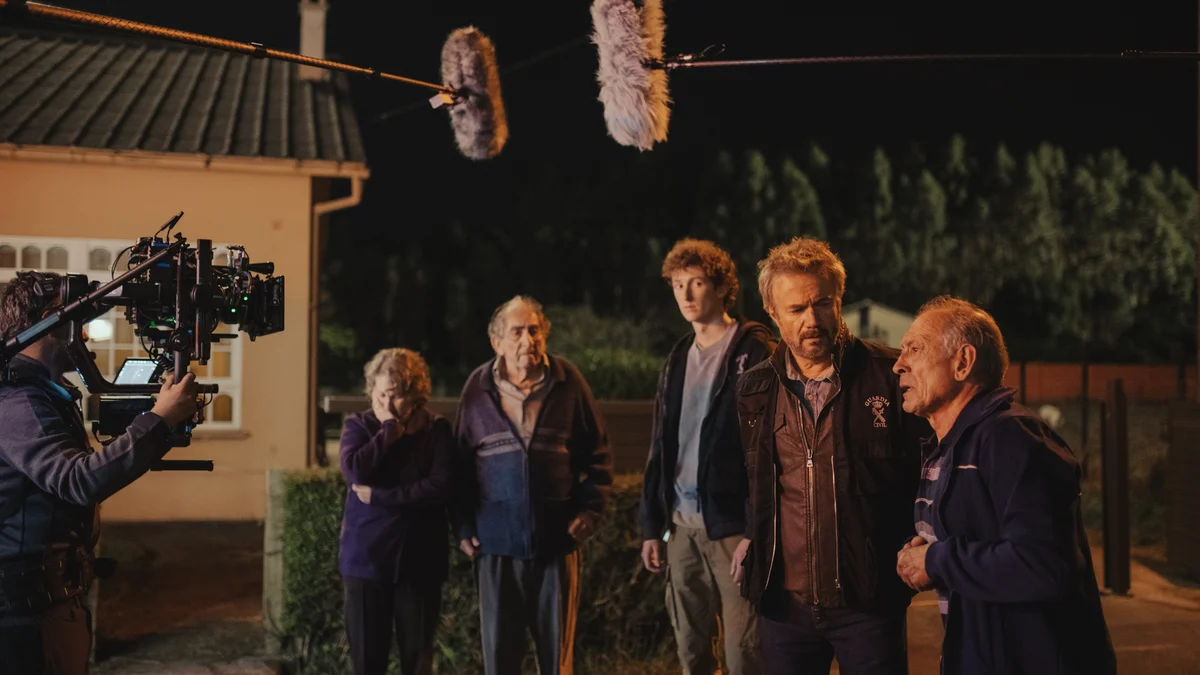
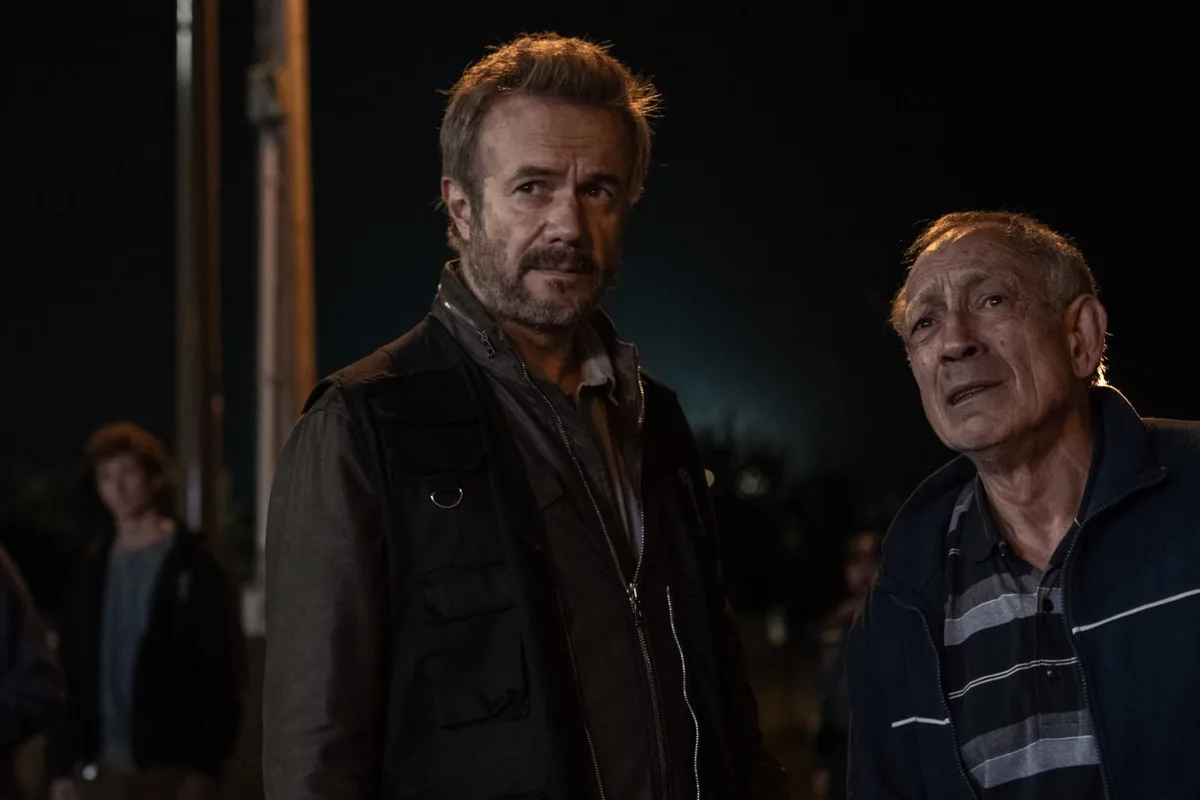
The new promotional release includes a poster and additional photographs.
It follows an earlier announcement on October 8, when Netflix confirmed the premiere date and released the first teaser.
The distinction matters.
October 22 marks the arrival of the full trailer and further promotional material, not the show's initial announcement.
Murder in Galicia is scheduled to premiere on November 13, 2026.
Its three episodes focus on an investigation led by a Civil Guard sergeant who believes the victim's husband is responsible for a violent assault.
The drama also examines his frustration with institutions he believes are failing to protect her.
Netflix unveils the official trailer ahead of November 13
Netflix's October 22 announcement establishes three new promotional developments.
The company has released the official trailer, an accompanying poster and additional photographs from the production.
These materials expand on the initial teaser and first-look images published earlier in October.
The previously confirmed premiere date remains unchanged.
Murder in Galicia will begin streaming on Friday, November 13, 2026.
Netflix has also confirmed the format: a three-episode limited series.
Unlike an ongoing procedural involving multiple investigations, the production is centered on one criminal case and its consequences.
That structure allows the story to concentrate on a small group of characters and the decisions surrounding a woman whose safety remains uncertain.
The official trailer can be accessed through Netflix's announcement: https://about.netflix.com/es_es/news/en-netflix-unveils-the-official-trailer-for-murder-in-galicia
However, promotional footage does not establish how effectively the completed episodes handle the case.
Their pacing, narrative choices and treatment of the real events cannot be fully assessed before release.
An attack in a quiet Galician village
The fictional story begins in Pazos, a village in Galicia.
Aniceto and his wife Irene appear to have an ordinary marriage.
That impression is shattered when Irene is brutally attacked at home during what initially appears to be a robbery.
She survives the assault but requires hospital treatment.
The investigation quickly becomes more complicated.
Elías, a sergeant in Spain's Civil Guard, suspects that Aniceto was involved in the attack.
He does not believe the explanation of an ordinary burglary adequately accounts for what happened.
According to Netflix's official synopsis, the sergeant struggles to persuade the relevant authorities to take his warnings seriously.
He fears that Irene remains at risk while her husband is free.
The narrative therefore revolves around more than identifying a possible attacker.
It also asks whether the authorities will respond to an investigator's concerns before another tragedy occurs.
An important distinction must be maintained.
Aniceto's suspected involvement is presented as the belief of a fictional investigator.
The promotional synopsis does not itself constitute legal proof of guilt.
The series will need to establish how Elías develops his suspicions and what consequences follow from his attempts to intervene.
Tristán Ulloa leads the investigation
Tristán Ulloa portrays Elías, the officer at the center of the limited series.
The actor has an extensive career in Spanish film and television.
Netflix audiences may recognize him from The Asunta Case and other recent Spanish productions, including A Widow's Game.
Murder in Galicia places his character in an uncomfortable professional position.
Elías belongs to an institution responsible for investigating crimes and protecting the public.
Yet he believes that the institutional response to Irene's situation is insufficient.
His conflict therefore extends beyond his suspicions about the victim's husband.
He must also navigate the procedures and decisions of people who may not share his assessment of the danger.
That premise provides material for a drama about the limits of professional responsibility.
An investigator can develop a theory and identify risks without possessing the authority to make every decision he considers necessary.
The tension between conviction, procedure and institutional power could become a defining element of the story.
However, the promotional synopsis does not reveal the full development of those conflicts.
Nor can Ulloa's performance across the complete series be evaluated before its premiere.
Miguel Borines plays the husband under suspicion
Miguel Borines portrays Aniceto, Irene's husband.
The official description identifies him as the person Elías suspects of responsibility for the assault.
That relationship forms the foundation of the thriller.
Viewers will need to understand why the investigator distrusts Aniceto and why other authorities may interpret the available circumstances differently.
Netflix has not disclosed every element of the investigation.
Its promotional material emphasizes the contrast between an apparently ordinary couple and the violence that disrupts their lives.
The ensemble also includes Carlos Blanco and Fer Fraga.
Other announced performers include Tito Asorey, Nacho Fresneda and Fernando Guillén Cuervo.
Verónica Sánchez and Edu Soto make special appearances.
The official announcement does not provide a complete biography for each supporting character.
It would therefore be premature to assign specific investigative roles or plot developments to performers whose characters have not been fully described.
The real case behind Murder in Galicia
The series draws on a crime that occurred near Verín in Galicia in 2015.
The real victim was Isabel Fuentes.
According to Netflix's official description of its accompanying documentary, she was seriously injured during an attack at her home in April 2015.
The incident was initially attributed to alleged burglars.
However, the Civil Guard sergeant investigating the case soon questioned that explanation.
He believed the woman remained in danger and attempted to obtain further protection.
Thirty-seven days after the first assault, Isabel Fuentes was murdered in the hospital room where she was recovering.
That chronology is central to Netflix's description of the real case.
It is also important to distinguish the historical individuals from the fictional characters.
The television drama calls its victim Irene and its investigator Elías.
Those names belong to the dramatized narrative.
The real-life victim was Isabel Fuentes.
A fictional adaptation may compress events, invent dialogue or reorganize situations to create a coherent television story.
Claims about the historical case should therefore be supported by documentary records or reliable reporting rather than inferred from dramatic scenes.
Netflix is releasing a documentary about the same crime
Murder in Galicia is part of an unusual two-production approach to the same historical event.
One week before the fictional series, Netflix plans to release Unprotected: Murder in Galicia.
The documentary premieres November 6, 2026.
Its Spanish title is Desprotexida: El crimen de Pazos.
The film is produced by True Crime Factory, a company associated with journalist and producer Carles Porta.
Jorge Laplace wrote and directed the documentary.
It includes accounts from investigators, medical professionals, relatives, neighbors and journalists.
Its stated objective is to reconstruct the events and examine how Isabel Fuentes could be murdered while recovering in hospital.
That purpose differs from the television drama's narrative approach.
The documentary relies on people and materials connected to the real investigation.
The series uses actors and constructed scenes to tell a dramatic story inspired by the case.
The distinction does not mean documentaries are free from editorial decisions.
Interview selection, editing and narrative structure still influence how historical events are presented.
Nevertheless, the two works have different approaches and should not be described as installments of the same television season.
The documentary examines failures in victim protection
In Netflix's official announcement, director Jorge Laplace identifies a question that strongly influenced his approach to the documentary.
He wanted to understand how a woman could be murdered in a hospital when concerns had already been raised about her safety.
That question moves the discussion beyond the identification of a perpetrator.
It asks how protection systems function when a person has survived a serious attack.
Several institutions may become involved in such circumstances.
Police officers investigate the suspected crime, judicial authorities assess information and medical professionals provide treatment.
Coordination between these different responsibilities can become particularly important when there is a risk of further violence.
The documentary intends to examine what happened in the Isabel Fuentes case.
However, the promotional description does not replace a comprehensive review of judicial findings and administrative decisions.
It would be inappropriate to assign specific blame to particular individuals or services without sufficient verified evidence.
The announced focus is the failure to protect a victim from a subsequent fatal attack.
That is a serious subject requiring care beyond the usual conventions of crime entertainment.
Carlos Sedes directs the limited series
Carlos Sedes is directing Murder in Galicia.
The series is produced by Bambú Producciones, a company with extensive experience in Spanish drama.
Ramón Campos serves as executive producer and co-writer.
He shares the screenplay credits with David Orea Arribas, Curro Serrano and Gema R. Neira.
Carlos Garcés is responsible for cinematography.
The team brings together professionals already associated with a range of Spanish film and television productions.
One major challenge will be presenting a complicated criminal investigation within three episodes.
A limited runtime requires choices about which events to dramatize and which perspectives to prioritize.
The writers must determine how much attention to give the investigator, the victim and the people surrounding them.
Netflix's synopsis clearly establishes Elías as a central character.
However, it does not reveal whether every episode will maintain his perspective or whether the narrative will move between multiple viewpoints.
Those decisions will become clearer when the series is released.
Bambú Producciones returns to Spanish true-crime drama
Bambú Producciones is well established within Spanish television.
Its credits include Grand Hotel, Velvet, Cable Girls and Cocaine Coast.
More recently, the company has worked on crime stories inspired by real events, including The Asunta Case.
That production also examined a high-profile crime in Galicia.
Murder in Galicia continues Bambú's involvement with criminal investigations and stories that received widespread public attention.
There are nevertheless important differences between the cases.
The victims, crimes and investigations are distinct.
Murder in Galicia is not a sequel to The Asunta Case.
The presence of Tristán Ulloa and the same production company does not create a shared fictional continuity.
Each work is based on separate events.
The challenge for Murder in Galicia will be establishing an identity of its own rather than relying exclusively on audience familiarity with Netflix's previous Spanish crime dramas.
Why a three-episode format could suit the case
The limited series differs structurally from conventional police procedurals.
Its three episodes focus on a single assault and the investigation surrounding it.
The premise does not involve a continuing sequence of unrelated cases.
That concentrated structure may allow the writers to emphasize decisions taken while Irene remains vulnerable.
Investigative developments, institutional communication and concerns raised by people close to the victim can become central sources of tension.
The approach has dramatic potential because the audience understands that delays and misjudgments may have serious consequences.
But the short format also creates risks.
Compressing a complicated case could encourage oversimplified explanations or turn institutions into generic obstacles rather than examining their actual responsibilities.
These concerns are especially relevant to stories inspired by real crimes.
The completed series will need to balance narrative clarity with a responsible approach to its historical basis.
That balance cannot be judged from a synopsis or trailer alone.
True-crime adaptations face difficult ethical choices
Crime stories built around real victims often encounter a recurring problem.
The investigation and suspected perpetrator can become so central to the narrative that the victim is reduced to a reason for other characters to act.
Murder in Galicia presents a particularly sensitive version of that challenge.
Irene is described as a woman seriously injured and hospitalized after a violent assault.
Her continued vulnerability is essential to the story.
Yet the promotional material naturally emphasizes Elías, the investigator played by Tristán Ulloa.
The dramatic treatment will need to determine how much individuality the victim retains beyond her role in the investigation.
Does she have a meaningful perspective of her own?
Are her relationships and experiences represented beyond the circumstances of the attack?
These questions are important in assessing any dramatization of actual violence.
The companion documentary may also offer a different perspective through testimonies from people connected to the real case.
Neither production should automatically be assumed to provide a complete account of the historical events.
Their treatment can only be evaluated when audiences and critics have access to the finished works.
Two Netflix premieres, one week apart
The release calendar is now established.
Unprotected: Murder in Galicia is scheduled to premiere on November 6, 2026.
Murder in Galicia follows on November 13.
The documentary and the dramatized limited series are separate productions inspired by the same historical case.
The official trailer released October 22 belongs to the Bambú Producciones drama.
Netflix did not announce a revised premiere date as part of that promotional release.
The new development concerns the arrival of additional material: the complete trailer, a poster and more images.
Neither production is available to stream as of October 23.
It would also be premature to report viewing rankings or critical assessments of the unreleased episodes.
Audience reactions to a trailer cannot establish how viewers will respond to the complete series.
What to know before watching Murder in Galicia
Murder in Galicia is a three-episode Spanish crime thriller inspired by the 2015 murder of Isabel Fuentes.
Bambú Producciones is producing, Carlos Sedes is directing and Tristán Ulloa stars as a Civil Guard sergeant investigating a violent attack.
Miguel Borines plays Aniceto, the husband suspected by the fictional investigator.
Netflix released the official trailer, poster and new images on October 22, 2026.
The limited series premieres November 13, following the November 6 release of the documentary Unprotected: Murder in Galicia.
The dual release offers two different ways of approaching the same tragedy.
One uses fictional characters to construct a thriller about an investigation and a police officer's warnings.
The other seeks to reconstruct the real case and investigate how a woman who survived an earlier attack was not protected from subsequent fatal violence.
Behind the dramatic mystery lies a question more disturbing than the usual search for a culprit: how can someone remain exposed to danger after authorities already know that she has survived a serious assault?