
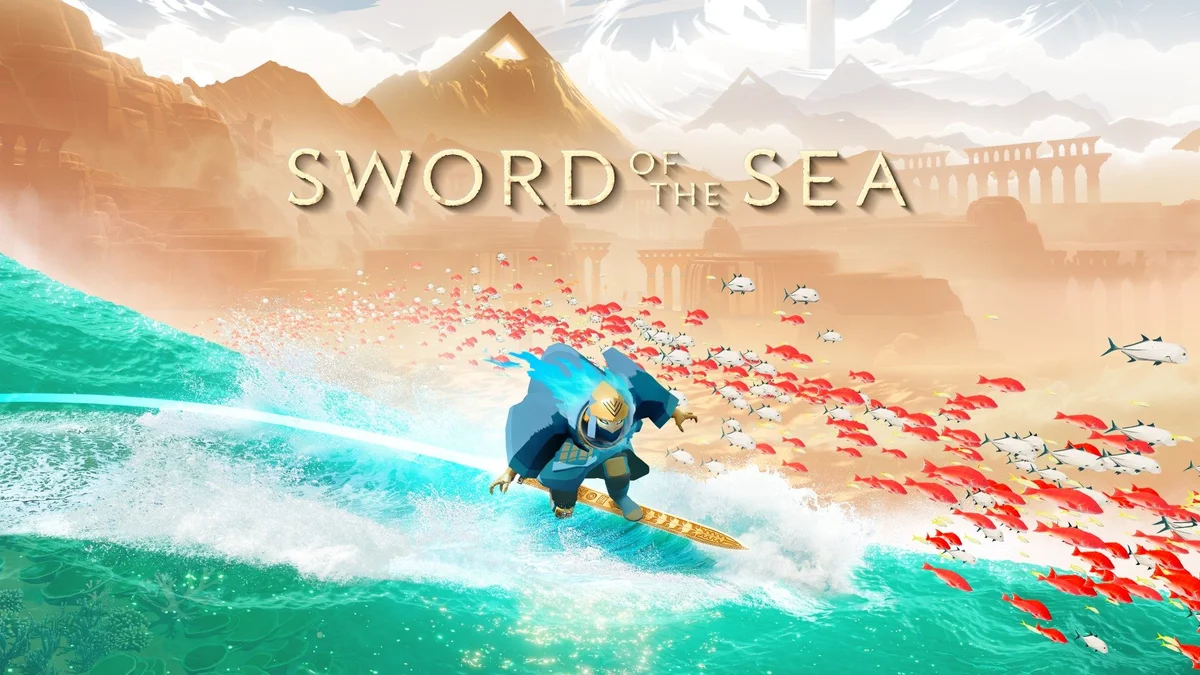
A desert is usually portrayed as a place where movement is difficult. Sand slows travellers down, distant dunes seem almost identical, and the landscape can feel hostile to exploration.
Sword of the Sea reverses those expectations. Its dunes behave like waves, allowing a mysterious figure to cross the landscape at extraordinary speed on a magical sword.
The game launched on PlayStation 5 and PC in August 2025. Following its appearance during the October 28 Nintendo Indie World presentation, it is now scheduled for Nintendo Switch 2 and Xbox Series X|S on October 29, 2026.
The additional platforms bring renewed attention to the work of Giant Squid, a studio associated with distinctive artistic adventures.
The legacy of Journey without repeating it
Creative director Matt Nava previously worked on Journey before helping establish Giant Squid, the studio behind ABZÛ and The Pathless.
These projects share an interest in enormous environments, mysterious ruins and stories communicated through exploration rather than extensive dialogue.
Sword of the Sea continues that approach.
Its protagonist, the Wraith, is resurrected in a desert necropolis where an ancient ocean has disappeared. The remains of a lost civilization suggest a history that players gradually uncover through their journey.
The comparison with Journey is understandable, but Sword of the Sea places much greater emphasis on speed and traversal.
The desert is not simply an environment to cross. Its flowing shapes determine how the player builds momentum, changes direction and reaches distant locations.
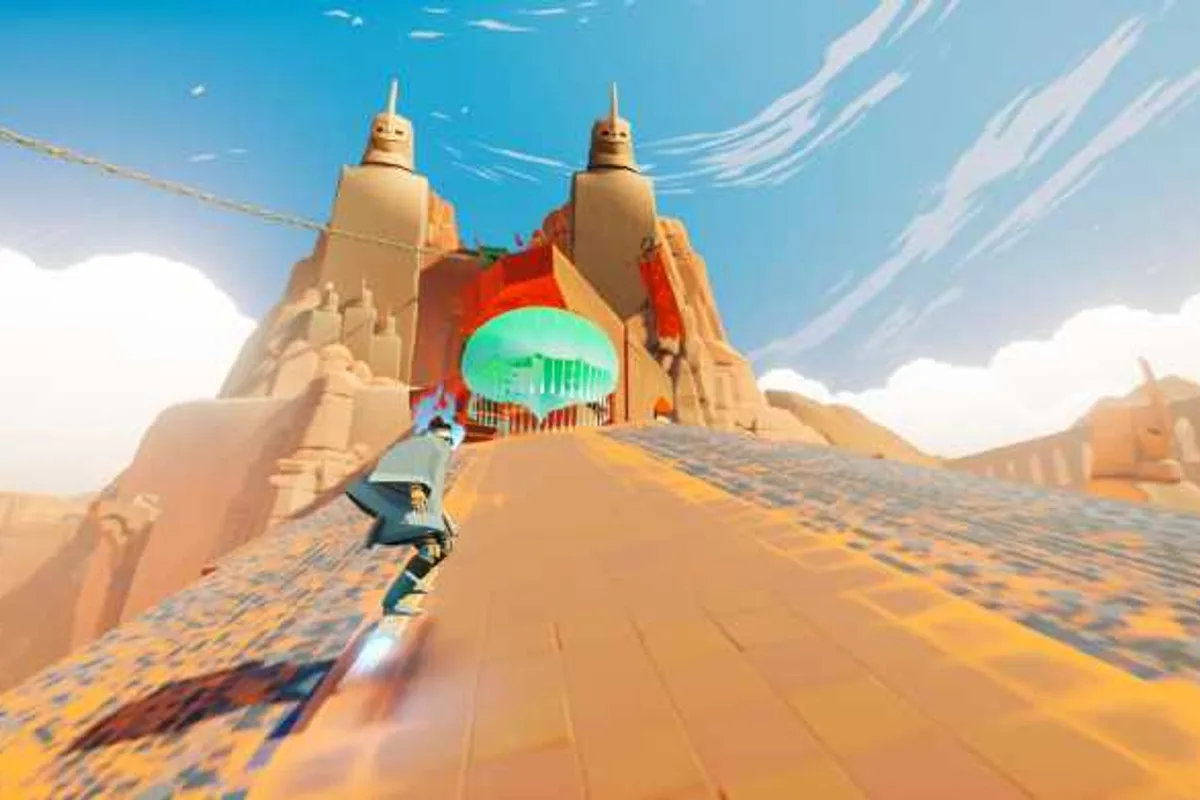
The landscape therefore becomes an active component of the experience rather than a static backdrop.
Movement as artistic expression
The Hoversword is central to the game's identity.
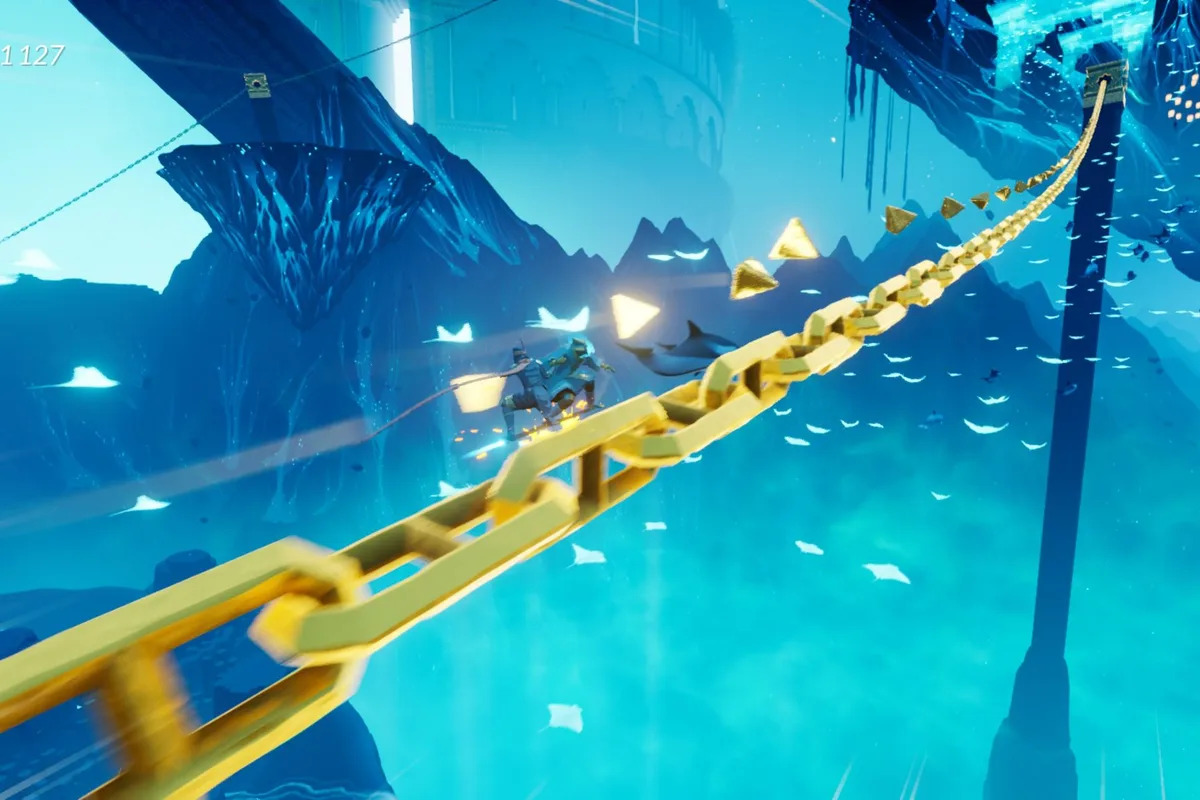
Although it resembles a weapon, its primary function is to carry the Wraith across the terrain like a surfboard, snowboard or skateboard.
Players descend steep slopes, launch into the air and perform tricks while moving through environments shaped for fluid traversal.
This creates a distinctive rhythm between rapid action and quieter moments of observation.
The world changes as the adventure progresses. Restoring the lost ocean brings brilliant water and marine creatures back to landscapes that once appeared lifeless.
Those visual changes provide a different kind of reward from traditional upgrades or collectible items.
The player can witness the consequences of their journey directly through the transformation of the environment.
Austin Wintory returns to the creative partnership
The game's soundtrack is composed by Austin Wintory, whose previous collaborations include Journey, ABZÛ and The Pathless.
His work with Matt Nava reflects a shared interest in connecting music with landscape, motion and emotional atmosphere.
In an exploration-focused adventure, music can communicate changes in mood without relying on spoken explanations.
Sword of the Sea follows this tradition through its combination of shifting environments and an atmospheric score.
The composer's involvement establishes a clear creative connection with the studio's earlier work, while the music itself remains one component of the overall experience.
Restoring life to a forgotten world
The Wraith's central purpose is to bring back an ocean that has vanished from the world.
Travelling through ruins and ancient structures allows the player to restore water and encourage marine life to return.
The transformation changes the emotional character of the environment. Places that once seemed abandoned become filled with movement, color and living creatures.
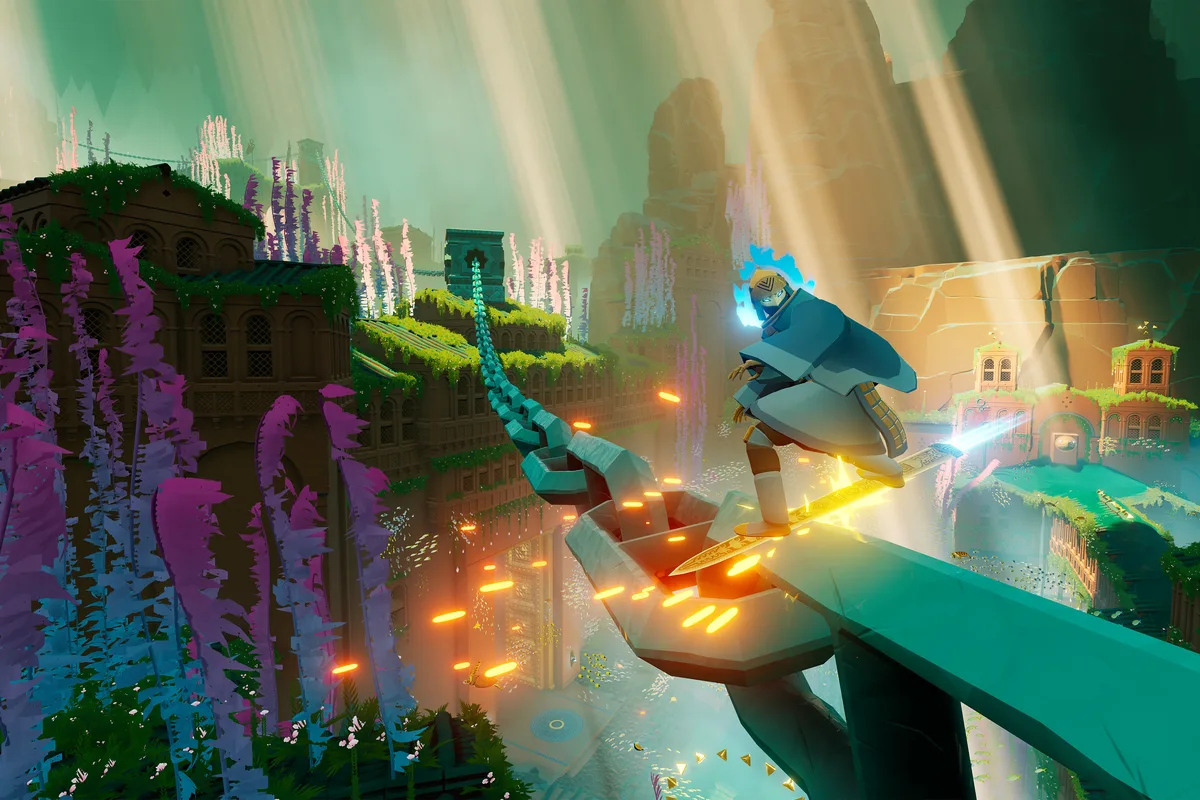
This gives the journey an underlying theme of restoration and renewal, although much of the narrative remains deliberately open to interpretation.
Enormous creatures and darker threats also inhabit parts of the world, preventing the adventure from becoming an entirely peaceful exploration.
The contrast between beauty and danger contributes to the atmosphere of the game's ancient landscapes.
A wider audience for Giant Squid's adventure
Sword of the Sea reaches Nintendo Switch 2 and Xbox Series X|S on October 29, 2026.
The Switch 2 edition supports handheld, tabletop and TV modes, with HDR output available on compatible displays.
French is included among the supported languages, and Nintendo lists the game as a single-player experience.
No additional story chapters have been officially confirmed for these new editions.
The significance of the announcement is therefore primarily accessibility: players on two more console platforms will be able to experience Giant Squid's unusual approach to movement and environmental storytelling.
Sword of the Sea demonstrates a creative idea the studio has explored for years. A journey does not always require extensive dialogue or complicated exposition to communicate emotion. Sometimes the relationship between a character, a landscape and a unique form of movement can carry the experience.