
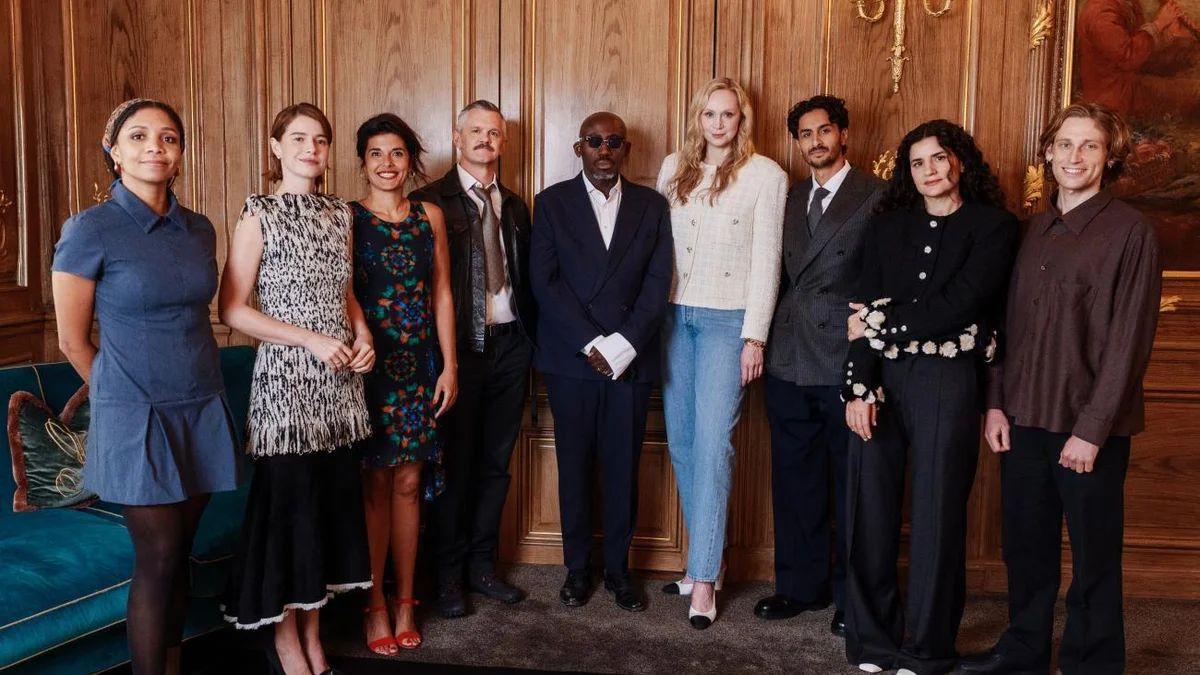
Four filmmakers receive support for their next creative steps
The awards were presented at Claridge's in London as part of the partnership between the British Film Institute and Chanel. Established in 2022, the Filmmaker Awards: Celebrating Creative Audacity recognize emerging UK-based artists demonstrating distinctive creative ambition.
This year's recipients were selected from a shortlist of eight. Rich Felgate, Olive Nwosu, Imran Perretta and Rachel Taparjan will each receive £20,000 to support the development of their artistic practice.
The awards differ from traditional competitive categories such as Best Director or Best Cinematography. They recognize filmmakers whose existing work suggests the potential for further creative development.
That distinction matters for independent cinema. A film may receive critical praise or festival exposure without providing its creator with sufficient resources to begin another project.
Research, writing, preparation and building professional relationships all require time and money. They often take place before a project has secured formal production financing.
The BFI describes the awards as an opportunity for the recipients to explore new artistic approaches and develop further collaborations. The £20,000 payment is not presented as a complete production budget for a future feature film.
The jury included actors Jessie Buckley and Gwendoline Christie, alongside Edward Enninful, Marie-Louise Khondji and BFI chief executive Ben Roberts.
Christie explained that the strength of the field persuaded the jury to select four winners rather than three, making this year's outcome particularly notable.
Rich Felgate documents the people behind environmental protest
Rich Felgate was recognized for We, The Hated, a documentary exploring members of the environmental protest movement Just Stop Oil.
Rather than presenting protest only through public demonstrations and confrontations, the film examines the individuals involved, the consequences of their choices and the tensions associated with controversial forms of activism.
The jury praised Felgate's storytelling and the attention he gives to the personal impact of political engagement.
It also highlighted the film's willingness to question the limitations of protest itself.
This approach creates space between understanding why someone chooses to demonstrate and endorsing every method they employ.
A documentary can investigate the experiences and motivations of activists without requiring its audience to agree with all their decisions.
Felgate worked as director, producer and cinematographer, combining responsibilities that are frequently shared among a small number of people in independent documentary production.
The film's UK theatrical journey is continuing. Preview screenings are scheduled from October 27, followed by a limited cinema release on November 2, 2026.
As of October 16, those screenings remain upcoming events.
The award arrives before the next phase of the film's commercial life. It may strengthen Felgate's professional visibility, although it does not establish how the documentary will perform at the box office.
Olive Nwosu brings the streets of Lagos to the screen
Olive Nwosu received recognition for Lady, her debut fiction feature set in Lagos, Nigeria.
The film follows a female taxi driver whose life changes when she reconnects with a childhood friend who has become a sex worker.
The story explores relationships between women within a city shaped by social pressures, economic differences and the daily struggle to maintain independence.
Lagos is more than a setting. Its streets and communities provide much of the film's identity and help define the lives of its characters.
The jury praised Nwosu's cinematic ambition and her ability to explore sensitive material without reducing her characters to their circumstances.
It also emphasized the sense of solidarity established among the film's female performers.
For a debut director, recognition of this kind can be particularly important. A first feature requires not only an artistic idea but also the ability to coordinate performers, technicians and production resources around a coherent vision.
Lady also illustrates the international scope of contemporary British independent filmmaking. Nwosu is receiving a UK-based award for a story rooted in Nigerian urban life.
The film appears in the 2026 BFI London Film Festival program, while its UK theatrical release is scheduled for spring 2027.
That does not establish a specific French, American or worldwide commercial release date.
Ish explores racial profiling through a childhood friendship
Imran Perretta was honored for Ish, a black-and-white film set within Luton’s South Asian and Middle Eastern communities.
The story follows two twelve-year-old boys whose friendship is affected by a police stop and search.
The incident changes their understanding of the institutions surrounding them and raises questions about belonging, identity and personal security.
The jury praised the film's black-and-white cinematography, its work with children and non-professional actors, and its treatment of racial profiling.
Rather than constructing a large geopolitical thriller, Ish approaches institutional suspicion through an event experienced by two young people.
The relatively small scale of the story is central to its meaning.
An incident that appears temporary to an outside observer can have lasting consequences for a child's understanding of society and their own place within it.
The jury highlighted the experience of feeling English while repeatedly being treated as an outsider.
Perretta's film approaches that contradiction through an intimate relationship rather than an abstract political argument.
The filmmaker also contributed as co-writer and composer, allowing different aspects of the production's artistic identity to develop together.
Unlike some of the other award-winning works, Ish already has a confirmed viewing platform. The BFI lists the film as available on BFI Player, although that does not automatically establish identical access conditions in every country.
Something Familiar turns a search for family into documentary cinema
Rachel Taparjan received an award for Something Familiar, her debut feature documentary.
The film examines her experience of being adopted from Romania and her attempts to find sisters from whom she was separated during childhood.
Its subject encompasses family identity, inheritance, separation and the lasting effects of generational trauma.
The project is not simply an effort to reconstruct a sequence of events. It examines how a person's understanding of their own history can change as new information emerges.
The jury praised Taparjan's personal openness and her use of interviews, narration and camera work to reshape the audience's perspective during the film.
Autobiographical documentary presents a particular creative challenge.
The filmmaker is simultaneously the person constructing the narrative and someone directly affected by the events being explored.
The search for factual understanding becomes inseparable from emotional experiences, incomplete memories and sensitive family relationships.
Taparjan emphasized in her response to the award that making her first feature documentary required considerable trust and support from the people involved.
She described the recognition as encouragement to approach her next projects with greater ambition.
The BFI has not announced a commercial release date for Something Familiar.
Its festival recognition should therefore not be mistaken for confirmed theatrical or streaming availability.
Why £20,000 can matter before a film even exists
Together, the four awards provide £80,000 in financial support.
Compared with the production budget of a feature film, £20,000 may appear modest. For an independent filmmaker developing new work, however, the amount can create meaningful opportunities.
Film production does not begin on the first day of shooting.
A project may require years of research, screenplay development, preliminary interviews, location investigations and negotiations with potential collaborators.
These activities are essential but not always visible to audiences.
They can also be difficult to finance before a producer, broadcaster or distributor has formally committed to the work.
The Filmmaker Awards are intended to offer additional creative freedom during that process.
The BFI specifically emphasizes experimentation, collaboration and the development of new directions in each filmmaker's practice.
The funding should not be presented as a comprehensive solution to the financial challenges facing British independent cinema.
Only four artists receive awards this year, while many more filmmakers face similar barriers.
The scheme's importance lies in recognizing that careers are built between productions, not only during theatrical releases or festival premieres.
The awards recognize careers rather than individual categories
The selection process further distinguishes the Filmmaker Awards from conventional festival competitions.
Candidates were assessed according to their existing work, creative ambitions and potential for future development.
For the 2026 awards, eligible artists had to be UK residents with a limited number of completed features or immersive projects that had been released or presented at qualifying events.
The process involved nominations from industry professionals, followed by applications and jury deliberation.
This is different from a fully open competition in which any filmmaker can submit a work without prior eligibility conditions.
The approach may allow targeted support, but it cannot be assumed to represent every emerging creative voice in the United Kingdom.
Professional connections and access to existing networks can influence which artists have opportunities to enter such programs.
That is why individual awards work best alongside training, development funds and broader systems of independent production support.
An annual prize can make a substantial difference to a small number of careers without replacing the need for long-term industry investment.
Four films show the range of politically engaged independent cinema
The award-winning works address different subjects, but each places considerable importance on experiences that can be difficult to represent responsibly.
We, The Hated examines those involved in public protest. Lady explores the lives and relationships of women in Lagos. Ish studies the consequences of institutional suspicion for children. Something Familiar investigates family separation and personal identity.
These projects should not be reduced to a single political category.
Their artistic identities depend on choices involving performance, cinematography, narrative structure and the relationship between filmmakers and their subjects.
That is the quality the BFI and Chanel seek to recognize through the language of creative audacity.
An important subject does not automatically produce an effective film.
How a story is told becomes especially significant when it involves vulnerable individuals, traumatic experiences or politically contested events.
The jury's assessments repeatedly return to artistic method as well as subject matter.
It praised Nwosu's direction of actors, Perretta's cinematography, Taparjan's documentary construction and Felgate's ability to portray the people behind protest activity.
Previous recipients offer examples of developing careers
The recent history of the Filmmaker Awards includes several artists whose work has gained wider recognition.
Harry Lighton, honored in 2025 for Pillion, subsequently received the Best British Independent Film award at that year's British Independent Film Awards.
Sandhya Suri was also recognized in 2025 following the success of Santosh.
Savanah Leaf, a 2023 recipient for Earth Mama, went on to receive the 2024 BAFTA for Outstanding Debut by a British Writer, Director or Producer.
These examples demonstrate that the scheme has supported filmmakers whose careers continued to attract attention.
They do not prove that the awards directly caused every subsequent achievement.
A filmmaking career depends on numerous factors, including the reception of completed work, access to funding, distribution arrangements and professional opportunities.
The BFI and Chanel partnership attempts to influence part of that process through financial support and institutional recognition.
The four recipients of the 2026 awards must now translate those opportunities into further creative work.
No confirmed announcement establishes the identity or production schedule of each recipient's next project.
Independent cinema is also shaped between releases
While the BFI London Film Festival presents major premieres and internationally recognized filmmakers, the Filmmaker Awards draw attention to a less visible part of the industry.
Before a film can reach a festival, somebody must have the time and resources to develop it.
The four awards will not eliminate the economic pressures facing independent cinema. They do, however, acknowledge the period when an artist possesses an idea and a distinctive voice but has not yet secured the means to turn either into a finished work.
Felgate, Nwosu, Perretta and Taparjan have already made films compelling enough to attract the attention of a professional jury.
Their next challenge will be to continue that exploration while retaining the qualities that distinguish their individual perspectives.
The longer-term value of the October 14 ceremony will therefore be measured not only by the names added to an awards list, but also by the films and collaborations that become possible afterward.
The movie industry spends enormous sums promoting work that has already been completed. Supporting films that do not yet exist is less visible. It may also be one of the most important ways of making room for the next generation.