
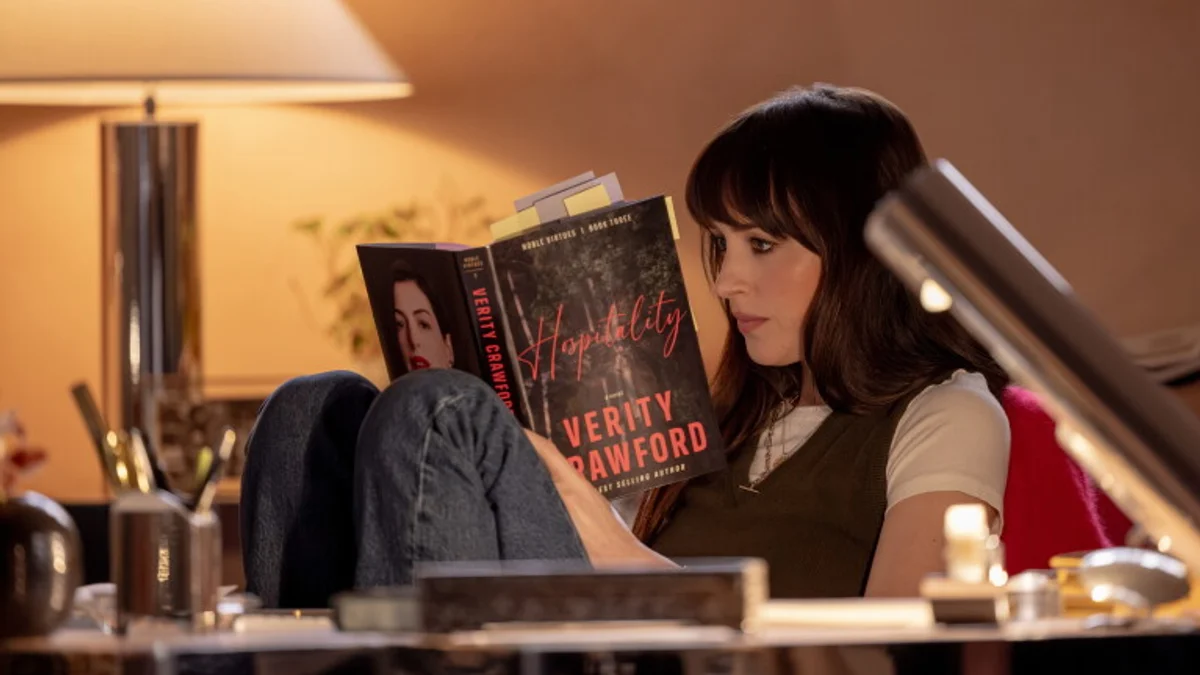
From $32 million to $12 million in one week
The Numbers provides a detailed picture of Verity's opening performance. During its first North American weekend, October 2–4, 2026, the film earned $32,031,011 from 3,510 theaters and took first place at the domestic box office.
Its second weekend, October 9–11, brought in $12,005,559 from 3,572 theaters. That represents a decline of approximately 62.5 percent, conventionally rounded to 63 percent.
The movie slipped to second place behind Other Mommy, the new horror release starring Jessica Chastain.
The final figures differ slightly from the early Sunday estimates published by the Associated Press, which reported an $11.5 million weekend and a decline of approximately 64 percent. The consolidated numbers provide a more precise view of the result.
By October 11, Verity had accumulated $54,384,610 in North America. That remains meaningful business for an adult-oriented psychological thriller.
The slowdown nevertheless raises an important question: did the adaptation attract most of its most motivated audience during the opening days?
That explanation is plausible but not established by ticket sales alone. Box office data shows how much money audiences spent, not how many purchasers had already read the book or why potential viewers decided against attending.
A bestseller arrived with an audience already waiting
Verity is based on Colleen Hoover's internationally successful psychological thriller. Amazon identifies the novel as a global bestseller and makes it available across print, digital and audiobook formats.
That established readership offers a major advantage when bringing a story to theaters. The film begins its promotional campaign with a recognizable title, familiar characters and a community already invested in the material.
But familiarity also generates expectations. Readers bring opinions about the characters, the story's mysteries and the narrative details they believe an adaptation should preserve.
Some may attend immediately to discover how the director has interpreted the novel. Other moviegoers, unfamiliar with the source material, need different reasons to purchase a ticket.
For a book adaptation, moving beyond its existing fanbase is often crucial. A strong opening weekend can reflect concentrated enthusiasm among readers, while subsequent weeks provide a better indication of the film's broader appeal.
That does not mean every literary adaptation follows the same pattern. Some sustain interest through positive recommendations and repeat discussion. Others experience a burst of attention that becomes more difficult to maintain.
An author's popularity helps establish an initial audience, but it cannot determine the entire theatrical trajectory.
Dakota Johnson enters a house built on secrets
The story follows Lowen Ashleigh, a struggling writer portrayed by Dakota Johnson. She receives an unusual professional assignment: completing the book series of a successful author who is no longer able to continue writing.
That author is Verity Crawford, played by Anne Hathaway. Her husband Jeremy, portrayed by Josh Hartnett, welcomes Lowen into the family home so she can examine the material necessary for the assignment.
While investigating Verity's papers, Lowen discovers what appears to be an autobiographical manuscript containing deeply disturbing revelations.
Whether the document should be believed becomes a central source of tension. The story moves between attraction, suspicion, manipulation and uncertainty about the motives of the people involved.
The setup offers recognizable psychological thriller ingredients: an isolated home, conflicting accounts of events and characters whose apparent intentions may not match their actual behavior.
The mystery is not simply about uncovering what happened. It also concerns the credibility of the evidence and the possibility that writing itself can be used to manipulate another person's understanding of reality.
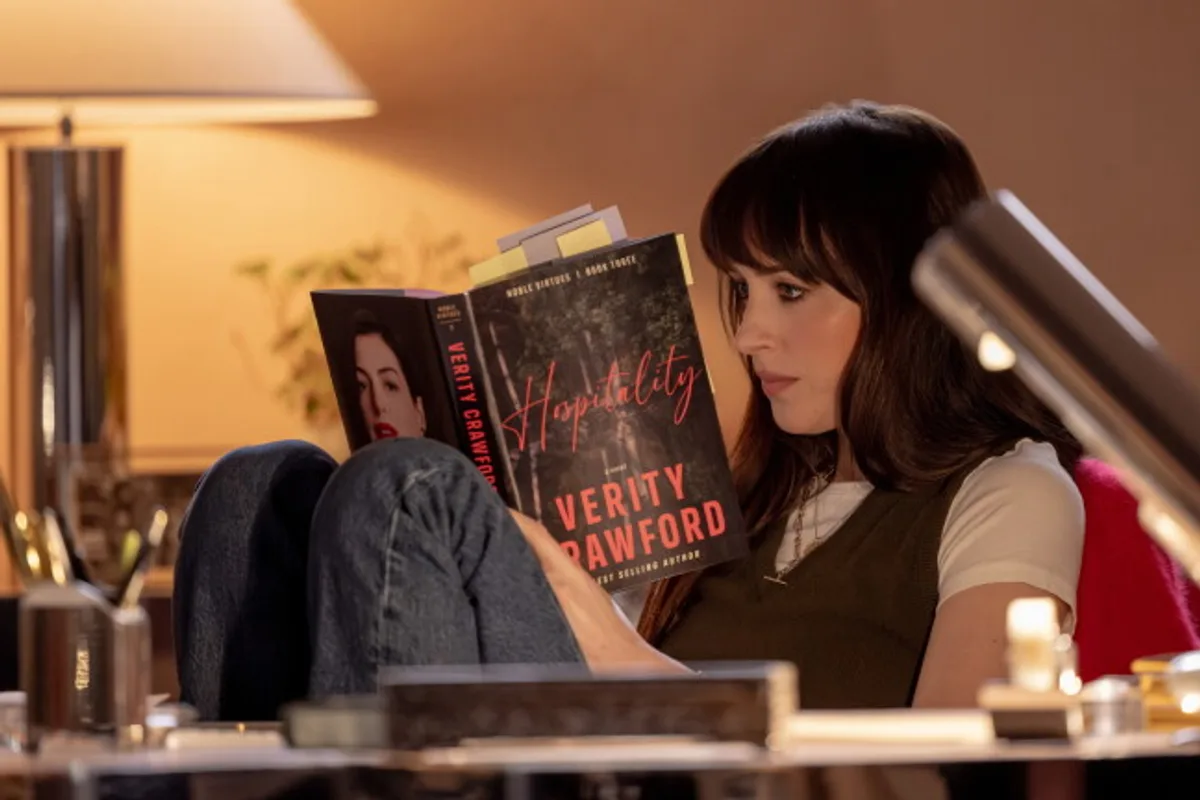
Michael Showalter directs after previously working with Hathaway on The Idea of You. That earlier collaboration also involved a literary adaptation with a romantic dimension, although Verity belongs to a considerably darker genre.
Amazon MGM Studios credits Nick Antosca and Colleen Hoover with the screenplay. The author's involvement is an important production detail, although it should not be understood as proof that every element of the novel has been transferred unchanged.
A recognizable cast does not guarantee staying power
Verity brings together three actors with substantial international recognition.
Anne Hathaway's career spans major Hollywood productions and dramatic performances, including her Academy Award-winning work in Les Misérables.
Dakota Johnson is closely associated with popular literary adaptations, while Josh Hartnett has enjoyed renewed prominence through projects including Oppenheimer and Trap.
Their presence gives the film visibility beyond readers of Colleen Hoover's books. Familiar performers can attract audiences who know little about the original novel.
But a prestigious cast does not automatically create sustained theatrical demand. Stars can generate awareness; the film must still give audiences reasons to attend and, potentially, recommend the experience.
The second-weekend decline is not an artistic judgment on the performances. It is a commercial indicator showing that weekend revenue fell substantially from the opening.
That distinction matters when box office results are frequently treated as immediate verdicts on the quality of a production.
Other Mommy intensifies the competition
Verity faced a significantly different theatrical environment during its second weekend.
On October 9, Other Mommy opened in 3,365 North American theaters and claimed first place with an estimated $27.5 million, according to the Associated Press.
The comparison is interesting because both films compete within broadly related entertainment categories. Each offers disturbing family relationships, suspense and the promise of an unsettling viewing experience.
They are nevertheless distinct productions. Other Mommy emphasizes a readily identifiable supernatural threat, while Verity relies on uncertainty about its characters and the secrets hidden within their relationships.
It would be excessive to attribute Verity's entire decline to this competition. Significant second-weekend drops are common following major theatrical openings, and several factors may contribute.
The arrival of another highly visible thriller did, however, change the choices available to moviegoers.
The contrast is particularly notable because Other Mommy also received negative critical and audience reactions without those responses preventing a strong opening.
An opening weekend frequently measures the initial attraction of a concept and marketing campaign. The second weekend begins to reveal whether that attention can be sustained once new releases enter the market.
Losing first place does not automatically mean failure
A 63 percent decline is substantial, but Verity has not disappeared from theaters. Its second weekend still generated approximately $12 million domestically, with the film playing in more than 3,500 cinemas.
Commercial performance cannot be assessed solely through box office rankings. Production costs, marketing expenditure, international sales and the duration of a theatrical release all contribute to the larger financial picture.
Nor can ticket sales be treated as studio profits. Revenue is divided among exhibitors, distributors and other participants, while promotional expenses can be significant.
There is also a distinction between theatrical earnings and potential downstream distribution.
Amazon MGM Studios produced Verity, but that does not mean the film is already included in a Prime Video subscription.
A Prime Video listing currently offers digital preorders in certain territories. It does not establish a single worldwide date for the film to become available through the subscription catalog.
Future digital distribution may be part of the studio's broader strategy, but unreported revenue should not be incorporated into an estimate of profitability.
French audiences are also turning out
Verity's theatrical release extends beyond North America. The film opened in France on September 30, 2026, two days before its American debut.
According to CBO data reproduced by AlloCiné, it attracted 235,630 admissions during its first week in French cinemas.
Admissions provide a different perspective from revenue in dollars. They count tickets rather than their total monetary value, making them useful for understanding attendance in a market where ticket pricing may vary.
However, directly comparing American grosses with French admissions requires additional context, including the number of theaters, ticket prices and national viewing habits.
The international popularity of Hoover's novels provides a recognizable foundation for the adaptation's overseas campaign.
A worldwide theatrical rollout can also help offset changes in one particular market, although the full extent of that effect cannot be determined from the domestic weekend figures alone.
The next few weeks will determine the larger story
Two weekends reveal a trend, not a final verdict. Verity successfully transformed the reputation of a popular novel into a substantial opening, but its North American revenue declined sharply during the following weekend.
Its subsequent performance will depend on how it responds to new releases, the behavior of international audiences and its ability to reach moviegoers beyond the readership that knew the story in advance.
The experience also illustrates the limits of one of Hollywood's most attractive commercial advantages: an established audience.
For long-term success, a literary adaptation needs to become more than an event for people who already know the book. It must interest viewers for whom Verity Crawford, Lowen Ashleigh and Jeremy Crawford were unfamiliar names before the trailer.
At this stage, Verity is neither a demonstrated long-term triumph nor an established commercial failure. It is a film with a strong opening, a challenging second weekend and a theatrical trajectory still developing.
In literary adaptations, loyal readers can create an excellent opening-night audience. Keeping seats occupied afterward is a different task entirely.