
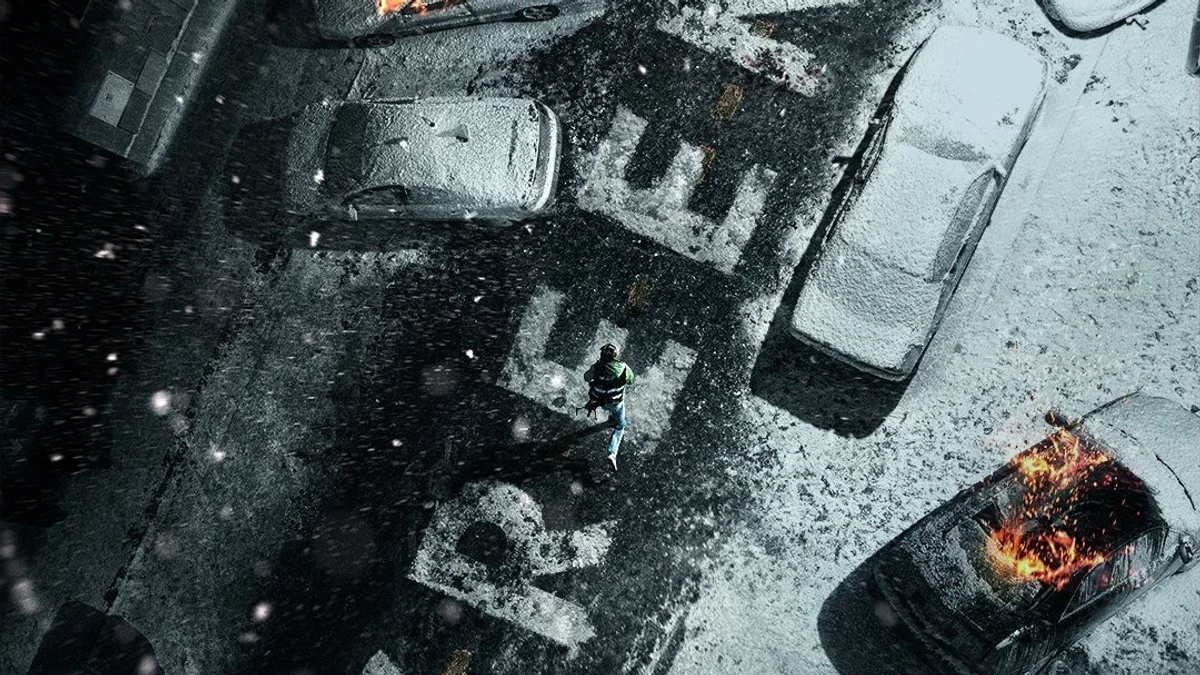
More than $320 million worldwide and a resilient fourth weekend
Resident Evil continues to perform internationally. Vulture reported on October 12 that Zach Cregger's film had reached approximately $320.2 million worldwide. The Numbers recorded $138.7 million in North American box office revenue through Sunday, October 11, alongside an international total of approximately $181.7 million.
The performance is substantial for a franchise that has experienced several different cinematic interpretations. The film started strongly, earning $60.15 million across its September 18–20 North American opening weekend.
Constantin Film described its estimated $108.3 million worldwide debut as the biggest opening in the history of the Resident Evil film franchise.
The following weeks provide another important part of the story. After dropping 62 percent in its second North American weekend, the film declined by approximately 45 percent in its third and 32 percent in its fourth. The Numbers lists its October 9–11 weekend at $8.56 million from 3,085 theaters.
These figures do not indicate constant attendance. Like most wide theatrical releases, Resident Evil loses business as its run progresses. The increasingly moderate weekly declines do suggest, however, that it has retained an audience while competing with newer movies.
The film ranked third domestically during its fourth weekend, behind Other Mommy and Verity. Maintaining that position several weeks after release is a meaningful result in a competitive market.
Worldwide theatrical grosses should not be confused with studio profits. Cinemas retain a share of ticket revenue, and distribution and marketing create additional expenses. The public figures establish the scale of the film's commercial performance but do not provide a complete calculation of net profitability.
China delivers a major international boost
An important part of the latest increase comes from international distribution. Resident Evil opened in China on October 5 and in Japan on October 9, bringing two significant markets into its theatrical run after the initial September release.
This staggered schedule explains why worldwide revenue can accelerate even as North American business slows. Different territories are at different stages of the release cycle.
A movie may be entering its fourth weekend in the United States while receiving opening-weekend attention in another country.
According to Vulture, Resident Evil added approximately $62.7 million worldwide during the October 9–11 weekend, with the Chinese release contributing substantially to that result.
The film therefore returned to a dominant international box office position even as it slipped behind newer releases in North America.
The situation illustrates why global theatrical performance cannot be understood through American rankings alone. Release calendars, premium-format availability and different regional audiences can have a major influence on a film's eventual revenue.
For Resident Evil, the expansion into additional territories has helped offset the normal decline that follows an initial theatrical launch.
It would nevertheless be premature to conclude that Chinese ticket sales alone guarantee profitability. Revenue-sharing arrangements vary between territories and contractual structures.
What the available data clearly confirms is the importance of international audiences to the film's success.
Zach Cregger tells a new story rather than adapting a specific game
The most important creative change in this Resident Evil is not simply its new cast or visual presentation. It concerns the structure of the story.
The film follows Bryan, a medical courier played by Austin Abrams, whose routine assignment turns into a desperate struggle for survival during a night of escalating chaos.
An outbreak, mutated creatures and increasingly dangerous encounters transform his journey into a nightmare.
Sony Pictures explicitly describes the movie as an original story within the Resident Evil universe. It is not a direct recreation of the first game, Resident Evil 2 or another individual installment.
That distinction gives Cregger greater narrative freedom. He does not need to reproduce puzzles, dialogue or locations exactly as they appear in an interactive game.
Instead, he can design a theatrical experience around cinematic pacing, suspense and the progression of danger.
Such freedom does not eliminate the expectations of longtime fans. Resident Evil has a recognizable mythology involving biological threats, grotesque creatures, hostile environments and scientific experimentation.
But the franchise's identity is not limited to its best-known characters or settings. It also depends on a particular feeling: moving through an unsafe environment without knowing what is waiting around the next corner.
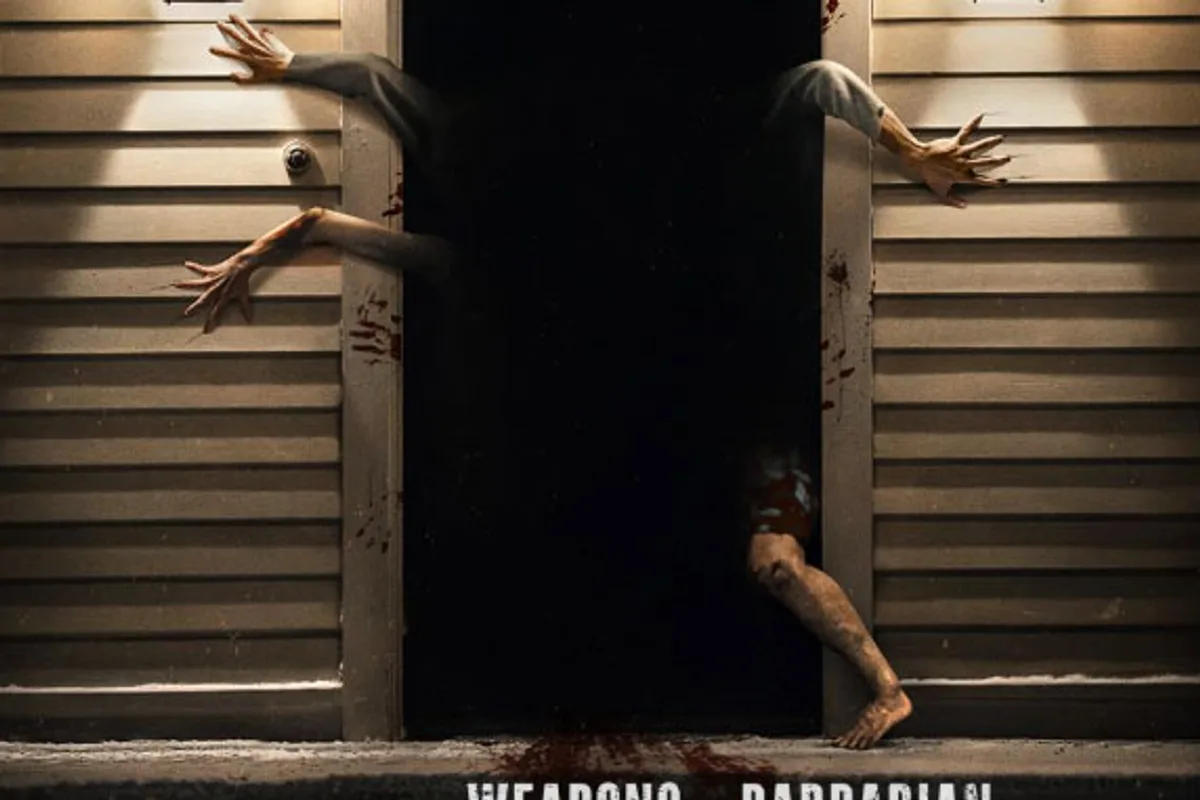
By choosing a medical courier rather than an established protagonist from the games, the film approaches that feeling through a comparatively vulnerable individual.
Bryan is not introduced as an experienced operative with extensive knowledge of biological weapons. He is someone forced to respond to an increasingly incomprehensible situation.
That perspective reflects a fundamental element of survival horror. Staying alive becomes a more immediate objective than defeating an enemy or completing a heroic mission.
Survival horror offers more than monsters and gunfire
The early Resident Evil games developed their identity around an unusual balance. Action was present, but it was not always the solution. Resources could be scarce, environments demanded careful exploration and encounters carried consequences.
Earlier cinematic adaptations often emphasized a more spectacular approach, with larger action sequences and increasingly elaborate confrontations.
The long-running film series starring Milla Jovovich developed its own commercial identity, but that approach was not identical to the experience of the games.
Cregger's involvement provides an opportunity to revisit vulnerability, unpredictability and the tension created by incomplete information.
His previous films, Barbarian and Weapons, demonstrated an interest in stories where seemingly ordinary environments conceal increasingly disturbing threats.
That does not mean Resident Evil simply repeats the construction of those productions. The new movie includes a substantial action component, but its premise creates a similar advantage: the audience encounters the danger alongside a protagonist who does not fully understand it.
The relatively compact 93-minute runtime also supports a more concentrated narrative rather than an attempt to reproduce the entire history of the franchise.
The American R rating, assigned for bloody violence, gore and strong language, confirms that Sony did not position the film as family entertainment.
That decision is consistent with the source material. Resident Evil has long depended on disturbing creature designs, physical transformation and the fear generated by hostile environments.
Austin Abrams brings a different kind of protagonist
Austin Abrams plays Bryan, the film's central character. The actor is familiar to audiences through projects including Euphoria and Weapons.
His character is not presented as a specially trained fighter or a veteran of biological emergencies. His relative inexperience becomes part of the story's immediate tension.
Zach Cherry, Kali Reis and Paul Walter Hauser complete the main cast officially confirmed by Sony Pictures.
Cregger co-wrote the screenplay with Shay Hatten, while production involves Constantin Film and several other companies associated with the film's financing and development.
The decision to focus on a new protagonist allows the adaptation to develop its own narrative without requiring viewers to know the history of every major character from the games.
It also carries an obvious risk. Fans familiar with Leon S. Kennedy, Jill Valentine, Claire Redfield and other iconic figures may prefer an adaptation built directly around those established characters.
Their importance to the games, however, does not mean every cinematic story has to depend on them.
The challenge is to maintain a recognizable franchise identity while making a film that works independently.
An adaptation that moves too far from its origins can lose the qualities that made the property attractive. One that concentrates too heavily on reproducing familiar material may struggle to develop its own cinematic personality.
Horror is thriving across film, games and streaming
Resident Evil's performance is part of a particularly strong year for horror.
During the same October weekend, Other Mommy topped the North American box office with an estimated $27.5 million debut despite unfavorable critical and audience reactions.
Resident Evil held third place several weeks into its own run.
Their simultaneous performance demonstrates how different kinds of horror can attract audiences within the same theatrical market.
One offers a supernatural threat within a domestic setting. The other combines a recognized video game franchise with mutated creatures and survival-driven action.
The Verge has also highlighted the genre's strength across video games, theatrical releases and streaming platforms during 2026.
Successful horror productions are encouraging companies to revisit established franchises while also investing in new concepts and unconventional creative approaches.
Resident Evil possesses an additional commercial advantage: its name is recognized internationally through Capcom's continuing video game series.
That recognition helps audiences identify the movie, but it does not guarantee commercial success. Previous adaptations have attracted different responses, and fans of a game do not automatically become paying moviegoers.
The latest performance instead suggests that an established property can gain renewed momentum when its newest adaptation offers a sufficiently clear cinematic proposition.
Video game movies do not always need to reproduce their source material
The success of Resident Evil raises a broader question about video game adaptations.
For years, these productions were often judged primarily according to how faithfully they reproduced recognizable characters, costumes, locations and plotlines.
Such elements remain important to fans, but they are not a complete filmmaking method.
Video games depend on player participation, repeated actions and a direct relationship between progression and challenge.
Cinema cannot reproduce those experiences in precisely the same form. It must translate the underlying appeal into tension, character development and visual storytelling that function without audience control.
Resident Evil appears to have found commercial success by drawing on the spirit of survival horror rather than rebuilding a specific game's narrative sequence.
That does not automatically make it a perfect adaptation. Box office results cannot establish the quality of its direction, performances or individual creative decisions.
They do show that this approach has attracted a substantial audience.
For studios, the distinction is valuable. An established video game property can provide the foundation for an original film, provided the creative team understands which characteristics make that property distinctive.
Zach Cregger reaches a new career milestone
With more than $320 million worldwide, Resident Evil has become the highest-grossing film of Zach Cregger's directing career, according to the figures reported by Vulture.
The result marks an important step after Barbarian and Weapons. Cregger has moved from horror projects associated with his own creative identity to an internationally distributed revival of a major franchise.
The commercial performance does not mean a direct sequel has been officially confirmed. No verified announcement in the sources used for this article establishes a production schedule or release date for another film in this particular continuity.
Nevertheless, the result gives Sony Pictures, Constantin Film and their partners a strong commercial reason to consider further development.
Any continuation would depend on additional decisions involving rights, financing, cast availability and creative direction.
The film's theatrical run is also continuing. Recent openings in China and Japan demonstrate that the final worldwide figure has yet to be determined.
Perhaps the most interesting conclusion is not simply that Resident Evil remains a valuable entertainment property. The new movie demonstrates that horror cinema can reinterpret an established franchise without reducing itself to a collection of references.
Sometimes the most effective way to adapt a survival horror game is to return to its simplest principle: place someone in a genuinely frightening situation and make survival the only thing that matters.