
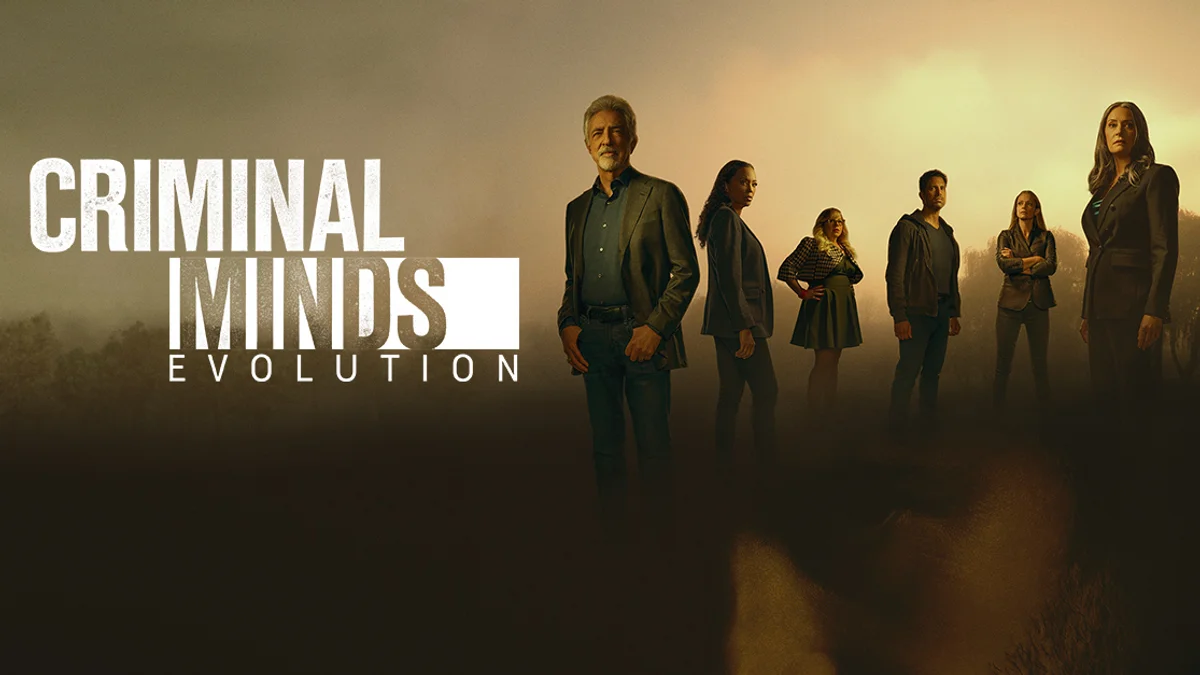
For more than two decades, the fictional profilers of the FBI's Behavioral Analysis Unit have investigated some of television's most disturbing crimes.
Now their own long-running story is approaching its conclusion.
Paramount+ announced on Friday, October 30, 2026, that Criminal Minds: Evolution will end with Season 20.
The news was reported by Variety, The Hollywood Reporter, TheWrap and several other entertainment publications.
The decision marks the end of a drama that first premiered on CBS in September 2005 and continued through a streaming revival launched in 2022.
Across those two eras, Criminal Minds has occupied an unusual position in American television.
It began as a traditional network procedural, built around recurring criminal investigations and a familiar ensemble.
It later became a more serialized streaming drama without abandoning the central characters and professional relationships that made it popular.
The twentieth season will bring that journey to an end in 2027.
Paramount+ confirms Season 20 is the last
The announcement changes the significance of an already commissioned season.
In March 2026, Paramount+ renewed Criminal Minds: Evolution for Season 20 before the nineteenth season premiered.
At the time, the early renewal suggested continued confidence in the franchise.
Season 19 subsequently aired between May 28 and July 23, 2026.
The twentieth season was already planned as the next installment.
Its status has now changed from another renewal to the final chapter of the series.
The returning cast includes Joe Mantegna as David Rossi, Paget Brewster as Emily Prentiss and A.J. Cook as Jennifer Jareau.
Kirsten Vangsness will reprise Penelope Garcia, Aisha Tyler returns as Tara Lewis and Adam Rodriguez plays Luke Alvez.
RJ Hatanaka is also returning as Tyler Green.
The final season is scheduled for 2027, although Paramount+ has not announced an exact premiere date.
Erica Messer responds to the unexpected ending
Longtime showrunner and executive producer Erica Messer addressed the decision in a statement shared with the entertainment press.
She expressed gratitude to the cast, writers, directors, crew members and viewers who have supported the series across two decades.
Her response also acknowledged the sudden nature of the ending.
That detail has become an important part of the story surrounding the cancellation.
The statement suggests that the final status of Season 20 was not necessarily part of the production's original creative plan.
Messer said the team was looking forward to sharing the twentieth season and celebrating the legacy of the series.
She did not provide a detailed explanation of the business considerations behind Paramount+'s decision.
Although some industry reporting has discussed the costs of long-running television dramas, those explanations have not been formally established as the reason for this cancellation.
The confirmed development is the ending itself, rather than any specific financial cause.
Was the final season written as a proper conclusion?
The timing of the cancellation presents an important creative question.
Several entertainment publications have reported that production on Season 20 was already complete when the news became public.
If that chronology is accurate, the writers and filmmakers may not have known that the episodes would represent the series' final installment.
That could affect the nature of the eventual ending.
A season finale written to continue an ongoing drama is not necessarily structured in the same way as a permanent series finale.
However, that does not establish that Criminal Minds will conclude with an unresolved storyline.
The final episodes have not been released, and their narrative content has not been fully disclosed.
A season may resolve its principal storyline even when it was not conceived as the last installment of an entire series.
For now, the possibility of an ending that was not deliberately designed as a farewell remains a concern rather than an established outcome.
Viewers will have to wait until 2027 to determine how the story concludes.
A television institution that began in 2005
Criminal Minds premiered on CBS on September 22, 2005.
Created by Jeff Davis, the series followed an elite FBI unit specializing in the behavioral analysis of dangerous criminals.
Its investigators attempted to understand the motivations, habits and psychological characteristics of suspects.
That approach distinguished the drama from police procedurals focusing primarily on forensic evidence or conventional detective work.
Each investigation offered a new case, while the recurring agents developed relationships and personal histories across multiple seasons.
The original run lasted fifteen seasons and concluded in February 2020.
For a time, that appeared to be the end.
Paramount+ revived the series in November 2022 under the title Criminal Minds: Evolution.
Rather than starting an entirely separate continuity, the streaming version continued the existing story and its season numbering.
The first season of Evolution was therefore Season 16 of the overall franchise.
The upcoming fifth Evolution season will be Season 20 of Criminal Minds.
The distinction explains why the current announcement describes both a five-season streaming revival and a twenty-season television institution.
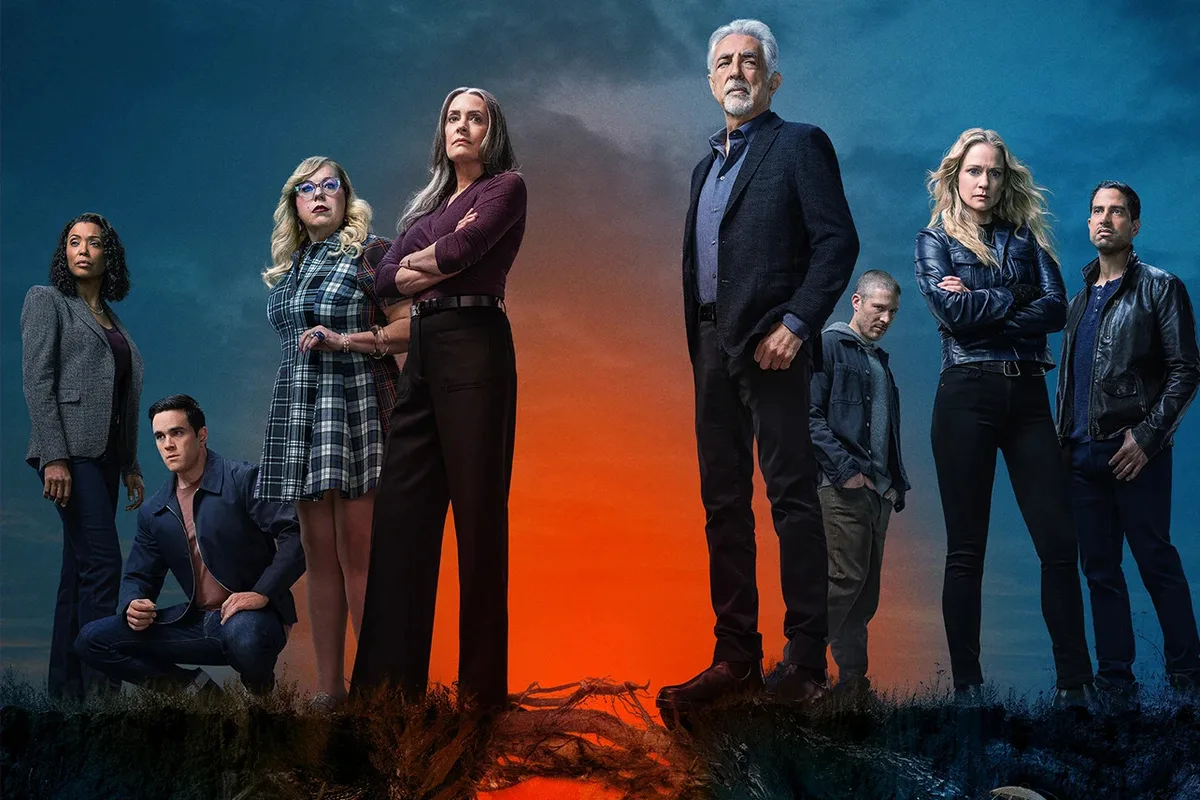
Evolution transformed the original procedural formula
The move from CBS to Paramount+ changed more than the distribution platform.
Criminal Minds: Evolution adopted shorter seasons and placed greater emphasis on investigations that unfolded across multiple episodes.
That approach reflected the storytelling possibilities of streaming television.
Instead of resolving every major threat within a single installment, the series could develop complicated antagonists and recurring investigations over longer arcs.
The darker tone and serialized structure did not eliminate the show's original identity.
The Behavioral Analysis Unit remained at the center of the drama.
The returning characters continued to rely on psychological profiling, teamwork and their accumulated experience.
For longtime viewers, Evolution offered the opportunity to reconnect with characters they had followed for years.
For new subscribers, it provided a modern entry point into a franchise with an extensive history.
The upcoming conclusion will therefore close both the original show's legacy and its streaming continuation.
Joe Mantegna and Paget Brewster remain central to the series
Joe Mantegna's return as David Rossi is especially significant.
Rossi joined Criminal Minds after the departure of Jason Gideon, the character originally portrayed by Mandy Patinkin.
Mantegna's performance helped establish a new center of gravity for the ensemble.
Over time, Rossi became one of the franchise's most enduring figures.
Paget Brewster's Emily Prentiss has also remained important through numerous changes in the team's structure.
Her character has occupied different positions within the unit and gradually developed into one of its principal leaders.
Their return maintains a strong connection to the earlier CBS seasons.
A.J. Cook, Kirsten Vangsness, Aisha Tyler and Adam Rodriguez also represent much of the continuity between the original drama and its streaming successor.
Their presence matters because Criminal Minds was never solely about the criminals being investigated.
Its emotional foundation depended on the bonds between investigators confronting difficult and often disturbing cases.
The final season will bring many of those relationships together once again.
Kirsten Vangsness reacts to the cancellation
Kirsten Vangsness was among the cast members who publicly addressed the news.
The actress, who portrays Penelope Garcia, shared an Instagram video on October 30 reacting to the ending.
Her response conveyed both disappointment and affection for the series.
Garcia occupies a distinctive position within the Criminal Minds ensemble.
Her colorful appearance, humor and emotional openness frequently contrasted with the darker aspects of the investigations.
That contrast became an important part of the show's identity.
Garcia often represented a more compassionate and visibly vulnerable response to the disturbing material confronting the team.
For viewers, she offered moments of warmth within stories that could otherwise become relentlessly bleak.
Vangsness' reaction also illustrates the personal consequences of ending a series that has occupied such a substantial part of its cast's professional lives.
Criminal Minds is not simply another production being removed from an active slate.
It is the conclusion of a collaboration that has lasted through many changes in television itself.
Will Matthew Gray Gubler return as Spencer Reid?
The approaching final season raises questions about other familiar characters.
Matthew Gray Gubler portrayed Spencer Reid throughout much of the original series.
His character became one of the show's most recognizable investigators, combining exceptional intelligence with a sometimes awkward social manner.
Gubler did not return as a regular cast member when Evolution launched.
He later made a guest appearance, but did not resume a permanent place in the ensemble.
The October 30 announcement does not establish whether Reid will feature in the final season.
It would therefore be premature to promise a complete reunion of every major character from the series' history.
The same caution applies to possible appearances by other former cast members.
The confirmed ensemble is substantial, but the production has not detailed every guest role or potential farewell.
The end of a defining era in American crime television
Criminal Minds emerged during a period when major American broadcast networks relied heavily on long-running procedural dramas.
These shows were built around recurring characters and investigations that could attract viewers week after week.
The formula allowed audiences to join at different points without necessarily needing an extensive knowledge of earlier episodes.
Criminal Minds developed its own identity by focusing on behavioral profiling and the psychology of violent offenders.
Its stories often involved difficult subject matter, but the agents' professional relationships gave the series a continuing emotional framework.
Viewers returned not only for the cases but also for the people responsible for solving them.
That combination helped the show survive numerous cast changes and shifts in the television marketplace.
Its revival demonstrated that a traditional network franchise could adapt to a more serialized streaming environment.
The cancellation now brings that long experiment to a close.
Its eventual legacy will include not only hundreds of episodes but also the way the franchise crossed between two different models of television production.
The franchise has already produced two spin-offs
Criminal Minds has previously expanded beyond its main series.
Criminal Minds: Suspect Behavior premiered in 2011 and followed a separate FBI profiling team.
The spin-off starred Forest Whitaker but lasted only one season.
Criminal Minds: Beyond Borders arrived in 2016 and focused on investigations involving American citizens overseas.
That series concluded after two seasons.
Neither spin-off achieved the longevity of the original drama.
The October 30 announcement specifically concerns the current Criminal Minds: Evolution series.
It does not amount to a permanent prohibition on future productions within the fictional universe.
At the same time, Paramount+ has not announced a replacement spin-off as part of the cancellation.
The possibility of a future revival or alternative series remains speculative.
The only confirmed plan is to conclude Evolution with Season 20.
Why is Paramount+ ending Criminal Minds?
Paramount+ has not published a detailed financial explanation for its decision.
Some industry observers have discussed production costs and the changing economics of established television dramas.
A long-running series may face significant expenses associated with cast contracts, production commitments and its overall scale.
Those are relevant considerations when examining the business environment.
They are not proof of the specific reason Criminal Minds is ending.
The decision also comes during a period of corporate change in the wider entertainment industry.
But timing alone cannot establish a direct connection between the cancellation and any particular restructuring.
Without a formal explanation identifying the causes, assigning definitive responsibility would go beyond the available information.
What Paramount+ has confirmed is that the twentieth season will end the series.
When will Criminal Minds Season 20 premiere?
The final season is scheduled to premiere on Paramount+ in 2027.
No specific month or date has been announced.
The season was originally ordered in March 2026, well before the October cancellation announcement.
That means its production history predates its designation as the final season.
Earlier episodes of Criminal Minds and Evolution remain available through Paramount+ in supported markets, although regional streaming rights can vary.
The twentieth season has not yet premiered.
The exact episode schedule and the content of the series finale remain undisclosed.
Those details will become important as the final release approaches.
A final farewell with unanswered questions
Criminal Minds will enter 2027 with its ending officially confirmed but several important questions unresolved.
The returning cast is known, yet potential appearances by other longtime favorites have not all been established.
Production reportedly finished before the cancellation was announced, leaving uncertainty about the narrative shape of the final episode.
And Paramount+ has not provided a detailed explanation for the decision.
What remains clear is the scale of the achievement.
A series that began as a CBS procedural in 2005 survived its original ending in 2020 and found another life through Paramount+ in 2022.
It continued adapting its formula while keeping many of its most recognizable characters at the center.
For Erica Messer and the cast, the final season will offer one more opportunity to share that work with audiences.
For viewers, it will mark the end of a television relationship lasting more than twenty years.
The Behavioral Analysis Unit may continue to exist within its fictional universe, but the current series is coming to a close.
Whether its final case provides a definitive farewell or leaves the audience wishing for another investigation remains to be seen.