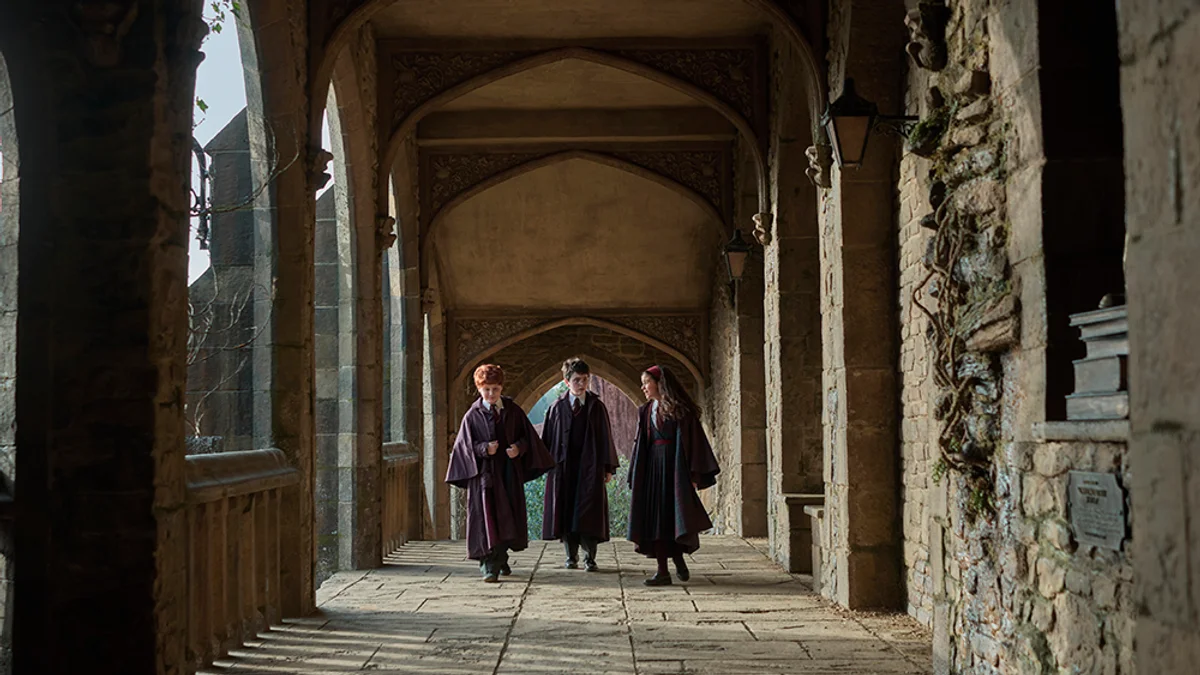
Charlie Weasley has always been an unusual presence in Harry Potter.
Readers know about his work with dragons in Romania, his history at Hogwarts and his position in the large Weasley family. Yet the original eight films never gave him a substantial onscreen role.
That is about to change.
On October 27, 2026, HBO confirmed that Harry Gilby will portray Charlie Weasley in its upcoming Harry Potter television series.
The announcement also introduced Hannah Chinn as Lily Potter and Jasper Talbot as James Potter, completing another important part of the story's family history.
All three actors have been announced for the first season, Harry Potter and the Philosopher's Stone, which is scheduled to premiere December 25.
HBO has not yet revealed how much screen time they will receive or exactly how their characters will be introduced.
Nevertheless, the casting choices provide another indication that the television adaptation intends to make room for characters and relationships that received limited attention in the films.
Hannah Chinn and Jasper Talbot become Lily and James Potter
Harry Potter's parents are central to his story despite being absent from almost all of his childhood.
James and Lily Potter were murdered by Lord Voldemort when Harry was a baby.
Their deaths set the central events of the series in motion, leaving Harry to grow up with his aunt and uncle, Petunia and Vernon Dursley.
HBO has now cast Hannah Chinn as Lily and Jasper Talbot as James.
Chinn's previous credits include Domina, Malpractice and The Conjuring: Last Rites.
Talbot has a background in theater and appeared in Broadchurch.
The pair follow Adrian Rawlins and Geraldine Somerville, who portrayed James and Lily in the original films.
Those performances were generally presented through memories, photographs and magical encounters.
The characters were important less because of their direct involvement in Harry's daily life than because of the emotional absence they left behind.
One of the first novel's defining scenes occurs when Harry encounters the Mirror of Erised, which allows him to see his family gathered around him.
The scene reveals his deepest desire: to know the parents and relatives he never had the chance to grow up with.
It would be a natural place for the new actors to appear, but HBO has not specified whether their roles will be limited to the mirror or include flashbacks and other scenes.
The announcement confirms the casting rather than a detailed account of how James and Lily will feature in the episodes.
Charlie Weasley finally gets a proper screen portrayal
Harry Gilby's casting may be particularly meaningful to readers who remember the Weasley family's larger role in the novels.
Charlie is the second son of Arthur and Molly Weasley, younger than Bill and older than Percy, Fred, George, Ron and Ginny.
He attended Hogwarts and went on to work with dragons in Romania.
His expertise is important in the first book when Hagrid acquires a young dragon named Norbert and needs help finding somewhere appropriate for the creature to live.
The original film significantly reduced that part of the story.
Although Charlie could be glimpsed in a family photograph, he never became a properly developed onscreen character.
The new television series is changing that by giving him an officially identified performer.
Gilby is known for playing Aethelstan in The Last Kingdom and has also appeared in Boarders.
His previous work demonstrates experience with period settings and ensemble television drama.
That does not establish how the HBO series will use Charlie, however.
There has been no official announcement of a dragon-centered subplot or an extended storyline about Charlie's life in Romania.
For now, the confirmed development is his inclusion in the first-season cast.
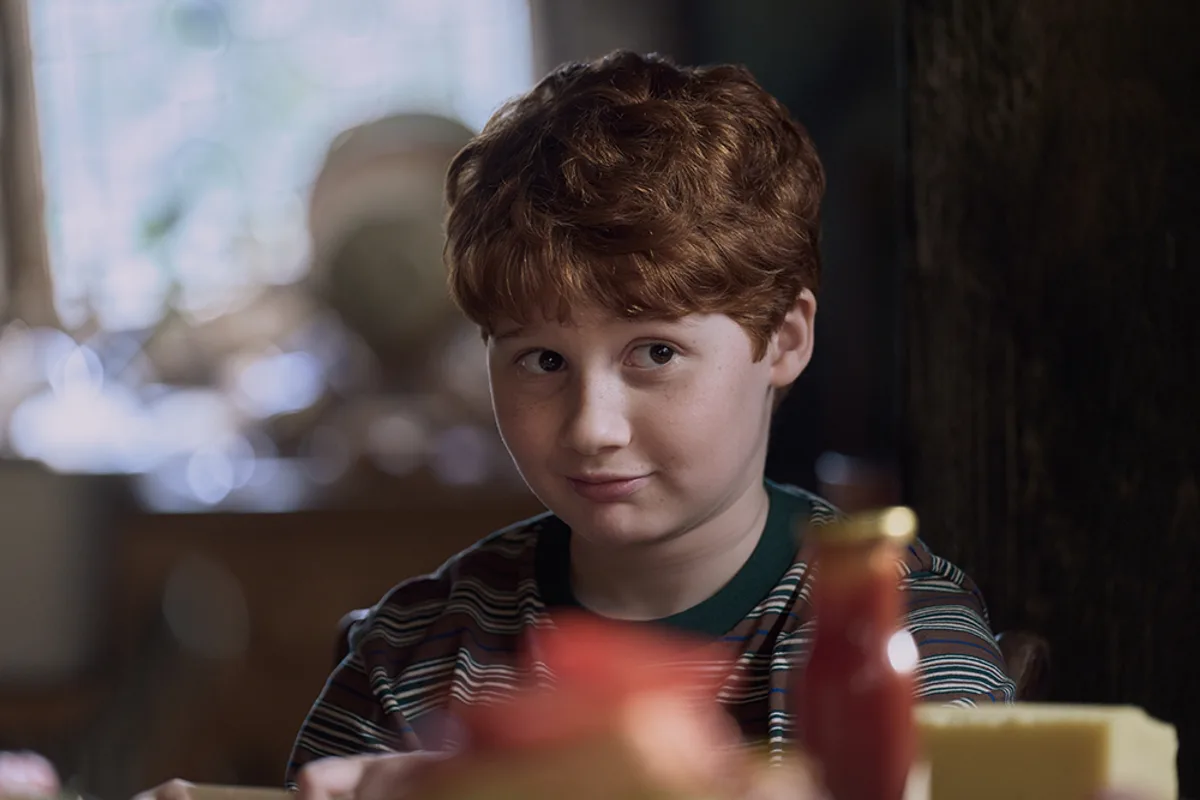
Even that is a meaningful distinction from the films.
Charlie is no longer simply a family member discussed by other characters. The show has taken a concrete step toward making him part of its visible world.
HBO wants to explore more of the books
The new adaptation has been developed around the idea that television can spend more time on J.K. Rowling's stories than a single feature film could.
Its first season consists of eight episodes devoted to Harry Potter and the Philosopher's Stone.
The extended format creates opportunities to spend more time with Harry's relatives, school life and supporting characters.
HBO's promotional footage has already emphasized scenes that received less attention in the 2001 film.
These include Harry's experiences at Muggle school, additional details of his difficult childhood with the Dursleys and smaller moments from his first encounters with the wizarding world.
Charlie Weasley's inclusion fits that broader approach.
It suggests the writers are prepared to revisit characters who were reduced or removed during the process of turning the books into movies.
The challenge is not simply including more material for its own sake.
A longer adaptation still needs to maintain dramatic momentum and decide which supporting stories meaningfully contribute to the central plot.
James and Lily Potter pose a different challenge.
Their absence is essential to Harry's identity, meaning that additional appearances must preserve the emotional significance of the loss.
More screen time is not automatically better if it weakens the feelings that define his relationship with his parents.
The Weasley family is taking shape across multiple seasons
Gilby joins a substantial group of actors portraying members of the Weasley family.
Alastair Stout plays Ron, one of Harry's closest friends, while Katherine Parkinson portrays Molly Weasley.
Ruari Spooner plays Percy, and twins Fred and George are portrayed by Tristan and Gabriel Harland.
Gracie Cochrane portrays Ginny during the first season.
HBO has separately announced that Bonnie Hill will play Ginny in Season 2, while Rafe Spall joins as Arthur Weasley.
These casting decisions demonstrate that the production is already planning how the family will appear across different installments.
That continuity matters because the Weasleys gradually become one of Harry's most important sources of emotional support.
Their home offers a sharp contrast with Privet Drive, where Harry has grown up feeling unwelcome and isolated.
The Weasleys are not simply supporting comic characters.
They provide Harry with a sense of belonging, helping him understand what ordinary family affection can look like.
A series with more time to explore their relationships may be able to strengthen that contrast without significantly altering the novels' main events.
Season 2 is already moving forward
HBO has made significant preparations for the second season before the first has even premiered.
The follow-up, adapting Harry Potter and the Chamber of Secrets, has been confirmed and is already in production at Leavesden Studios outside London.
Several cast members associated with that installment have also been announced.
Kit Harington will play Gilderoy Lockhart, the celebrity wizard who becomes Hogwarts' Defence Against the Dark Arts teacher.
Lenny Rush has been cast as Dobby, the house-elf whose attempts to protect Harry create major complications.
Billy Barratt will portray Tom Riddle.
Molly Hewitt-Richards is attached to play Moaning Myrtle, and Jasper Ambrose will portray Colin Creevey.
These roles belong to the second-season production plans and should not be mistaken for newly announced first-season appearances.
By contrast, Chinn, Talbot and Gilby were announced in connection with Harry Potter and the Philosopher's Stone.
That makes the latest additions directly relevant to the approaching December premiere.
An ambitious cast for the return to Hogwarts
The new Harry Potter series has assembled an extensive ensemble around its three young leads.
Dominic McLaughlin plays Harry, Arabella Stanton portrays Hermione Granger and Alastair Stout is Ron Weasley.
John Lithgow stars as Hogwarts headmaster Albus Dumbledore.
Janet McTeer portrays Professor Minerva McGonagall, Paapa Essiedu plays Severus Snape and Nick Frost appears as Rubeus Hagrid.
Lox Pratt plays Draco Malfoy, while Warwick Davis returns as Filius Flitwick.
Daniel Rigby and Bel Powley portray Vernon and Petunia Dursley.
Petunia's relationship with Lily is particularly significant because it helps explain the hostility Harry experiences during his childhood.
She knew about the wizarding world through her sister, yet raises Lily's son in an environment where magic is treated as something shameful.
Casting Lily gives the production a way to establish the person whose memory influences both Harry's emotional life and Petunia's behavior.
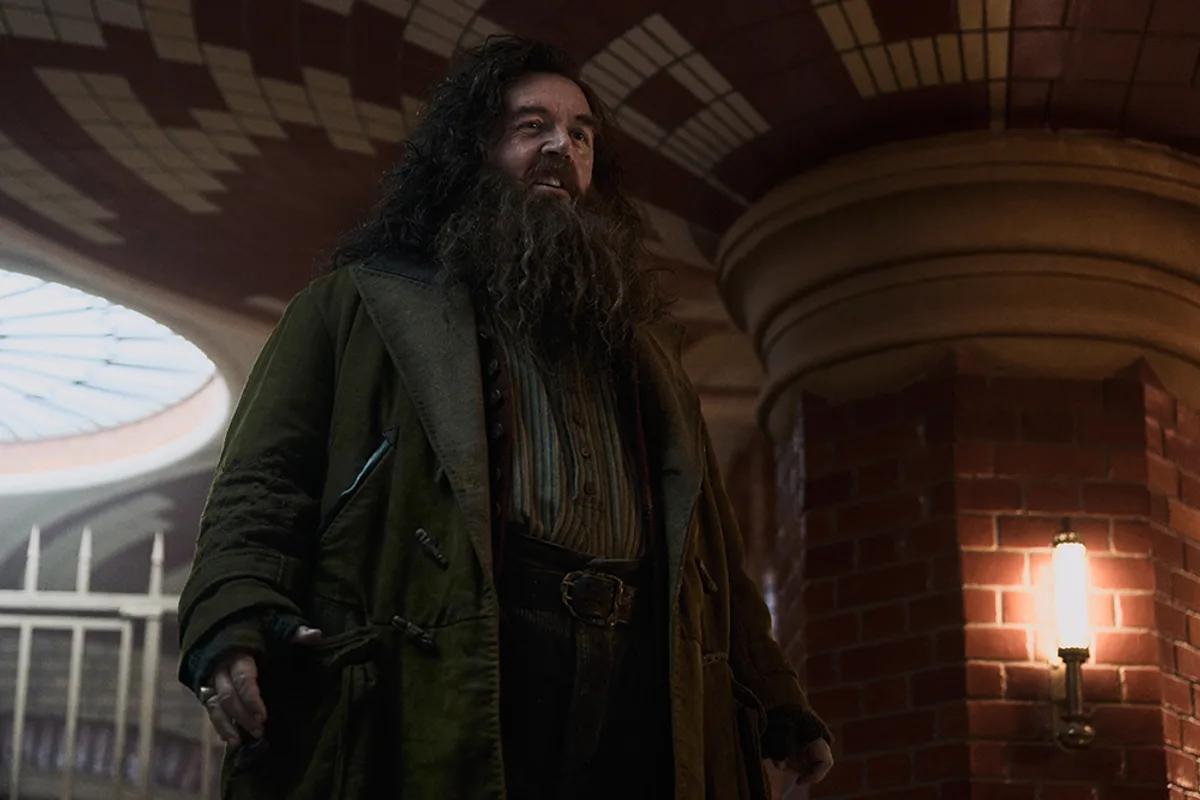
The series combines experienced television and film performers with younger actors who will be expected to grow into their roles over multiple seasons.
That is one of the production's biggest long-term challenges.
Each installment must stand on its own while maintaining continuity across an expanding story, cast and fictional world.
Francesca Gardiner leads the creative team
The series is written and executive produced by Francesca Gardiner.
Mark Mylod, whose previous credits include Succession and The Last of Us, serves as an executive producer and directs multiple episodes.
HBO is producing the adaptation in association with Brontë Film and TV and Warner Bros. Television.
J.K. Rowling, Neil Blair, Ruth Kenley-Letts and David Heyman are among the executive producers.
Heyman was a producer on the original Harry Potter film franchise, providing a link between the previous screen adaptations and the new production.
The series nevertheless has a distinct cast, creative leadership and visual presentation.
HBO's trailers have already revealed redesigned Hogwarts environments, new costume details and different interpretations of several familiar characters.
The arrival of Charlie Weasley is another example of the television format potentially changing the emphasis of the adaptation.
Rather than reproducing the films scene for scene, the creative team has an opportunity to draw directly from material that earlier productions omitted.
The results will depend on how those choices are incorporated into the finished episodes.
Harry Potter premieres December 25, 2026
The first season of Harry Potter and the Philosopher's Stone is scheduled to debut on Friday, December 25, 2026.
The eight-episode production will air on HBO and stream on HBO Max in supported territories, subject to local distribution arrangements.
Promotional teasers have already introduced the young leads, Hogwarts and several members of the supporting cast.
However, HBO has not yet released specific scenes establishing how Chinn, Talbot and Gilby will appear in their new roles.
The announcement should therefore be understood as confirmed casting rather than a detailed preview of their performances.
For James and Lily Potter, the new series offers another chance to portray the parents whose loss defines Harry's earliest experiences.
For Charlie Weasley, it represents something different: an opportunity to become an onscreen character after years of being largely absent from the films.
That combination captures the larger promise of HBO's adaptation.
The central story remains familiar, but eight television episodes may allow its world to expand beyond the people and events that received attention in the original movies.
Whether that additional detail improves the storytelling will become clear when audiences return to Hogwarts on Christmas Day.