Four nominations became four awards for Tales from Outer Suburbia at the 2026 Screen Music Awards.
Josh Hogan and Ned Beckley emerged as the evening's most successful composers, collecting four trophies for their work on the Australian animated series based on Shaun Tan's illustrated stories.
The ceremony took place Wednesday, October 28 at Brisbane's Fortitude Music Hall.
Organized by APRA AMCOS and the Australian Guild of Screen Composers, the awards recognize music written for film, television, advertising, interactive media and other screen productions.
The composers won Best Music for Children's Programming, Best Opening Title Television Theme and Best Soundtrack Album.
They also received the award for Best Original Song Composed for the Screen, sharing that recognition with Joni Hogan for Nothing Stays the Same.
The result represents a complete sweep of the four categories in which Hogan and Beckley were nominated for the series.
More importantly, the awards recognize different elements of the same musical world, from an individual episode to the opening sequence and soundtrack album.
Four awards, four different musical achievements
The Best Music for Children's Programming prize specifically recognized the tenth episode of Tales from Outer Suburbia.
The category rewards composition for programming aimed at younger audiences, where music often plays an important role in expressing emotions, guiding narrative transitions and supporting imaginative storytelling.
Hogan and Beckley also received Best Opening Title Television Theme.
An opening theme carries a distinct responsibility. It must establish a recognizable identity in a relatively short period, preparing viewers for the world they are about to enter.
That task is especially important for a series in which the ordinary and extraordinary frequently overlap.
The Best Soundtrack Album award recognizes the compositions as a collected musical work extending beyond their immediate function in individual scenes.
Finally, Nothing Stays the Same received Best Original Song Composed for the Screen.
The official credits identify Ned Beckley, Josh Hogan and Joni Hogan as the song's composers.
Together, the four results demonstrate that the music was recognized across several disciplines rather than for one isolated composition.
The distinction is also worth defining accurately. These are specialist screen music awards, not general television awards covering every aspect of production.
A suburb where the impossible feels familiar
The music belongs to an unusual animated world.
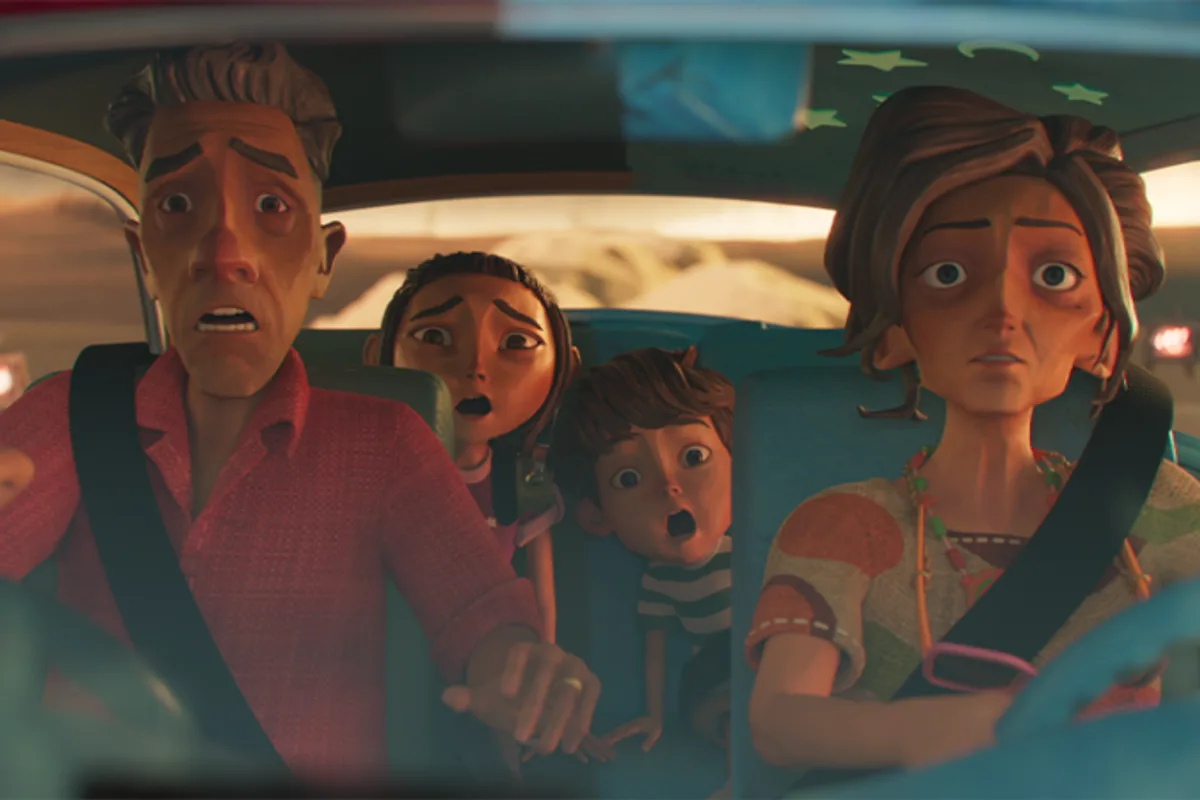
Tales from Outer Suburbia follows siblings Klara and Pim as they move with their mother, Lucy, to a new neighborhood.
Their surroundings initially resemble an ordinary Australian suburb, complete with houses, streets and gardens.
But strange encounters soon disrupt that familiar environment.
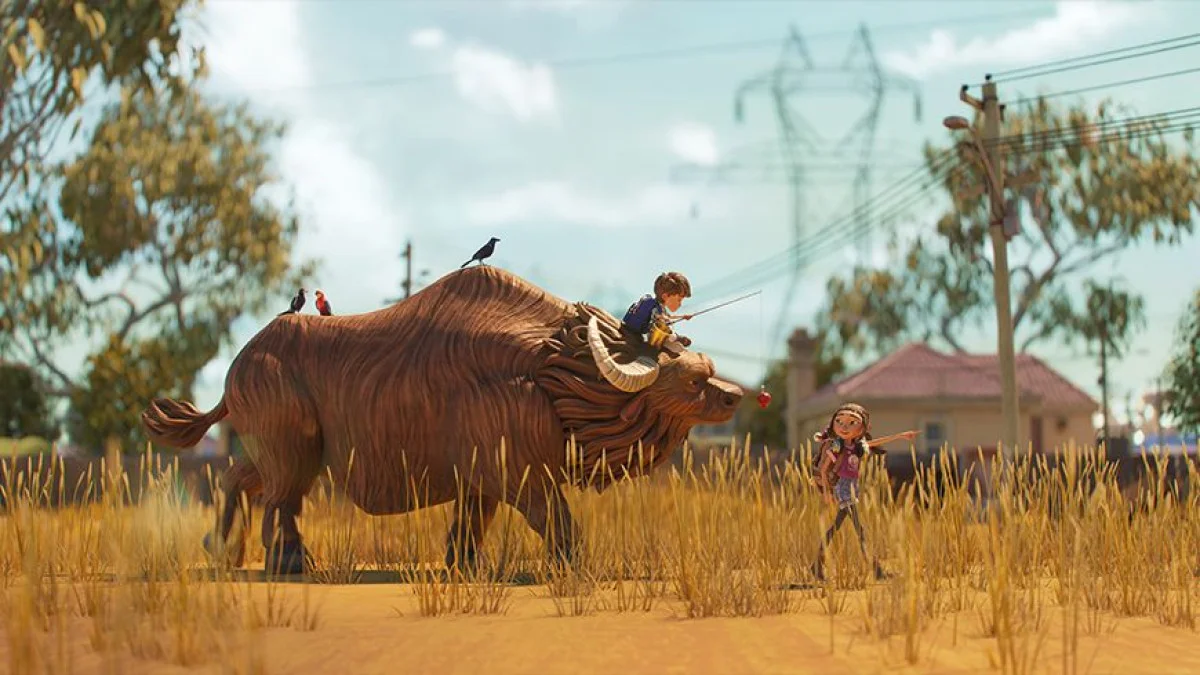
The children discover a mysterious water buffalo, meet a lost deep-sea diver and experience events that challenge their understanding of the world around them.
These incidents are not simply opportunities for action or spectacle.
They are connected to the characters' experiences of family change, uncertainty, loneliness and the challenges of growing up.
The series is based on Shaun Tan's illustrated collection Tales from Outer Suburbia, published in 2008.
Tan drew inspiration from the suburban landscapes and childhood experiences of Western Australia, combining recognizable domestic settings with extraordinary creatures and events.
The original book consists of separate stories, many with different narrative approaches and characters.
That structure created an adaptation challenge. A television series needed a stronger sense of continuity than the collection naturally provided.
The creative team responded by building an ongoing story around a central family while preserving the original material's surreal qualities.
How music supports an unexplained world
Animated fantasy can use music in many different ways.
A score might emphasize excitement, announce danger or tell viewers exactly how to interpret an emotional scene.
Tales from Outer Suburbia presents a more delicate problem.
Its extraordinary events take place in a world that feels broadly recognizable. The series often resists offering complete explanations for what characters encounter.
That creates room for music to establish emotional connections without resolving every mystery.
Hogan and Beckley's compositions support a visual world containing both intimate family moments and surreal experiences.
The award-winning score helps connect those different registers through a consistent musical identity.
This function is closely related to Shaun Tan's own approach to storytelling.
In an interview published by the Australian Children's Television Foundation in June 2025, Tan explained that he wanted viewers to experience a productive sense of uncertainty.
He was interested in stories whose meaning could remain partly elusive rather than being fully explained by the narrative.
For the music, that creates an opportunity to suggest feelings that the dialogue and images do not explicitly define.
Such an approach makes the soundtrack a participant in the storytelling rather than a decorative addition.
Shaun Tan helped guide the adaptation
Bringing Tales from Outer Suburbia to television required years of creative development.
Noel Cleary directed the series, with Shaun Tan serving as creative director.
The production was developed by Highly Spirited and Flying Bark Productions for ABC and BYUtv.
Tan had previously received proposals to adapt the original book, but its unusual structure created difficulties for conventional screen storytelling.
The individual stories offered rich imagery and imaginative situations without necessarily providing a continuous narrative arc.
The television team therefore developed new connections between stories and established recurring characters.
Klara, Pim and Lucy became central to that adaptation process.
The visual style also evolved beyond the appearance of Tan's original illustrations.
At Flying Bark, artists, writers and animators worked to create a unified animated world while retaining elements of the source material's strange atmosphere.
Tan described the process as highly collaborative, with different members of the creative team contributing their own experiences and ideas.
He also discussed the moment when animation, lighting, character movement, sound and music finally come together.
What begins as a constructed visual object develops the illusion of an independent life.
The musical awards now offer specific recognition to one of the departments that helped achieve that transformation.
The ten episodes have already premiered
Tales from Outer Suburbia is not an upcoming series awaiting its first release.
All ten episodes premiered on Australia's ABC iview service beginning January 1, 2026.
Each installment runs for approximately 22 minutes.
The series was also developed for BYUtv in the United States, with the Australian Children's Television Foundation handling international distribution.
The announced voice cast includes Dawn French, Geraldine Hakewill, Shabana Azeez, Michael Theo, Tony Nikolakopoulos, Brooklyn Davies, Felix Oliver Verges and Andrea Solonge.
The first episode, Water Buffalo, introduces the children to their unfamiliar neighborhood and an extraordinary animal.
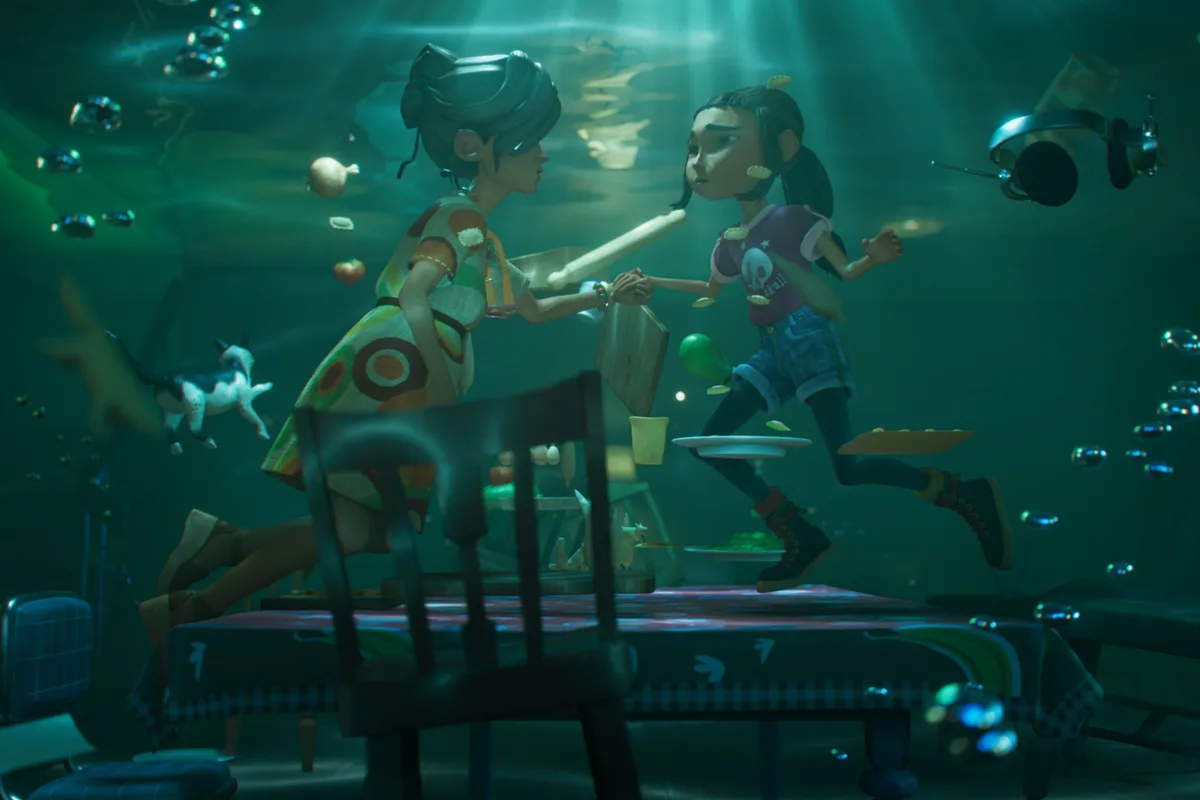
Broken Toys features a mysterious diver who appears to be far from where he belongs.
Distant Rain explores the characters' difficulties expressing themselves while an unusual event develops around them.
The series uses these fantastical encounters to examine experiences that are recognizable even when the events themselves are impossible.
The October awards therefore celebrate a completed and released production, not a newly announced season.
From Annecy to Australian television
The series had already attracted international interest before reaching Australian audiences.
In 2025, its third episode, Distant Rain, was selected for the Annecy International Animation Film Festival in France.
The presentation brought the adaptation to one of the industry's leading animation events ahead of its television premiere.
The project received support from several Australian screen organizations, including Screen Australia, Screenwest and the Australian Children's Television Foundation.
ABC and BYUtv were also involved as broadcast partners.
Shaun Tan's international reputation provided another foundation for the production.
His previous work includes The Lost Thing, the animated short film he co-directed with Andrew Ruhemann that won an Academy Award in 2011.
His illustrated books frequently explore displacement, memory, belonging and the way extraordinary images can communicate emotions that are difficult to describe directly.
The television adaptation takes those interests into a collaborative, serialized form.
Its success at the Screen Music Awards adds another stage to a journey that began with an illustrated book and extended through animation festival screenings and public television.
Other winners at the 2026 Screen Music Awards
Tales from Outer Suburbia was the night's standout success, but the ceremony recognized a much broader range of music.
The Screen Music Awards were hosted by actor and singer Rob Collins, with Claudia Karvan and Ayesha Madon among the guest presenters.
Erkki Veltheim led a live orchestra performing selections from nominated compositions.
The Feature Film Score of the Year award went to Piers Burbrook de Vere and Rose Mackenzie-Peterson for Addition.
Helena Czajka won Best Music for a Documentary for Sentient.
Antony Partos received Best Music for a Television Drama for an episode of The Artful Dodger Season 2.
In interactive entertainment, Christopher Larkin won Best Music for a Video Game or Other Interactive Media for Hollow Knight: Silksong.
Finn Clarke received the Emerging Screen Composer of the Year award.
Composer Cezary Skubiszewski was honored for distinguished services to Australian screen music, recognizing his extensive contribution to film and television composition.
These awards demonstrate how varied the contemporary screen music profession has become.
The same ceremony can recognize a children's animated series, a feature film, a television drama, a documentary and an interactive video game.
That context makes the four wins for Hogan and Beckley particularly notable within their profession.
What the sweep means for animated storytelling
The achievement points to a part of animation that audiences may recognize emotionally without always noticing consciously.
Music can shape how a scene unfolds, how a character's uncertainty is communicated and how a fantastical event becomes emotionally believable.
That is particularly relevant to Tales from Outer Suburbia.
The series does not rely exclusively on conventional adventures with explicit explanations and neatly resolved mysteries.
Its images often invite viewers to experience something strange and decide for themselves what it might mean.
The soundtrack can support that ambiguity by connecting different scenes through feeling rather than explanation.
Winning the opening theme, soundtrack album, children's programming and original song categories suggests recognition across both the narrative and standalone musical aspects of the production.
It is a substantial professional achievement, even if awards alone cannot determine the artistic value of a series for every viewer.
The result also brings attention to the collaboration required to turn Shaun Tan's visual imagination into a fully realized animated environment.
Four confirmed wins, with no new season announced
As of October 29, 2026, the awards results are confirmed.
Josh Hogan and Ned Beckley won four Screen Music Awards for Tales from Outer Suburbia, including the original song prize shared with Joni Hogan.
The announcement does not include a second-season renewal or a new premiere date.
The existing ten-part series remains available through ABC iview in Australia, subject to the service's regional access arrangements.
For the creators, the awards represent recognition of a musical identity that has become an important part of Shaun Tan's animated world.
The series explores the ways childhood experiences can feel both familiar and impossible to explain.
Its four awards suggest that music has been one of the most successful tools used to give those experiences shape, allowing the extraordinary to feel emotionally real without requiring every mystery to be solved.