
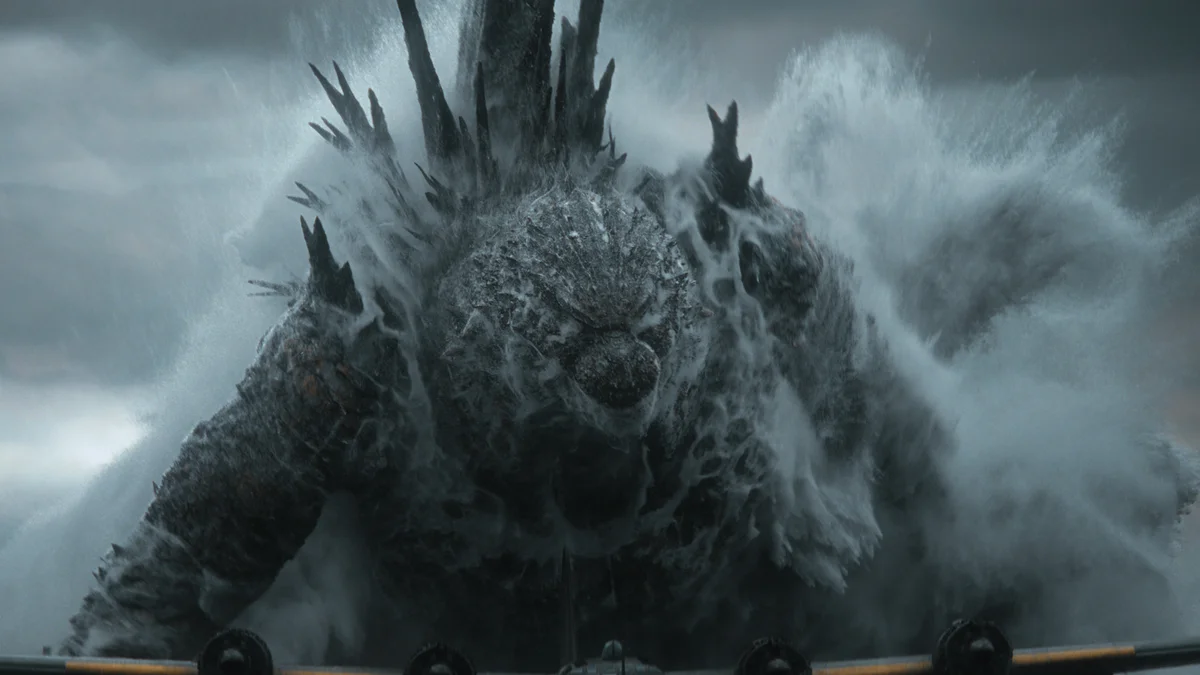
The king of the monsters has returned to Japanese cinemas with a box-office result that even its distributors are treating as exceptional. Godzilla Minus Zero generated ¥910 million on its first day, drawing more than 590,000 admissions and establishing what Toho and GKIDS describe as a new national opening-day record for live-action filmmaking.
The figures cover November 3, 2026, the date of the film's Japanese theatrical debut. Toho announced them the following day, citing box-office data from Kogyo Tsushin.
The distributors say no Japanese or foreign live-action feature has previously generated more revenue on a single opening day in Japan. The comparison includes Hollywood productions released in the country, although it excludes animated films.
That distinction is essential to the scale of the claim. Godzilla Minus Zero has not become Japan's highest-grossing film of all time after one day, nor has it established a record covering all cinematic formats.
What it has achieved is a record within a clearly defined category, supported by a particularly strong attendance figure.
Its opening-day revenue reached approximately 201% of the amount earned by Godzilla Minus One on its corresponding first day, according to the official announcement. In practical terms, the sequel opened at a little more than twice its predecessor's level.
The result establishes enormous initial demand. What it cannot yet establish is how long that demand will continue.
A record launch with important qualifications
The ¥910 million total was valued at approximately $5.75 million in the distributors' statement. The Japanese-currency amount is the more useful benchmark for comparing the film with earlier domestic box-office performances.
More than 590,000 moviegoers attended screenings on November 3. This is a first-day attendance figure, not the result of a complete opening weekend.
The release date was chosen for a reason. November 3 is a national holiday in Japan and marks the anniversary of the original Godzilla film's theatrical debut in 1954.
The franchise has turned that anniversary into Godzilla Day, giving the new film a highly recognizable occasion around which to build its theatrical launch.
The holiday calendar also complicates comparisons with movies that opened on ordinary weekdays. A large audience arriving on a public holiday may help generate an extraordinary first day, even if the subsequent pattern of attendance proves less unusual.
Premium formats are another consideration. Godzilla Minus Zero has been promoted extensively through IMAX screenings, which can carry higher ticket prices than standard presentations.
The reported revenue therefore reflects both demand and the mix of ticket formats. It should not be treated as a pure measurement of audience size, which is why the attendance figure matters alongside the gross.
Toho has suggested that the opening creates an opportunity for the film to surpass ¥10 billion in Japanese box-office revenue over its theatrical run.
That remains a target, not a completed achievement.
Godzilla Minus One changed the franchise's expectations
The new film inherits a very different commercial environment from the one its predecessor entered in 2023.
Godzilla Minus One returned the creature to postwar Japan, framing its destructive arrival through the experience of people already struggling with grief, guilt and the consequences of national devastation.
Its central character, Koichi Shikishima, was a former kamikaze pilot whose survival had left him carrying an overwhelming sense of shame.
Takashi Yamazaki used that human story to give Godzilla's destruction emotional weight. Buildings were not simply collapsing because a giant monster made for spectacular entertainment. Each attack threatened people whose attempts to rebuild their lives had already been established.
The approach attracted audiences well beyond Japan. According to figures publicized by Toho and GKIDS, Godzilla Minus One ultimately earned more than $116 million worldwide.
It also won the Academy Award for Best Visual Effects in 2024, a milestone for Japanese filmmaking and the Godzilla franchise.
Yamazaki's involvement in writing, directing and supervising visual effects became an important part of the movie's reputation.
Those achievements created expectations for the sequel that the earlier film did not have to carry. Godzilla Minus Zero is no longer introducing an unfamiliar creative approach to a skeptical audience.
It is following an internationally acclaimed feature whose success has become part of the marketing for the new installment.
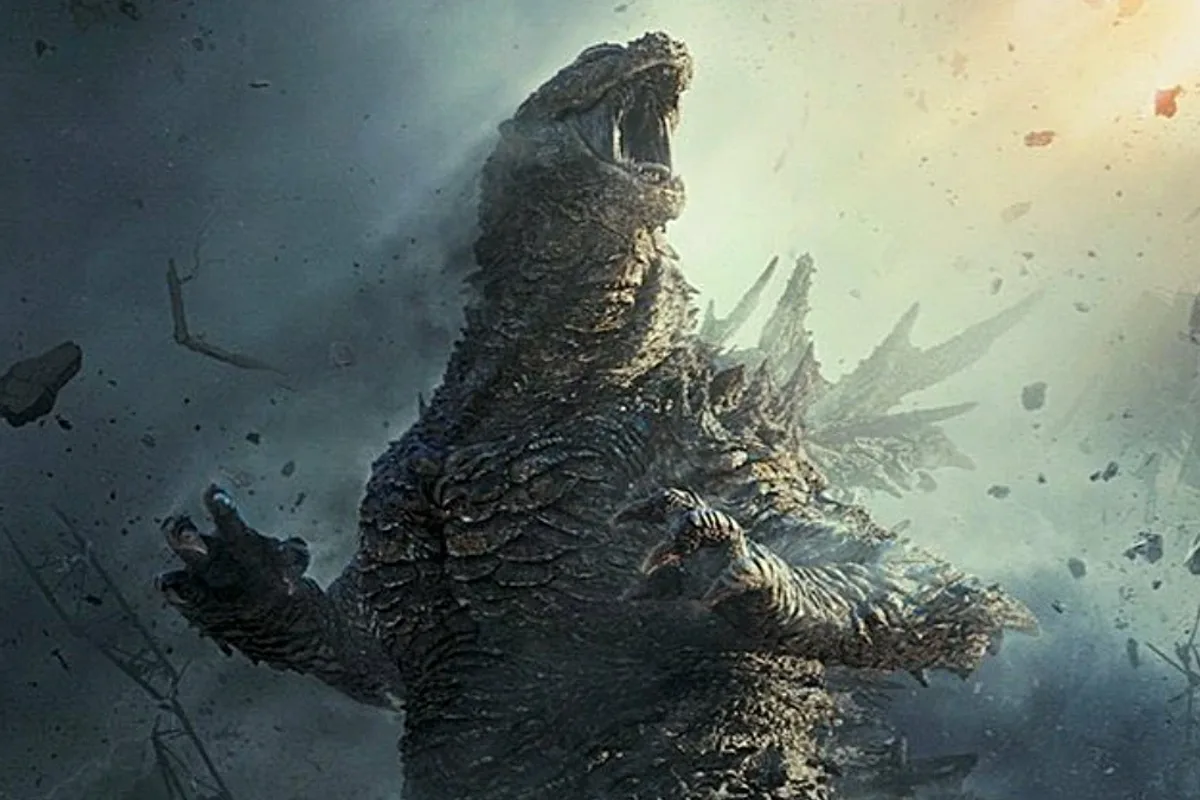
The opening-day figures indicate that this reputation translated into immediate ticket demand in Japan. They do not yet establish whether the sequel will enjoy the same long-term critical or commercial response.
The Shikishima family returns in 1949
Godzilla Minus Zero continues the story two years after the events of the previous film.
Set in 1949, it follows a Japan attempting to recover from war and reclaim some form of ordinary life after the devastation already inflicted by Godzilla.
Ryunosuke Kamiki reprises his role as Koichi Shikishima, with Minami Hamabe returning as Noriko Shikishima. Their family is confronted by another catastrophe just as recovery begins to feel possible.
The choice to retain these characters gives the sequel a clear narrative connection to the first film, rather than treating Godzilla as the only recurring element.
Yamazaki again serves as writer and director while supervising visual effects. Toho Studios and ROBOT are involved in production, with SHIROGUMI responsible for visual effects.
Several supporting performers also return, including Hidetaka Yoshioka as Kenji Noda, Yuki Yamada as Shiro Mizushima, Kuranosuke Sasaki as Seiji Akitsu and Sakura Ando as Sumiko Ota.
New additions include Masami Nagasawa as Makoto Aoyama, a weather forecasting specialist associated with the Disaster Response Bureau, and Min Tanaka as biologist Kanji Murakami.
Their inclusion expands the scientific and institutional dimensions of the story. The returning characters, meanwhile, allow the film to explore how survivors of the first catastrophe respond when confronted by another threat.
That human continuity is one of the central creative differences between this Japanese series and monster movies built primarily around encounters between giant creatures.
IMAX is part of the film's identity, not just its release plan
Godzilla Minus Zero has also been promoted as the first Japanese production made under the Filmed For IMAX program.
The designation refers to a production process involving IMAX-certified high-definition digital cameras and image and sound optimization for compatible theaters.
Some sequences are designed to make use of the expanded 1.43:1 aspect ratio, offering a taller image in appropriately equipped auditoriums.
This should not be confused with a claim that the entire movie was shot using traditional IMAX film cameras.
The technical approach is particularly relevant to a Godzilla film because scale is such an important element of its visual storytelling.
The creature's presence can be communicated through the relationship between its body, the surrounding architecture and the human figures attempting to survive.
A taller frame offers another way to emphasize that disproportion without relying exclusively on more elaborate effects.
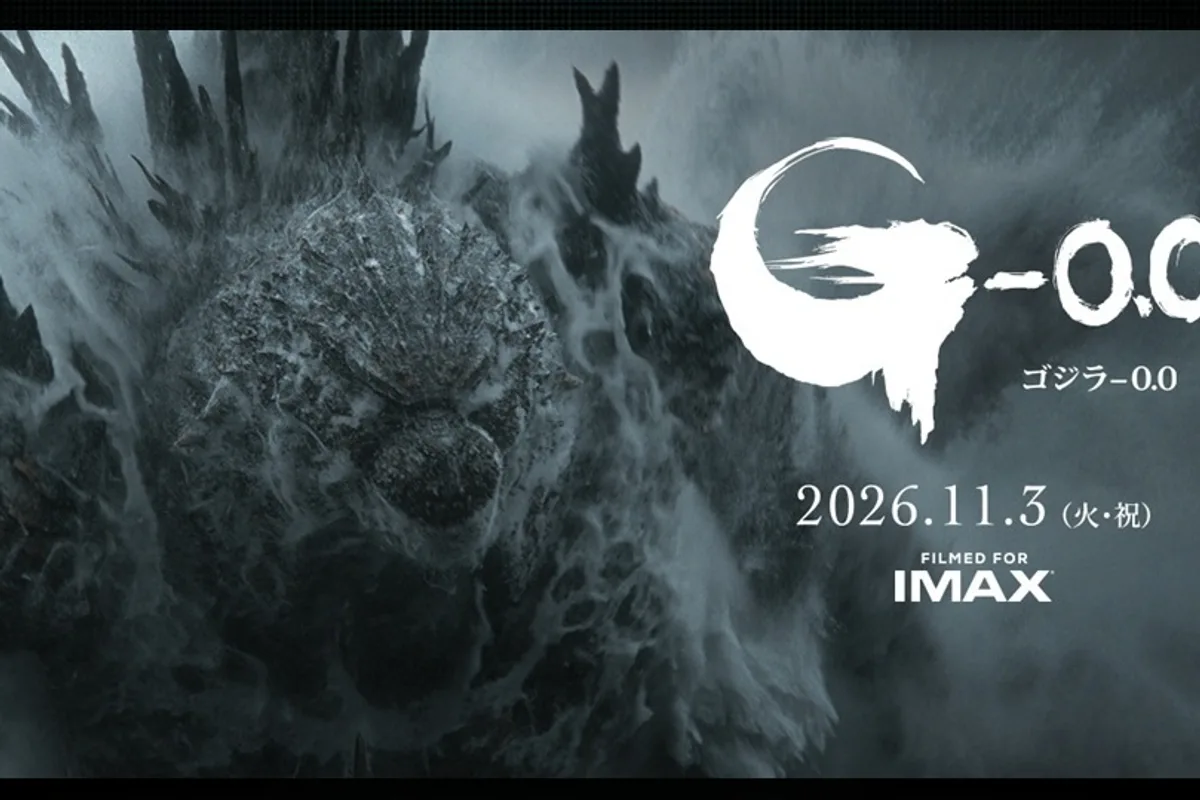
For Toho, the IMAX approach also has a clear commercial dimension. Premium theatrical experiences offer distributors a way to encourage cinema attendance and generate revenue from higher-priced ticket categories.
However, the opening-day statement does not isolate the exact contribution of IMAX or other premium formats to the ¥910 million total.
It is therefore possible to identify the format as a major part of the release strategy without claiming that it was responsible for any specific share of the record.
A faster international release than before
The distribution strategy also marks an important change.
Godzilla Minus Zero opened in Japan on November 3. North American audiences were offered early IMAX screenings on the same day, with GKIDS scheduling its wide theatrical release for November 6.
That near-simultaneous arrangement contrasts with the longer gaps that have historically separated Japanese Godzilla releases from their international distribution.
The decision reflects how much the franchise's commercial position has changed following the international success of Godzilla Minus One.
GKIDS became part of Toho in 2024. The distributor, widely associated with bringing Japanese animation to North American cinemas, is now handling a major Japanese live-action theatrical release for the group.
That corporate relationship gives Toho a distribution operation closely connected to its broader ambitions outside Japan.
The company has also announced international releases across additional territories, although schedules differ by country.
A North American release date should not be interpreted as confirmation that every European market will receive the film at precisely the same time.
The record announced on November 4 concerns Japanese box-office revenue alone. It does not include ticket sales from early international screenings.
The ¥10 billion milestone is now within the company's sights
Toho's interest in the ¥10 billion threshold comes from the historical performance of the Japanese Godzilla series.
Godzilla Minus One ended its domestic theatrical run at approximately ¥7.65 billion, according to figures cited by Japanese industry reporting.
Crossing ¥10 billion would therefore place the sequel at a new level for the franchise in its home market.
But opening-day momentum is not enough to establish that outcome.
Strong initial demand can reflect advance ticket purchases, franchise enthusiasm and the appeal of special screenings. Sustained success depends on additional audiences arriving after the most dedicated fans have already attended.
Reviews, word of mouth, repeat viewing and competing theatrical releases will all influence the subsequent results.
The sequel also enters cinemas with a major advantage over its predecessor: an established reputation.
Godzilla Minus One had to establish the appeal of its particular combination of period drama and monster spectacle. Godzilla Minus Zero benefits from audiences who already know Yamazaki's approach and want to see the continuation.
That advantage may produce stronger initial attendance. Whether it results in a higher final total will require more than one day's data.
The box-office figures also cannot be used to calculate the film's profit without reliable information about production costs, marketing spending and revenue-sharing arrangements.
A significant moment for the Japanese Godzilla franchise
Godzilla's theatrical identity has developed along multiple paths.
Legendary and Warner Bros.' MonsterVerse has built a large-scale international franchise around spectacular clashes between giant creatures.
Toho's Japanese productions have explored different directions, including the bureaucratic and political concerns of Shin Godzilla and the postwar human drama of Godzilla Minus One.
The commercial comparison between those productions requires care because their budgets, territories and release structures are different.
Nevertheless, the new opening-day result shows that a Japanese Godzilla feature can generate event-level demand at home while launching with a coordinated international theatrical strategy.
The film's first-day record provides Toho with a particularly strong commercial opening to that strategy.
The next question is whether Godzilla Minus Zero can convert its spectacular initial response into a longer theatrical run capable of matching or surpassing the achievements of the film that preceded it.
For now, the confirmed result is substantial enough on its own: ¥910 million and more than 590,000 admissions in Japan on November 3, establishing the live-action opening-day benchmark reported by Toho and GKIDS.