
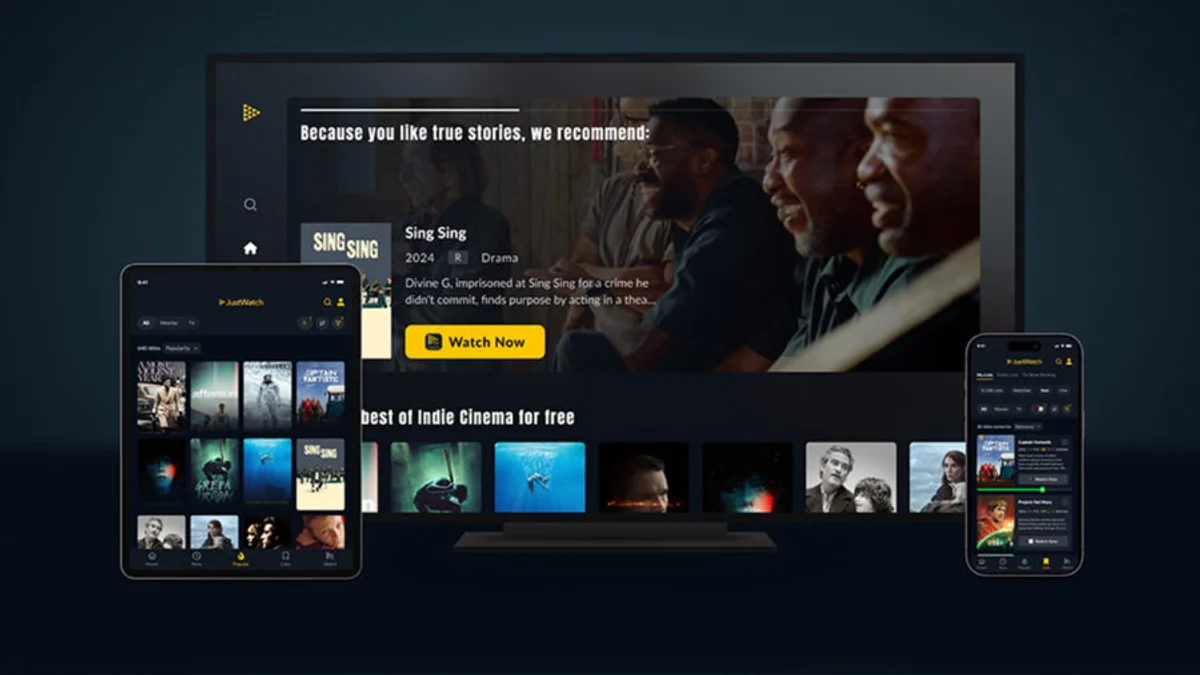
The familiar JustWatch experience usually ends with a departure.
Someone searches for a movie, discovers that it is available on Netflix, Prime Video or another streaming service, and follows a link to the appropriate platform.
JustWatch helps users find entertainment, but another company ultimately delivers it.
That arrangement is changing.
JustWatch TV officially launched on October 20, 2026, allowing audiences to watch selected films and television shows directly through the company's existing website and applications.
The guide remains in place. It continues to index competing services and help viewers locate titles across the streaming market.
But when a film is available through JustWatch TV, the customer can now watch without leaving the interface.
The technical convenience is straightforward. The commercial implications are considerably larger.
JustWatch is moving from directing traffic toward other distributors to becoming a distributor in its own right.
Three ways to watch, rather than one conventional subscription
JustWatch TV launches with three distinct access models.
JustWatch TV Free provides a curated selection of movies and shows supported by advertising.
Users can watch included titles without paying a conventional subscription fee, although commercial interruptions help finance the offering.
JustWatch TV Store provides transactional rentals. Customers pay to access individual movies rather than relying exclusively on a recurring subscription.
The Store is initially available in five markets: the United States, United Kingdom, Ireland, Australia and New Zealand.
The company plans further geographic expansion, but the launch announcements do not establish a detailed timetable for each additional country.
The third option is JustWatch TV Plus.
This subscription provides ad-free access to selected titles and additional features connected to the streaming guide.
TheWrap reports a US subscription price of $3.99 per month.
That figure should not be interpreted as a uniform international rate. Local prices and the exact feature set may differ between markets.
Importantly, the subscription does not automatically unlock everything indexed by JustWatch.
Titles offered by Netflix, Prime Video or other providers remain subject to their own distribution arrangements.
Similarly, films in the rental store are not necessarily included in the ad-free subscription.
The new interface therefore combines free access, subscriptions and individual transactions without making them commercially interchangeable.

The launch covers eleven countries
The initial markets are the United States, Canada, United Kingdom, Ireland, Germany, Austria, France, Italy, Spain, Australia and New Zealand.
This list differs slightly from JustWatch's earlier announcement.
When the service was introduced in September, Switzerland also appeared among the expected launch territories.
It is absent from the official October 20 list, which identifies eleven markets.
JustWatch has not provided a specific explanation or a new Swiss launch date in the announcements reviewed.
The change matters because international streaming availability is governed by territorial licensing arrangements.
A film available for free in one country may require a subscription elsewhere or be absent entirely from another country's catalogue.
The rental business provides an immediate example of the distinction.
Although France and Germany are listed as launch markets for JustWatch TV, neither is included among the first five countries offering the Store.
The service's international launch should therefore not be interpreted as simultaneous access to identical functions and films everywhere.
Users will need to consult their local version to determine which options are currently available.
Thirty content partners support the initial catalogue
The new streaming operation begins with thirty content partners.
The announced companies include Paramount, New Regency, Fremantle, Bleecker Street, Vortex Media and A24.
Additional agreements were confirmed with Cineverse in the United States, LEONINE Studios in Germany, SND in France and Altitude in the United Kingdom and Ireland.
The selection reflects a different approach from streaming platforms built primarily around an enormous collection of exclusive original productions.
JustWatch is assembling access to movies and shows through partnerships with multiple rights holders.
That strategy can help smaller distributors reach an established audience without needing to build a separate consumer streaming service.
It also creates opportunities for titles that may have limited visibility on larger platforms.
However, the list of partners is not a complete catalogue.
A distribution agreement with Paramount or A24 does not establish that every film owned by those companies is included.
Nor does it prove that a particular title is available for free in all eleven markets.
Territorial rights, access tiers and licensing windows continue to determine what audiences can actually watch.
The service is already showing how the different tiers work
The American JustWatch TV website demonstrates the structure in practice.
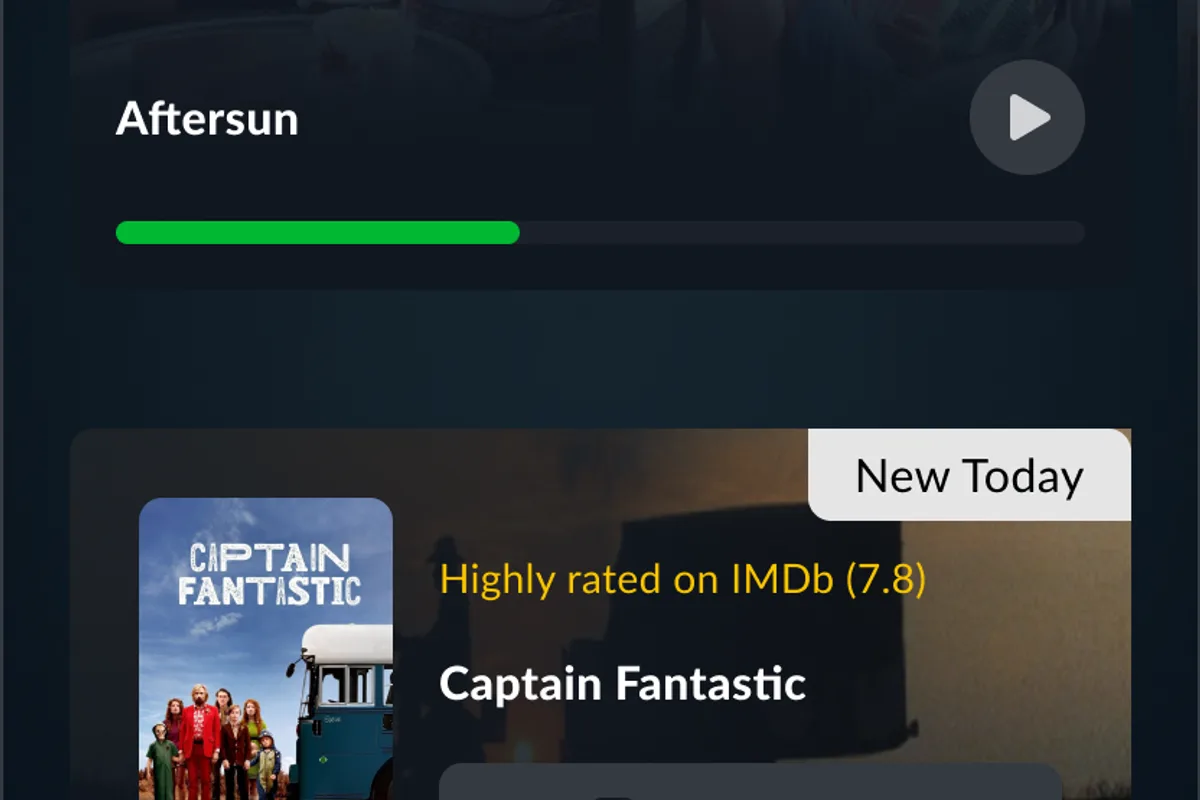
Coherence appears as a free viewing option, while Green Room is presented with a JustWatch TV Plus label.
Other films are associated with rental options.
The site also organizes titles through editorial recommendations, thematic collections and lists based on viewing interest.
That arrangement feels familiar because discovery has always been JustWatch's central business.
The difference is that certain recommendations now lead directly to video playback.
But the service's catalogue remains far smaller than the entire collection of movies and shows indexed by the historical JustWatch guide.
The international launch announcement does not establish a single comprehensive title count for every country and tier.
A separate German report from early October described approximately 950 films and shows available in a local free beta offering.
That observation should not be treated as an official global catalogue figure or applied automatically to other territories.
JustWatch's commercial proposition is not that it owns every movie audiences might search for.
It is that the service may be able to offer additional viewing choices at the precise moment consumers are deciding what to watch.
JustWatch's biggest advantage may be the data it already has
The company enters streaming with an asset that most new distributors lack: a mature discovery platform.
JustWatch says its guide reaches approximately 50 million consumers across 140 markets.
Those figures describe the existing guide business, not fifty million subscribers or active viewers already acquired by JustWatch TV.
The distinction is essential.
The new streaming platform initially operates in just eleven markets, and the company has not disclosed a verified launch audience for it.
Nevertheless, the guide provides information about what audiences are searching for.
JustWatch says it draws on billions of demand-related data points to identify titles that might complement the entertainment already available elsewhere.
That information could influence future content acquisitions.
For example, a film that regularly attracts searches but remains difficult to stream may represent an attractive licensing opportunity.
If the appropriate rights become available, JustWatch could potentially bring that title into its own catalogue.
This is the commercial logic described by the company, rather than a guarantee that every heavily searched movie will eventually become available.
Its success will depend on licensing costs, territorial restrictions and whether the demand information accurately predicts paying or advertising-supported viewing.
The streaming guide is now competing with its own recommendations
The launch also creates an unusual strategic tension.
JustWatch became useful because audiences could compare entertainment options across numerous competing providers.
The service did not need to own a film to recommend where it could be watched.
Now it has a financial interest in some of the titles that appear in its own discovery environment.
A viewer might search for a movie and encounter a rental option, a subscription offer or an ad-supported stream from JustWatch TV alongside links to other platforms.
That combination could create a more convenient experience.
It also raises questions about how recommendations will be ranked.
Will JustWatch prioritize the best available option for the viewer, or will its own commercial offers receive greater prominence?
The existence of a direct streaming business does not establish that the company will favor its content unfairly.
But it creates a potential conflict of commercial interests that did not exist in exactly the same form when JustWatch was primarily a discovery service.
Transparency about availability, pricing and recommendation criteria will become increasingly important as the two activities develop together.
JustWatch Media could gain a new source of audience insight
A second part of the business makes the launch particularly significant.
JustWatch Media helps studios, distributors and streaming platforms plan and purchase digital advertising campaigns.
The company has already used information gathered through its discovery service to understand audience demand.
Direct streaming introduces the possibility of observing another stage of consumer behavior.
Searching for a movie is not the same as watching it.
A user may express curiosity about a title and never start playback. Another may watch a film that was not originally the subject of their search.
JustWatch TV could provide additional information about the relationship between discovery and consumption.
The company has indicated that the service will support deeper audience insights for JustWatch Media.
That opportunity is commercially significant, particularly for advertisers interested in understanding how marketing activity relates to viewing decisions.
However, the launch announcement does not provide a complete description of the technical data-processing arrangements, consent systems or advertising integrations.
It would therefore be premature to claim that every viewing event is being used for personalized advertising or shared with particular commercial partners.
Those questions require examination of actual product behavior, privacy policies and applicable regulatory requirements.
A Netflix competitor, but not a direct replacement
JustWatch TV inevitably becomes a competitor to other streaming services in certain market segments.
But describing it as a direct replacement for Netflix would misrepresent its business.
Netflix relies primarily on subscription distribution, original programming and an extensive network of content licensing arrangements.
JustWatch TV combines a smaller curated catalogue with several distinct commercial models.
Its free advertising-supported tier may compete more directly with services such as Tubi or Pluto TV, depending on the local market.
The rental Store occupies a segment already served by Apple, Amazon and other transactional platforms.
Plus competes for subscription spending, but with a catalogue and feature proposition that differs from major premium streaming services.
The combination may appeal to consumers who want more flexibility than a conventional monthly subscription.
It also creates a usability challenge.
The platform must make it clear which titles are free, which require Plus and which carry a separate rental charge.
A confusing pricing system could undermine the simplicity that made JustWatch valuable in the first place.
The Plus subscription has to justify its price
In the United States, JustWatch TV Plus is offered at $3.99 per month according to TheWrap.
That positions it below many established premium streaming subscriptions in absolute monthly cost.
However, a lower price does not automatically make it better value.
The important questions concern catalogue quality, the frequency of new additions, playback performance and the practical usefulness of exclusive features.
There is also potential confusion between the existing JustWatch Pro offering in some territories and the newer TV Plus subscription.
Names, pricing and included functions can vary by market.
An existing Pro subscription should not automatically be assumed to provide every TV Plus benefit in every country.
Users should examine the local offer before subscribing.
The international announcement confirms the subscription model, but it does not establish identical terms across the entire launch territory.
Why rights holders might welcome another streaming outlet
For film distributors, JustWatch TV creates a potentially useful additional route to audiences.
Many catalogue movies retain public interest long after their initial release, yet may be difficult to find because of fragmented licensing agreements.
A distributor with no consumer streaming application of its own can struggle to generate visibility for older titles.
JustWatch offers an established search environment alongside the possibility of direct playback.
If the company can identify demand and negotiate commercially sustainable rights, the service could bring additional revenue opportunities to rights holders.
Partners such as Bleecker Street, Altitude and SND suggest that the catalogue strategy may extend beyond the largest Hollywood productions.
But those possibilities remain commercial expectations rather than measured launch outcomes.
The existence of thirty content partners does not establish profitability, customer retention or sustainable licensing costs.
Those results will require actual operating data over time.
JustWatch TV is live, but availability depends on location
JustWatch TV officially launched on October 20, 2026, and is integrated into the existing JustWatch website, mobile applications and supported television apps.
The service is announced in eleven countries, with an initial five-market footprint for movie rentals.
Its catalogue, subscription terms and viewing options vary by territory.
The original JustWatch guide continues to index titles across many competing platforms, while the new service provides direct playback for selected content.
That distinction defines the company's next challenge.
JustWatch has spent twelve years helping people navigate an increasingly fragmented streaming market.
Now it is entering that market as a distributor itself.
Whether the new business becomes successful will depend not only on licensing and subscriber numbers, but on the company's ability to maintain the consumer trust that made its discovery service useful.
It is one thing to tell people where they can watch a film. It is another to persuade them that the best place might be JustWatch itself.