Poison Ivy may finally be moving toward a live-action television series built around her own story.
The DC Comics character is the subject of a project in early development at HBO, according to industry reporting published on October 21 and 22, 2026.
Lauren LeFranc, the creator and showrunner behind The Penguin, is currently negotiating to participate as a producer.
Her potential involvement is the most recognizable creative connection announced so far.
It also makes the project especially interesting because The Penguin demonstrated how a familiar Batman antagonist could support a television drama without requiring the superhero to dominate the story.
Nevertheless, the similarities between the two productions should not be exaggerated.
The proposed Poison Ivy series has not received a formal production order.
No writer, showrunner or lead actress is attached, and its intended relationship with DC's wider screen continuity remains partly unresolved.
These details make it a developing project rather than an upcoming series with a guaranteed release.
Lauren LeFranc would produce rather than write
LeFranc earned considerable recognition for her work on The Penguin.
The 2024 HBO drama followed Oswald Cobb, played by Colin Farrell, as he pursued power within Gotham City's criminal underworld.
The show built on the events of Matt Reeves' 2022 film The Batman while maintaining a largely independent narrative focused on ambition, criminal organizations and personal betrayal.
LeFranc guided that production as its showrunner, overseeing the overall creative direction of the series.
Her proposed role on Poison Ivy would be different.
According to TheWrap, she is negotiating to serve as a producer, not as a writer.
The project does not currently have an announced writing team or designated showrunner.
That distinction matters because a producer's involvement does not automatically establish who will write individual episodes or supervise the day-to-day creative decisions of a television series.
LeFranc's participation would nevertheless bring experience with a recent, well-received DC adaptation.
The negotiations would fall under her two-year overall agreement with HBO.
The arrangement provides a framework for developing new projects with the network.
However, her final involvement remains subject to negotiations, and no definitive agreement has been publicly confirmed in the reporting reviewed.
The new show would not belong to Matt Reeves' Batman universe
One of the clearest reported details concerns continuity.
The Penguin was explicitly connected to The Batman, the 2022 film starring Robert Pattinson.
Its criminal underworld and central characters belonged to the grounded interpretation of Gotham established by Reeves.
Poison Ivy would reportedly exist outside that continuity.
The difference could allow a substantially different approach to the character.
In the comics, Pamela Isley is frequently associated with extraordinary botanical abilities, dangerous toxins and forms of biological manipulation that extend far beyond conventional human capabilities.
A series embracing those powers would require more overtly fantastical storytelling than the crime-driven world of The Penguin.
However, the available reporting does not explain exactly why the project is being developed separately.
Nor does it definitively establish whether Poison Ivy will become part of the interconnected DC Universe overseen by James Gunn and Peter Safran.
Being outside Reeves' continuity does not automatically confirm membership in another particular continuity.
DC has developed different interpretations of its characters across films, television and animation.
The new project's position within that wider structure will need to be clarified before audiences can understand which other characters might plausibly share its world.
Poison Ivy offers more than another Batman villain
Poison Ivy first appeared in Batman comics in 1966.
Her most familiar identity is Dr. Pamela Isley, a scientist whose expertise in botany becomes linked to remarkable powers over plants and biological substances.
Across decades of comic-book stories, Ivy has been portrayed as an antagonist, an antihero and occasionally a tragic figure.
She is particularly distinctive because her criminal actions are often connected to an extreme interpretation of environmental protection.
Ivy frequently considers humanity responsible for destroying ecosystems and believes drastic measures are necessary to defend the natural world.
That motivation creates dramatic tension.
Protecting the environment can be an understandable concern, but the character's methods regularly place innocent people in danger.
A series centered on Pamela could examine how someone reaches the point of treating human lives as expendable in pursuit of an ecological objective.
It could also explore the conflicts between her identity as a scientist and the extraordinary abilities that separate her from ordinary human society.
Those are narrative possibilities suggested by the character's history, not elements of a confirmed HBO storyline.
The network has not released an official synopsis for the proposed show.
No specific comic-book arc has been announced as its source material.

Her relationship with Harley Quinn could be important
One of the major developments in Poison Ivy's modern characterization concerns Harley Quinn.
Their relationship has become an important part of several DC comic-book and animated stories.
Originally closely associated with the Joker, Harley has developed an emotional connection with Ivy that places both characters in a different narrative context.
The animated series Harley Quinn has explored that relationship in considerable detail.
Lake Bell provides Ivy's voice in the series, creating a version of the character whose intelligence, frustration and emotional vulnerability are often as important as her powers.
That material could offer a live-action adaptation meaningful opportunities for character development.
However, Harley Quinn has not been confirmed for the proposed HBO production.
Neither has Batman.
It would be premature to describe the series as a romance involving Harley or as a direct confrontation with Bruce Wayne.
For now, the only confirmed narrative focus is Poison Ivy herself.
The absence of a publicly announced storyline leaves considerable room for interpretation, but speculation should not be mistaken for established production information.
Poison Ivy has a long screen history
Although she has never led her own live-action television series, Poison Ivy has appeared in numerous DC adaptations.
Uma Thurman famously portrayed her in Joel Schumacher's Batman & Robin, released in 1997.
That version embraced exaggerated theatricality, elaborate costumes and a flamboyant style very different from the realistic crime drama of The Penguin.
On television, Gotham featured Ivy Pepper at different ages, with Clare Foley, Maggie Geha and Peyton List among the performers portraying the character.
Bridget Regan later played Pamela Isley in Batwoman.
Animated productions have also made extensive use of Ivy, particularly Harley Quinn, where Lake Bell voices the character.
These appearances demonstrate her enduring appeal.
But they have generally positioned her within stories centered on Batman, Harley Quinn or Gotham City's wider collection of characters.
A dedicated series would allow her own relationships, motivations and decisions to become the primary focus.
That opportunity resembles what The Penguin provided for Oswald Cobb, although the tone and genre of Poison Ivy remain undetermined.
DC continues exploring stories about its villains
The development reflects a broader interest in giving established comic-book antagonists their own screen projects.
The Penguin demonstrated that a Batman villain could anchor a crime drama built around recognizable human conflicts.
Other DC projects have explored different genres and narrative possibilities for characters traditionally associated with superhero opposition.
Clayface is another example of a villain whose unusual abilities create opportunities for stories outside conventional superhero action.
Poison Ivy could theoretically support a drama involving environmental conflict, science fiction, psychological horror or fantastical storytelling.
The character's background is flexible enough to accommodate several of those approaches.
But none has been officially selected in the announcements reviewed.
There is also a practical distinction between developing a television concept and ordering an entire season.
Studios routinely consider multiple projects before deciding which ones should receive production commitments.
Poison Ivy remains at that earlier stage.
The current negotiations indicate interest in moving the concept forward, but they do not guarantee that the series will eventually reach viewers.
Development has already faced corporate uncertainty
Reports indicate that the project experienced a previous pause amid corporate changes involving Warner Bros. and DC.
The Paramount-Warner Bros. merger and related restructuring affected decisions about various properties and potential productions.
The renewed discussions surrounding Poison Ivy suggest that the concept remains under consideration.
That does not establish that all financing, scheduling or creative arrangements are complete.
The prospective involvement of LeFranc could support the development process by connecting the project with a producer experienced in HBO's approach to DC adaptations.
But no confirmed production budget or filming commitment has been announced.
The reporting also does not establish whether the current version of Poison Ivy is identical to earlier proposals discussed within the company.
The project should therefore be understood as active development rather than a fully assembled television production.
Who will play Poison Ivy?
No actress has been attached to the title role.
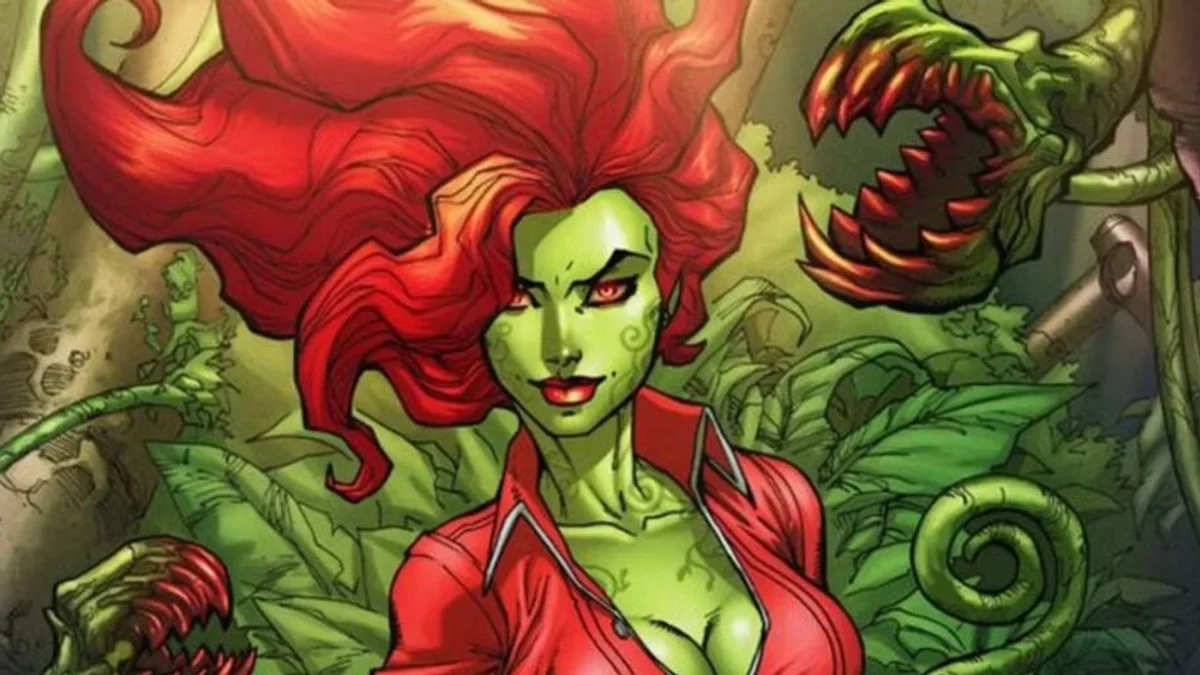
Pamela Isley is one of DC's most visually recognizable characters, often depicted with red hair, green clothing and botanical imagery.
But the role would require more than recreating a familiar comic-book appearance.
Depending on the creative direction, the performer could need to portray a brilliant scientist, a dangerous antagonist or a character struggling with conflicting loyalties and beliefs.
The absence of an announced screenplay makes it impossible to determine what version of Ivy the producers intend to create.
Online casting suggestions should therefore be treated as fan speculation.
There is no confirmed indication that Uma Thurman, Bridget Regan or any performer associated with a previous version will return.
The same uncertainty applies to the wider supporting cast.
Until writers and a creative direction are established, predictions about additional characters have little factual foundation.
When will the Poison Ivy HBO series be released?
There is no confirmed release date as of October 23, 2026.
HBO has not formally ordered the series, and no filming schedule has been announced.
Lauren LeFranc remains in discussions to join as a producer.
The project also lacks an announced writer, showrunner and lead actress.
Assigning it a 2027 or 2028 premiere would therefore be speculative.
The next important developments will concern the confirmation of its production team and a possible formal order from HBO.
DC will also need to clarify the continuity in which Pamela Isley's story takes place.
The premise is promising because Poison Ivy has enough history, contradictions and dramatic potential to support a narrative beyond her encounters with Batman.
Whether HBO actually brings that potential to the screen remains the central unanswered question.