
A woman walks down the street singing, wearing a smile that seems unable to conceal her sadness. Later, she breaks down in front of a documentary camera. The woman filming her watches in silence, visibly moved by what she is witnessing.
The final trailer for Possible Love builds much of its emotional tension around moments like these. There are no obvious threats or dramatic declarations to explain precisely what is happening between the characters. Instead, director Lee Chang-dong focuses on gestures, uncomfortable glances and the growing uncertainty surrounding two marriages.
Netflix released the trailer on October 20, with the film scheduled to become available worldwide on November 6. By then, Possible Love will have already completed an extensive festival journey, including its Venice premiere and its Silver Lion Grand Jury Prize at the 2026 festival.
It is also South Korea's official submission for Best International Feature Film at the 99th Academy Awards. That makes it a contender in the selection process, not yet an Oscar nominee.
For Lee Chang-dong, these developments mark the end of an unusually long wait. Possible Love is his first feature since Burning in 2018, and reunites him with Jeon Do-yeon, whose performance in his earlier film Secret Sunshine earned her the Best Actress award at Cannes in 2007.
A documentary project brings two marriages together
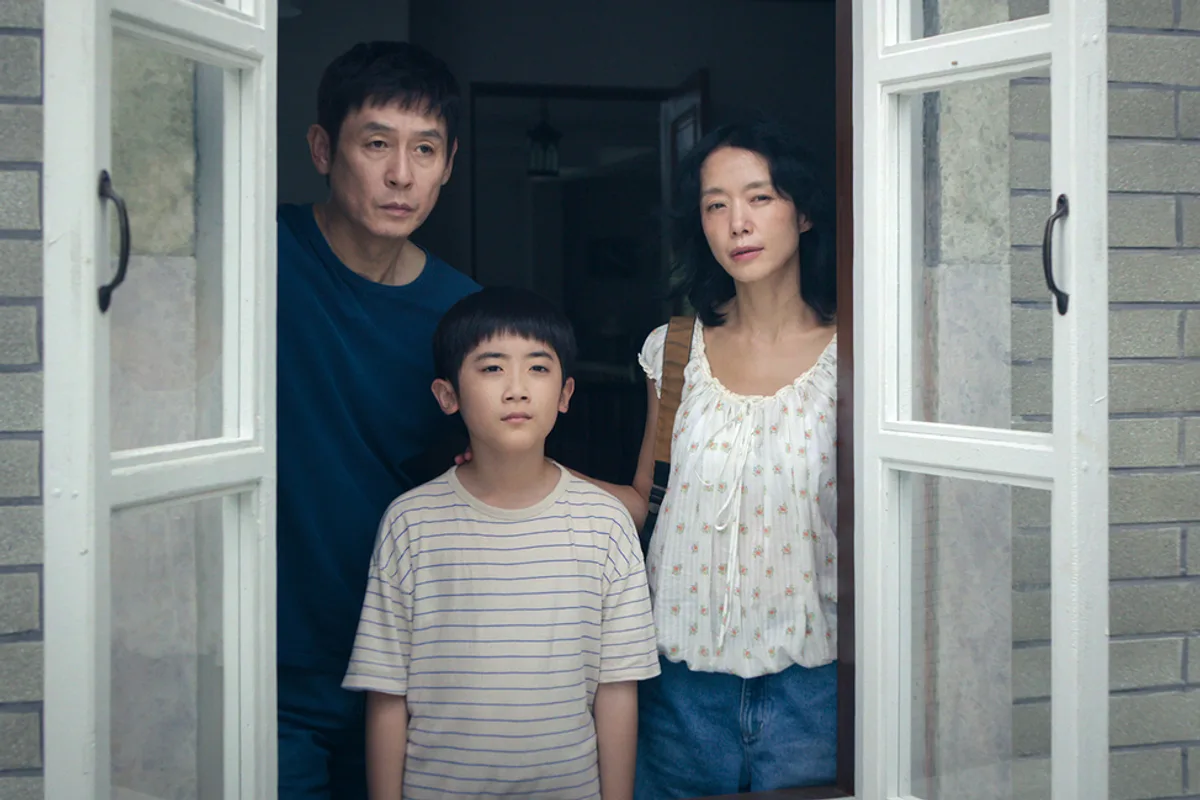
Jeon plays Mi-ok, a woman living with her husband Ho-seok and their young son Cheol. Ho-seok, portrayed by Sul Kyung-gu, lost his job years earlier, and the consequences have gradually affected their marriage and their sense of stability.
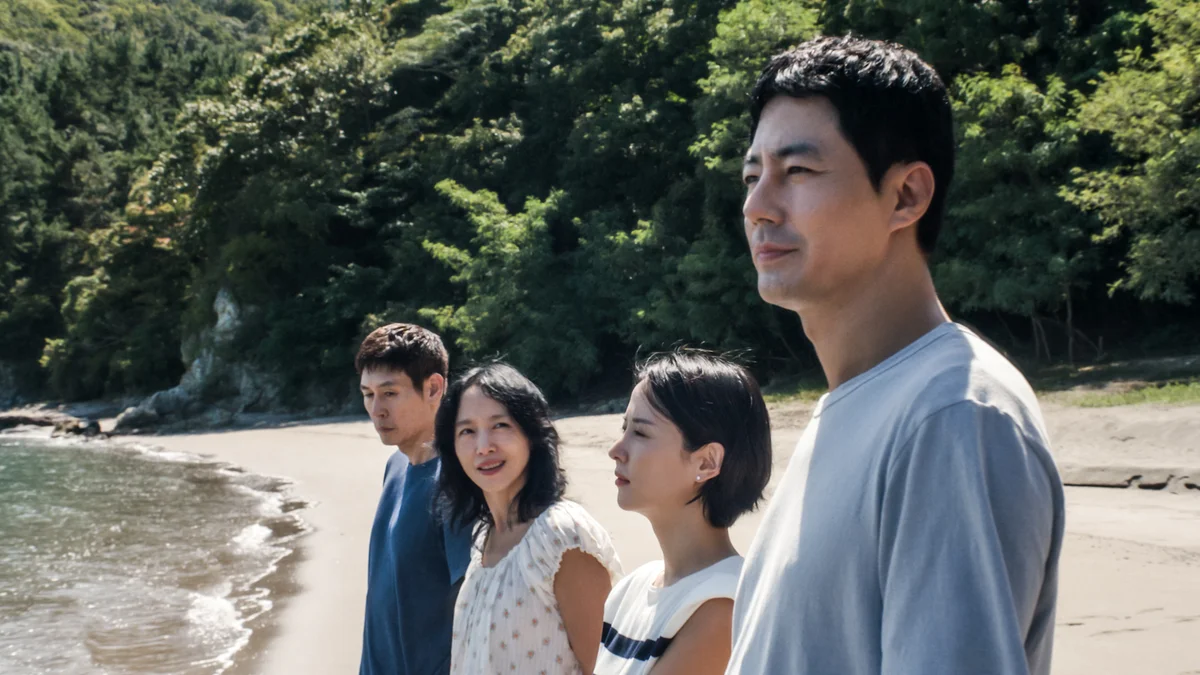
Their lives intersect with those of documentary filmmaker Ye-ji, played by Cho Yeo-jeong, and her affluent husband Sang-woo, portrayed by Zo In-sung.
Ye-ji wants to make a film about workers who have lost their jobs. When Mi-ok agrees to participate, what initially appears to be a professional encounter develops into a more complicated relationship between the two women and their respective husbands.
Class differences immediately shape the situation. Ye-ji can approach unemployment as a subject to investigate and document. Ho-seok and Mi-ok have to live with its consequences. Their experiences are connected by the documentary project, but the people involved do not possess the same economic security or freedom.
The trailer suggests that this imbalance will become increasingly uncomfortable as the couples spend more time together. Ye-ji proposes a shared holiday, and the resulting scenes introduce new emotional tensions rather than the uncomplicated intimacy that such a trip might promise.
Mi-ok also appears increasingly unsettled by Sang-woo, while her relationship with Ye-ji develops beyond the boundaries of a conventional documentary collaboration.
Lee does not seem interested in establishing a straightforward conflict with clearly defined sides. Each character has private desires, unresolved experiences and reasons to misunderstand the others.
Jeon Do-yeon brings an extraordinary history to the role
The prospect of another collaboration between Lee Chang-dong and Jeon Do-yeon would be noteworthy even without the film's festival success.
Their previous feature together, Secret Sunshine, was an intense portrait of grief, belief and the limits of emotional recovery. Jeon's performance was central to that film's impact, and her Cannes recognition remains a defining achievement in her career.
Possible Love introduces a very different character, but the final trailer again places enormous emotional demands on the actress. Mi-ok moves between moments of apparent calm and visible distress. The most revealing changes are not necessarily associated with dramatic events. Sometimes they occur in the space between one expression and another.
Sul Kyung-gu provides the other half of a marriage shaped by economic displacement. His character's history is closely connected to the film's broader interest in employment, class and the lingering consequences of social upheaval.
Cho Yeo-jeong's role introduces an additional layer. As Ye-ji, she is both an observer and a participant, using her camera to study people whose private lives increasingly influence her own.
Zo In-sung completes the central ensemble as Sang-woo. The contrast between the couples is not simply financial; it is also reflected in how they approach one another and what each expects from their growing relationship.
Why Lee Chang-dong's return matters
There have never been many Lee Chang-dong films. His body of work includes Green Fish, Peppermint Candy, Oasis, Secret Sunshine, Poetry and Burning, a relatively compact filmography that has nevertheless left a remarkable impression on contemporary Korean cinema.
His films tend to explore emotional suffering alongside the social conditions that shape it. The connections between individuals are rarely isolated from questions of money, status, memory or institutional power.
Burning transformed an apparently ordinary encounter into an elusive mystery involving desire and class. Possible Love appears to pursue some related concerns through a more openly domestic setting, with the documentary camera becoming a central element of the relationships.
Lee has acknowledged that making a film requires a lengthy process of finding a subject that genuinely matters to him. In a September interview published by Netflix, he explained that he cannot begin a project until he understands its significance for himself, its audience and cinema.
That helps explain the eight-year interval between Burning and Possible Love, although it does not provide a complete account of the film's production history.
The result has already received one of the Venice Film Festival's most prestigious distinctions. Winning the Grand Jury Prize does not settle every question about the movie's reception, but it represents substantial recognition before its global streaming debut.
The camera is part of the conflict
One of the most intriguing elements of Possible Love is the way filmmaking itself becomes part of the story.
Ye-ji's documentary is intended to reveal the lives of people affected by layoffs. Yet the process also places a camera between individuals who are developing increasingly complicated feelings about one another.
Mi-ok's emotional confession in the final trailer offers an especially striking example. She is speaking to a camera while Ye-ji watches, sharing an intensely private experience through a device designed to preserve and eventually present that experience to other people.
There is a fundamental imbalance in that relationship. Ye-ji decides how to approach her documentary subject, while Mi-ok exposes parts of a life shaped by experiences that cannot easily be reduced to a film narrative.
The trailer also shows the two women becoming closer outside their professional relationship. That creates further uncertainty about the boundaries between observation, friendship and personal desire.
Those tensions make the film sound considerably more complex than a conventional story about troubled marriages. The differences between the couples are not merely background information. They influence how the characters understand one another and how much power they have over the narratives surrounding their lives.
The film's final emotional meaning remains something the trailer cannot establish. Its images suggest several possibilities without confirming exactly where these relationships will lead.
From Venice to Netflix, with a theatrical release in between
Possible Love premiered at the 83rd Venice International Film Festival and subsequently appeared at other major international events, including Toronto and New York.
The film opened in South Korean theaters on September 23, 2026. Additional theatrical releases were scheduled for Australia on October 22 and for markets including the United States, Canada, the United Kingdom, Ireland and Japan on October 23.
Netflix will make the film available globally on November 6. The company has confirmed that date repeatedly through its official publicity materials, including the newly released final trailer.
The theatrical rollout matters because Possible Love is not being introduced to audiences exclusively through streaming. Its festival recognition and cinema engagements have already established it as one of the year's significant international film releases.
Netflix is also expanding access to Lee's earlier films across selected territories. Titles including Secret Sunshine, Peppermint Candy, Oasis, Poetry and Burning are part of that broader initiative, although their availability differs by country.
According to the Korean Film Council's film database, Possible Love runs for 164 minutes. That gives Lee considerable room to develop the emotional history of both marriages without compressing their conflicts into a conventional two-hour structure.
The final trailer is now available through Netflix's official channels. Its worldwide streaming release remains scheduled for November 6, 2026.