

Muhammad Ali was more than a boxing champion.
He was a performer, a political figure and a young man determined to define himself in an America that often refused to recognize his equality.
That complexity is central to The Greatest, Prime Video's new drama about Ali's formative years.
The series stars Jaalen Best as Cassius Clay, following his journey from Olympic success in 1960 to his first heavyweight championship victory in 1964.
The first reviews arrived on October 30, several days before the official streaming premiere.
Early reactions from TheWrap and RogerEbert.com are positive.
Both publications identify Best's performance as a major strength of the production.
Their assessments are not identical, however.
TheWrap is particularly enthusiastic about the dramatic storytelling, while RogerEbert.com raises some concerns about the directness of the show's social commentary.
Together, the reviews offer an encouraging early picture without establishing a universal critical consensus.
TheWrap calls The Greatest one of the year's standout dramas
Zaki Hasan reviewed the series for TheWrap on October 30.
His assessment is strongly favorable.
Hasan places The Greatest among the year's most impressive new television dramas and praises creator Ben Watkins for concentrating on a relatively short period in Ali's life.
Instead of attempting to cover the boxer's entire career, the series focuses on the transition from promising Olympic athlete to heavyweight champion.
That approach gives the narrative a clearly defined structure.
The dramatic progression begins with Cassius Clay's victory at the 1960 Rome Olympics and builds toward his confrontation with Sonny Liston in 1964.
TheWrap argues that the series finds much of its strength away from the boxing ring.
The relationships within the Clay family help explain how the young athlete developed his confidence and independence.
The series also examines the contradictions between American ideals and the racial discrimination experienced by Black Americans.
For Hasan, those elements make the character more than a collection of famous speeches and athletic victories.
The drama explores a young man gradually discovering the consequences of becoming a public figure.
Jaalen Best earns praise for more than an imitation
Portraying Muhammad Ali presents an unusual challenge.
The champion's speaking style, gestures and athletic movements remain immediately recognizable decades after his greatest achievements.
An actor must reproduce those characteristics without allowing the performance to become a collection of familiar impressions.
TheWrap believes Best succeeds in finding that balance.
The review emphasizes his ability to portray the flamboyant athlete who commands public attention and the more thoughtful young man who exists beyond the spotlight.
Richard Roeper reaches a similar conclusion in his review for RogerEbert.com.
He describes Best as a charismatic performer who brings different aspects of Ali's personality to the screen.
The actor underwent extensive preparation for the role.
In a profile published by Teen Vogue, Best discussed the physical demands of portraying the future champion.
He spent months studying Ali's fights and mannerisms while developing the conditioning required for the boxing scenes.
Those preparations matter because Ali's movement was one of his most distinctive qualities.
He combined speed, rhythm and an unconventional approach to distance for a heavyweight fighter.
The early reviews suggest that Best's physical performance contributes significantly to the show's credibility.
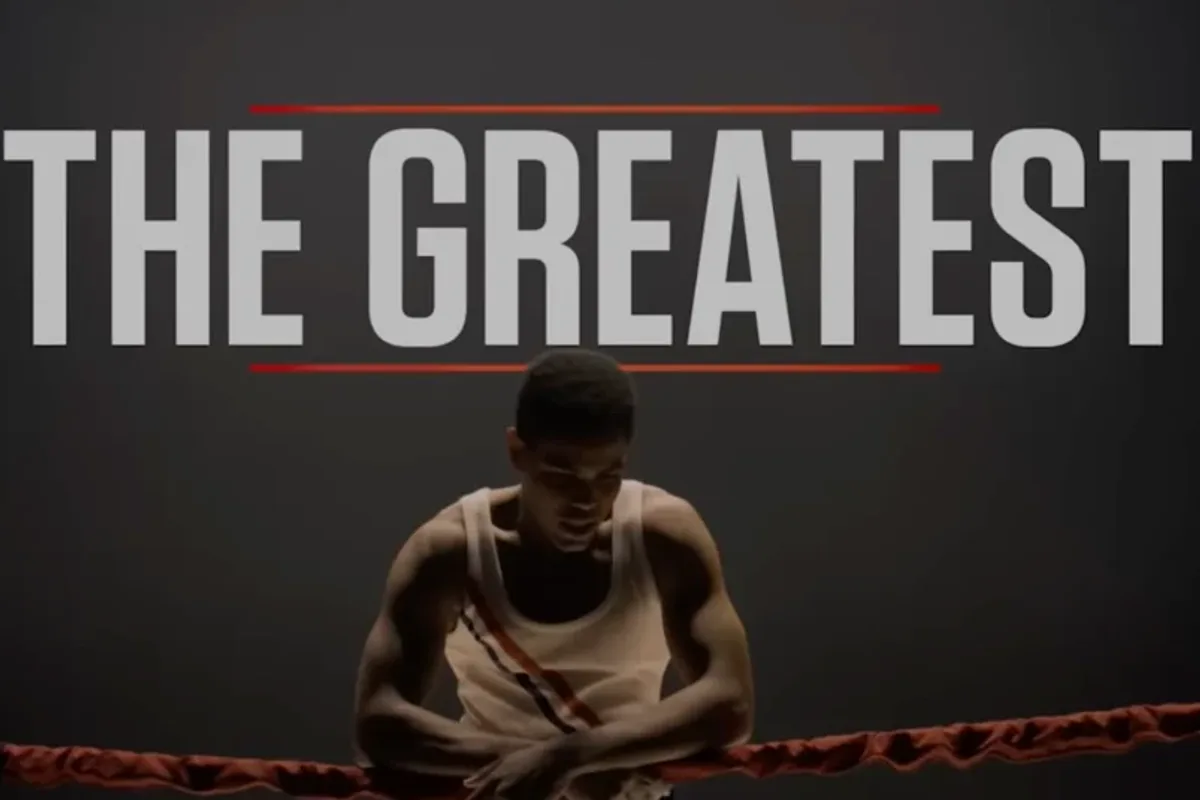
The story begins with Olympic gold in Rome
The Greatest concentrates on four crucial years.
In 1960, Cassius Clay won an Olympic gold medal in Rome.
He was only eighteen years old.
The achievement gave him international attention and helped launch his professional boxing career.
But sporting success did not protect him from the racial discrimination that shaped American society.
The series examines that contradiction.
A young man celebrated for representing his country could still face unequal treatment in everyday life.
The narrative follows Clay's progress through professional boxing while developing his personal and political awareness.
It ultimately builds toward his 1964 fight against heavyweight champion Sonny Liston.
That victory represents the culmination of the season's sporting storyline.
However, the drama does not attempt to tell the complete story of Muhammad Ali's life.
Later events, including his opposition to the Vietnam War and his legendary fights against Joe Frazier and George Foreman, belong to subsequent periods.
The first season is specifically concerned with the years in which Cassius Clay became Muhammad Ali.
The Clay family provides the emotional foundation
The supporting cast plays an important role in the early reviews.
Omari Hardwick portrays Cassius Clay Sr., the young boxer's father.
Dana Gourrier plays his mother, Odessa Clay, while Kai Parham portrays his brother Rudy.
In TheWrap's assessment, the family scenes are among the strongest parts of the production.
The characters are not presented simply as encouraging figures surrounding an inevitable champion.
They have their own ambitions, disagreements and emotional difficulties.
Clay's father is particularly complicated.
He feels pride in his son's achievements while struggling with his own disappointments.
That tension gives their relationship dramatic weight.
Success can change the balance within a family, especially when one member begins attracting extraordinary public attention.
The younger Clay must increasingly make decisions independently.
His family remains central to his identity, but he also wants control over his professional and personal future.
The series uses those relationships to show the person behind the famous public image.
Michael Ealy portrays Malcolm X
The Greatest also explores the political and religious transformation of Cassius Clay.
Michael Ealy portrays Malcolm X.
The civil rights leader played an important role in Ali's developing political and religious identity.
Their relationship belongs to a period of intense social change in the United States.
The series examines Clay's growing interest in the Nation of Islam and his desire to define himself independently of the expectations surrounding him.
TheWrap praises Ealy's interpretation of Malcolm X.
His performance contributes to the political dimension of the story while maintaining the focus on Cassius.
The young boxer adopted the name Muhammad Ali in 1964.
That decision followed his heavyweight championship victory and reflected a significant religious and personal transformation.
It was not merely a publicity strategy.
It became part of Ali's insistence on determining his own identity.
The series explores the experiences that contributed to that decision.
RogerEbert.com praises the drama but identifies some heavy-handed moments
The positive reception is not without reservations.
Richard Roeper's review for RogerEbert.com praises the cast, the historical setting and the fight sequences.
He considers Best particularly effective in conveying Ali's contrasting personalities.
However, Roeper finds some of the social commentary overly direct.
The series repeatedly addresses the contradictions between the athlete's success and the racial injustice surrounding him.
For Roeper, certain scenes emphasize their message more forcefully than necessary.
The criticism concerns the storytelling rather than the relevance of the historical context.
Racial segregation and discrimination were central realities of the period.
The question is how a fictional drama incorporates those realities into its characters and scenes.
Roeper's overall assessment remains favorable.
His reservations nevertheless establish an important distinction between a positive review and an entirely unqualified endorsement.
An authorized drama, not a documentary
Amazon MGM Studios describes The Greatest as the first authorized scripted television series about Muhammad Ali's life.
Ali has already been the subject of numerous films, documentaries and biographies.
Michael Mann's 2001 film Ali, starring Will Smith, remains one of his best-known cinematic portrayals.
The Greatest differs through its television format and the direct involvement of people associated with Ali's estate.
Lonnie Ali, the champion's widow, serves as an executive producer.
The production received access to resources and perspectives connected with his family and legacy.
That involvement can provide valuable historical and personal context.
It does not mean that every dialogue exchange or dramatized event should be treated as a documentary record.
Scripted biography necessarily involves narrative choices.
It can reorganize events, construct scenes and interpret personalities for dramatic purposes.
An officially authorized production also raises questions about how critically it can examine its subject.
TheWrap acknowledges that tension in its review.
Hasan nevertheless believes the series largely avoids presenting Ali as an entirely flawless figure.
That is an assessment of the episodes reviewed, not proof that the production covers every controversial aspect of Ali's life.
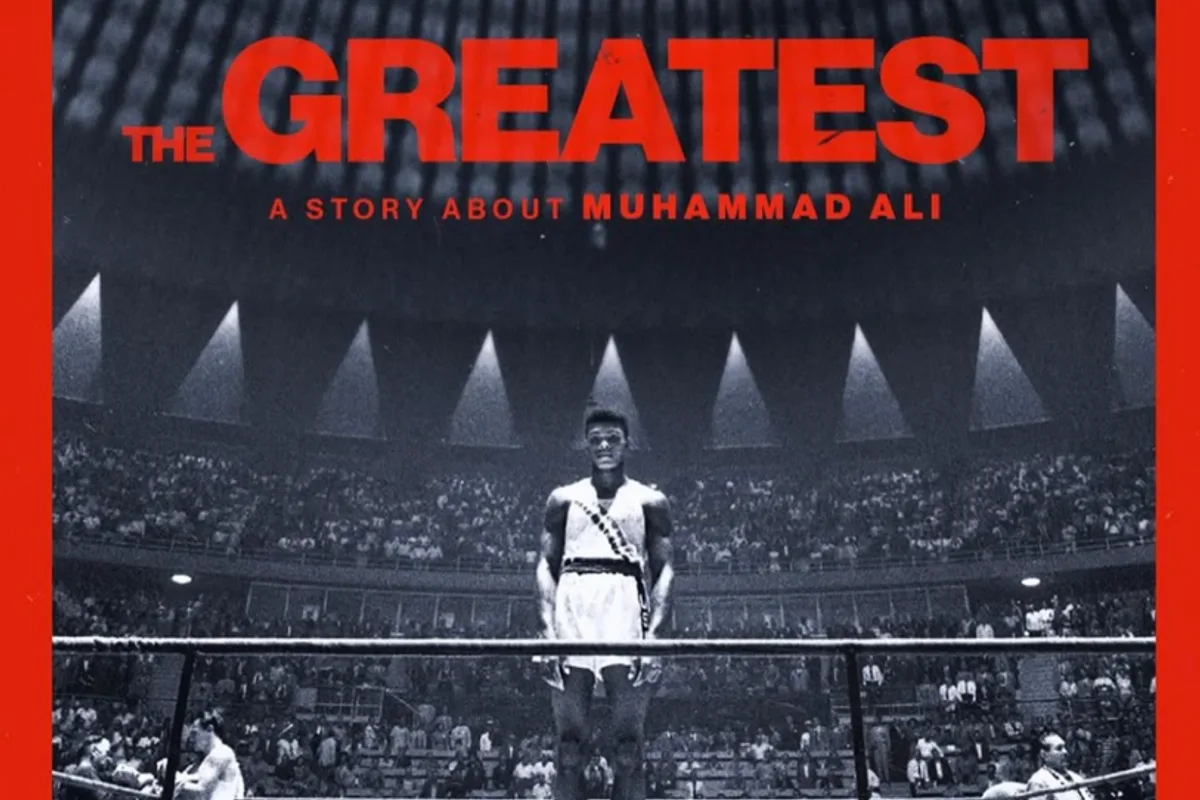
Ben Watkins focuses on the young man behind the legend
The Greatest was created by Ben Watkins, who also serves as showrunner and executive producer.
Watkins is known for Cross, the Prime Video crime drama based on the Alex Cross novels.
His new series takes a very different approach.
Rather than following a criminal investigation, it examines the formation of a historical figure.
The drama devotes attention to family conversations, everyday experiences and personal conflicts alongside the boxing matches.
That approach reflects Prime Video's official positioning.
The platform emphasizes Ali's identity as a man, son, brother and family member rather than portraying him solely through championship victories.
The eight episodes follow the years when Clay began understanding the scale of his talent and the limitations imposed by society.
The struggle for independence becomes a central theme.
Clay wants to win fights, but he also wants to determine how he will live and what he will represent.
This gives the series a more focused dramatic identity than an exhaustive chronological biography.
Michael B. Jordan is among the executive producers
Michael B. Jordan is involved through his company Outlier Society.
The actor and filmmaker has an established connection to boxing dramas through the Creed franchise.
He stars as Adonis Creed and directed the third installment.
His involvement with The Greatest adds an experienced producer familiar with portraying boxing on screen.
However, Jordan is not playing Cassius Clay.
That central role belongs to Jaalen Best.
The producing team also includes Ben Watkins' Blue Monday Productions and partners associated with Amazon MGM Studios.
Lonnie Ali participates as an executive producer representing the champion's legacy.
The collaboration combines television production experience with access to people connected to the historical subject.
The result remains a dramatized interpretation rather than a documentary presentation.
Giovanni Ribisi and Amin Joseph play crucial figures
Giovanni Ribisi portrays Angelo Dundee, the trainer who played an essential role in Muhammad Ali's boxing career.
Dundee's relationship with the young Clay provides the series with opportunities to explore the technical and personal aspects of preparing for major fights.
Roeper praises Ribisi's work in his review.
Amin Joseph plays Sonny Liston.
Liston was the reigning heavyweight champion when Clay challenged him in 1964.
He was widely regarded as a formidable and intimidating opponent.
TheWrap appreciates the way Joseph brings complexity to the character.
The performance gives Liston a personal dimension beyond his function as an obstacle for the protagonist.
That matters because the climactic championship fight involves more than two athletes exchanging punches.
It represents the meeting of a rising challenger and an established champion, both carrying public expectations and personal pressures.
The dramatic value comes from understanding those pressures before the two men enter the ring.
All eight episodes arrive November 4
Prime Video has officially scheduled The Greatest for Wednesday, November 4, 2026.
All eight episodes will premiere simultaneously in more than 240 countries and territories.
The series is not following a weekly release model for its first season.
Subscribers will be able to watch the complete story from the launch date.
As of October 31, the show has not yet been released to the general public.
The critics publishing reviews on October 30 received advance access.
That distinction matters when describing the status of the production.
A press screening does not mean that the series is already available on Prime Video.
There are also no public streaming audience figures for the unreleased episodes.
Claims about commercial success or broad viewer response would therefore be premature.
Aggregate review ratings should likewise be interpreted cautiously while the number of published assessments remains limited.
A promising start, with the broader reception still to come
The Greatest enters its premiere week with several promising elements.
Its subject is one of the most recognizable athletes in modern history.
Its creator has chosen a focused period rather than attempting to dramatize an entire lifetime.
The supporting cast includes experienced performers portraying important family members, opponents and political figures.
Most importantly, Jaalen Best has made a strong impression on the first critics.
TheWrap praises the series' combination of boxing, family drama and political history.
RogerEbert.com also welcomes the production, while expressing reservations about some of its more direct historical messaging.
Those responses are encouraging without establishing universal acclaim.
Further reviews may differ, and the general audience has not yet had an opportunity to respond.
For now, Best is emerging as the central attraction.
His task is to make a familiar historical icon feel like a young person whose future has not yet been written.
On November 4, viewers will be able to judge whether The Greatest succeeds in showing the man who existed before the legend.