
The Original Tomb Raider Was Not a Guided Tour
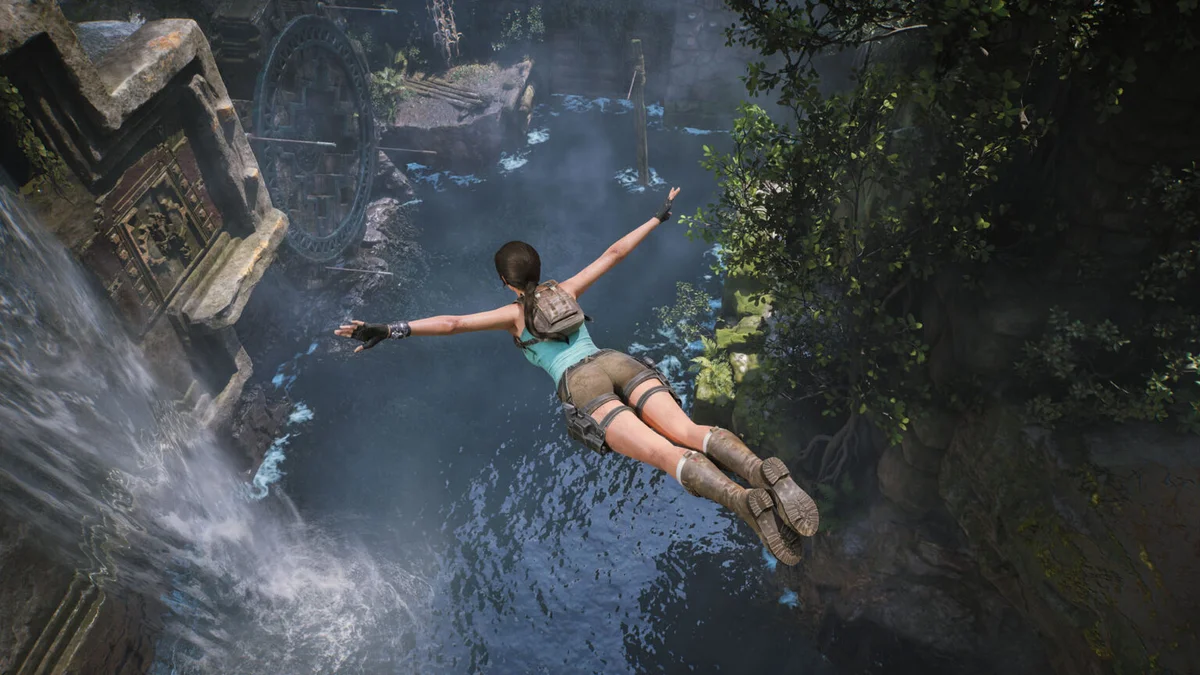
When Tomb Raider arrived in 1996, it offered something relatively unusual: a three-dimensional adventure in which understanding the environment was a substantial part of the challenge.
Tombs were not simply backgrounds to travel through along an obvious route.
Players needed to study their architecture, understand spatial relationships and recognize possibilities within monumental structures.
Solitude was also important.
Lara Croft explored places where human encounters were rare, reinforcing the impression of entering forgotten spaces.
Later changes to the genre increasingly emphasized clearly readable routes and more directed progression.
These developments made many action-adventure games more approachable.
They also sometimes reduced the importance of uncertainty.
That is the experience Crystal Dynamics wants to revisit.
Nostalgia Is Not an Architectural Blueprint
Flying Wild Hog creative director Michael Kuk offers an interesting way of approaching the original game's reconstruction.
The team is identifying what players remember most vividly about the 1996 adventure.
A dramatic vista, event or object may have left a lasting impression.
The exact dimensions of a corridor or position of a minor object may matter much less.
Faithfulness therefore becomes a question of memory and emotion rather than meticulous geometric reproduction.
That helps explain why the developers describe Legacy of Atlantis as a reimagining.
They are attempting to preserve a cultural experience rather than simply reconstruct software.
That does not guarantee success.
However, the approach recognizes that people rarely remember an adventure as a detailed architectural plan.
They remember fear, discovery, difficult victories and environments that felt impossibly large.
The Lost Valley as a Shared Memory
The Lost Valley is an ideal example.
For many players, this sequence remains associated with the surprise of encountering dinosaurs inside an archaeological adventure.
The tyrannosaurus rex became one of the original Tomb Raider's defining images.
Preserving the encounter therefore seems essential to the reimagining.
However, simply bringing back a giant creature cannot reproduce exactly what the moment felt like in 1996.
The surprise depended partly on contemporary technology and audience expectations.
A massive three-dimensional dinosaur carried a different visual impact then than it does today.
In 2027, the developers will need different techniques to create comparable tension.
The June demonstration included a chase sequence and environmental hazards Lara must navigate while escaping the creature.
The memory remains, but its expression changes.
Mystery Also Depends on Environmental Direction
The environment is one of the main instruments of this approach.
The original game's ancient architecture was necessarily represented within the limitations of early three-dimensional graphics.
Those limitations sometimes left considerable space for imagination.
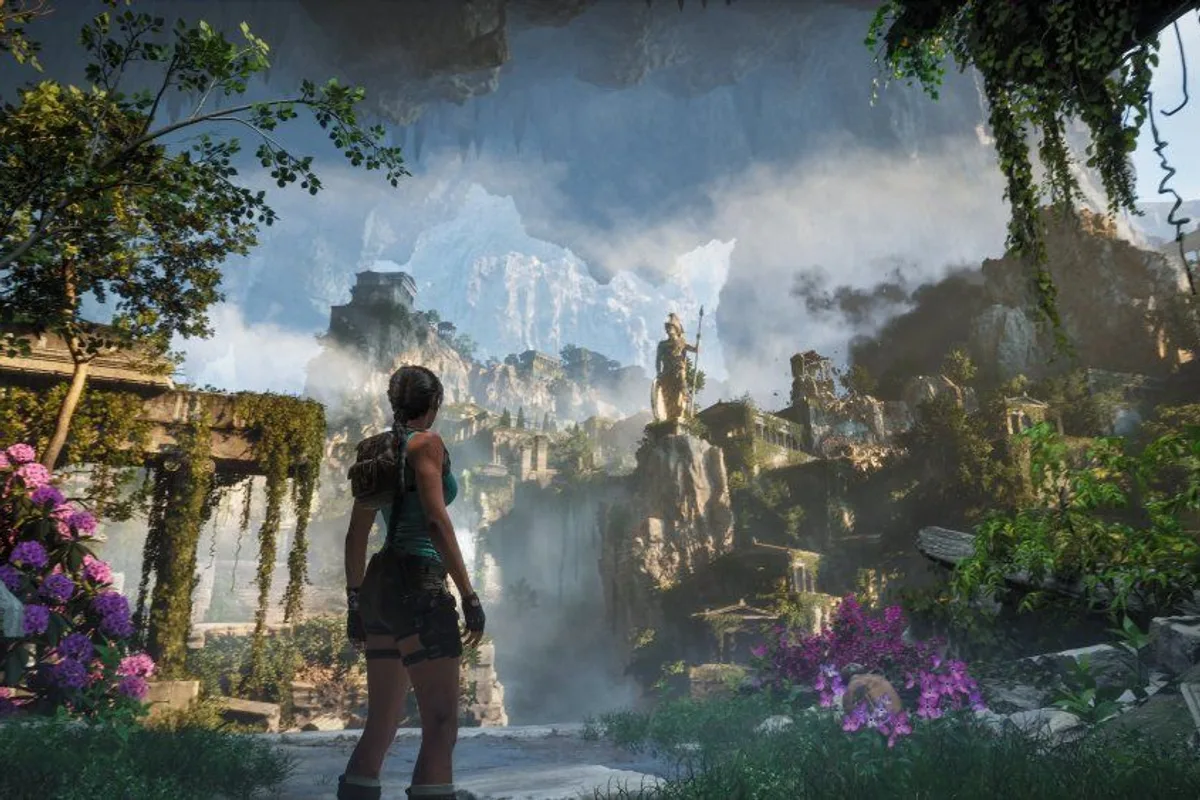
Legacy of Atlantis uses Unreal Engine 5 to reconstruct ruins with much greater detail.
Vegetation, materials and lighting contribute to a stronger physical presence.
That can enrich the atmosphere.
However, elaborate visual detail also carries a potential risk if important environmental clues become difficult to recognize.
The challenge is therefore not simply to create impressive spaces.
Their composition must help players gradually understand how they work.
A tomb can be beautiful and initially difficult to interpret without becoming arbitrary.
Balancing mystery with clarity will be essential.
Does Getting Lost Still Have a Place in Games?
In comments reported by GamesRadar+, Jeff Adams argues for exploration that allows players to lose their bearings.
That position deserves consideration beyond nostalgia.
Getting lost can create two very different experiences.
In the first, the environment provides enough information for players to eventually understand its organization.
Discovery becomes a reward.
In the second, the game merely conceals essential information and forces players to search randomly.
That can become frustrating.
Legacy of Atlantis needs to preserve the first experience without falling into the second.
The developers appear aware of the distinction.
They have announced guidance options and separate difficulty settings for puzzles and combat.
The intention is not necessarily to impose identical difficulty on everyone.
It is to make less directed discovery a meaningful possibility.
This Lara Is No Longer a Beginner
Rebuilding the adventure also affects its protagonist.
The trilogy beginning in 2013 presented a younger Lara learning how to survive extraordinary situations.
Legacy of Atlantis features a more experienced heroine.
She moves confidently and faces danger with abilities closer to the classic Lara Croft.
Acrobatics, dual pistols and mobile combat contribute to that characterization.
The Focus system, which briefly slows time during certain maneuvers, reinforces her physical mastery.
Lara's competence becomes part of the presentation.
Players are no longer simply watching her learn to survive.
They are controlling an adventurer who willingly enters dangerous places because she wants to understand what they contain.
That distinction changes the relationship between the character and her surroundings.
Crafting Represents a More Difficult Compromise
Modernization also involves progression systems familiar to contemporary games.
Crafting is one example.
Jeff Adams argues that certain conventions from the original Tomb Raider are difficult to justify within the new visual setting.
Finding an intact medical kit inside a tomb sealed for thousands of years is not especially believable.
Allowing Lara to craft some healing items from local resources may make more sense.
However, fictional consistency does not automatically establish good gameplay design.
Crafting might enrich exploration if it encourages observation and meaningful resource management.
It could also slow the experience if it introduces repetitive interactions without interesting decisions.
The June demonstration did not allow a full evaluation of the system.
The finished release will determine whether crafting strengthens Lara's journey or unnecessarily complicates it.
Preserving a Classic Does Not Mean Refusing Change
The Tomb Raider series has already attempted several returns to its origins.
Tomb Raider: Anniversary offered an earlier reinterpretation of the 1996 adventure in 2007.
Remastered collections later made the older games available with modernized presentation.
Legacy of Atlantis has a different ambition.
It is not simply trying to make the original playable on current hardware.
It wants to reconstruct what that first adventure might become with contemporary technology and design ideas.
That inevitably involves changes.
The important question is therefore not whether every element will remain identical.
It is which changes reinforce the original's strengths and which might dilute them.
A Cultural Promise to Be Tested in February
Tomb Raider: Legacy of Atlantis is scheduled for February 12, 2027, on PC, PlayStation 5, Xbox Series X|S and Nintendo Switch 2.
Crystal Dynamics and Flying Wild Hog continue development under publisher Amazon Game Studios.
Public demonstrations have revealed several systems and environments.
They are not enough to judge the complete experience.
However, the comments from Jeff Adams and Michael Kuk provide a clear creative direction.
The developers do not simply want to reproduce images that players remember.
They want to recover the emotions associated with those images.
That distinction matters.
A faithful recreation of the T-Rex or an ancient stone mechanism may create nostalgic satisfaction.
Recovering the feeling of being alone in an unfamiliar place, uncertain how to advance and gradually understanding its logic is a much more demanding objective.
Legacy of Atlantis will largely succeed or fail on that difference. Returning Lara Croft to her first world is not enough. The developers must also recover what it felt like to enter that world for the first time.