
A fictional city is moving into its real-world inspiration
Most major entertainment campaigns try to make a product visible. Rockstar's latest promotion attempts something different: making a fictional location feel as though it already exists.
Miami residents can now encounter Vice City imagery on a major basketball arena, in an internationally recognized arts district and across parts of the city's beach culture.
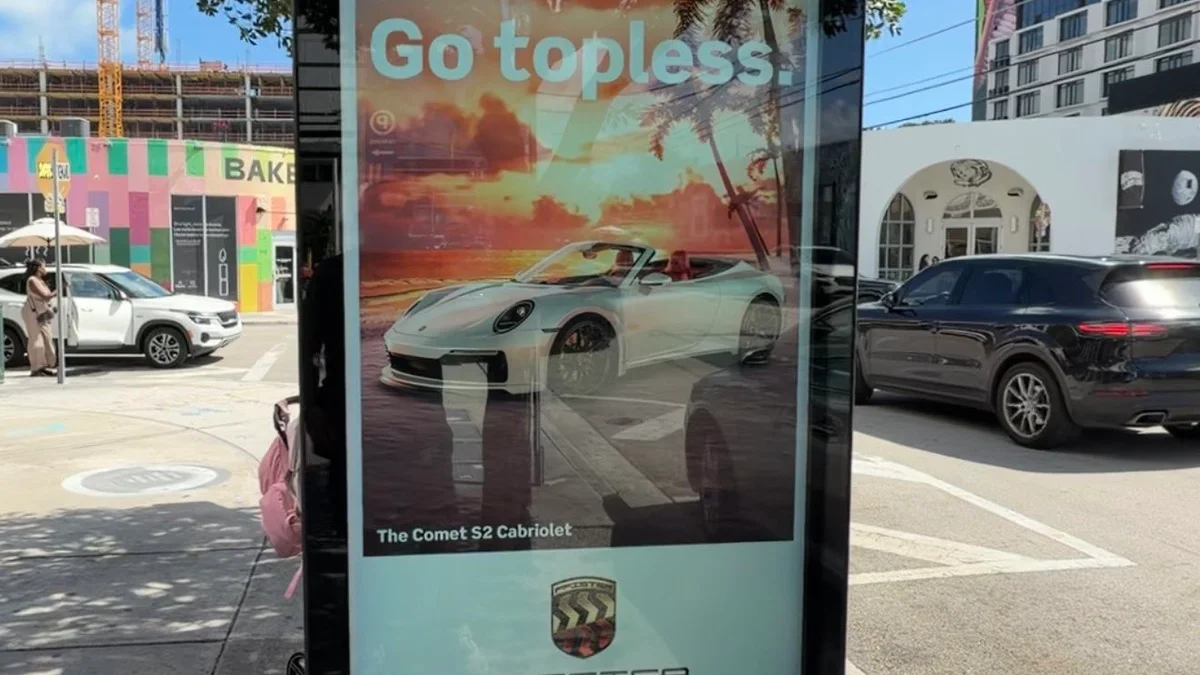
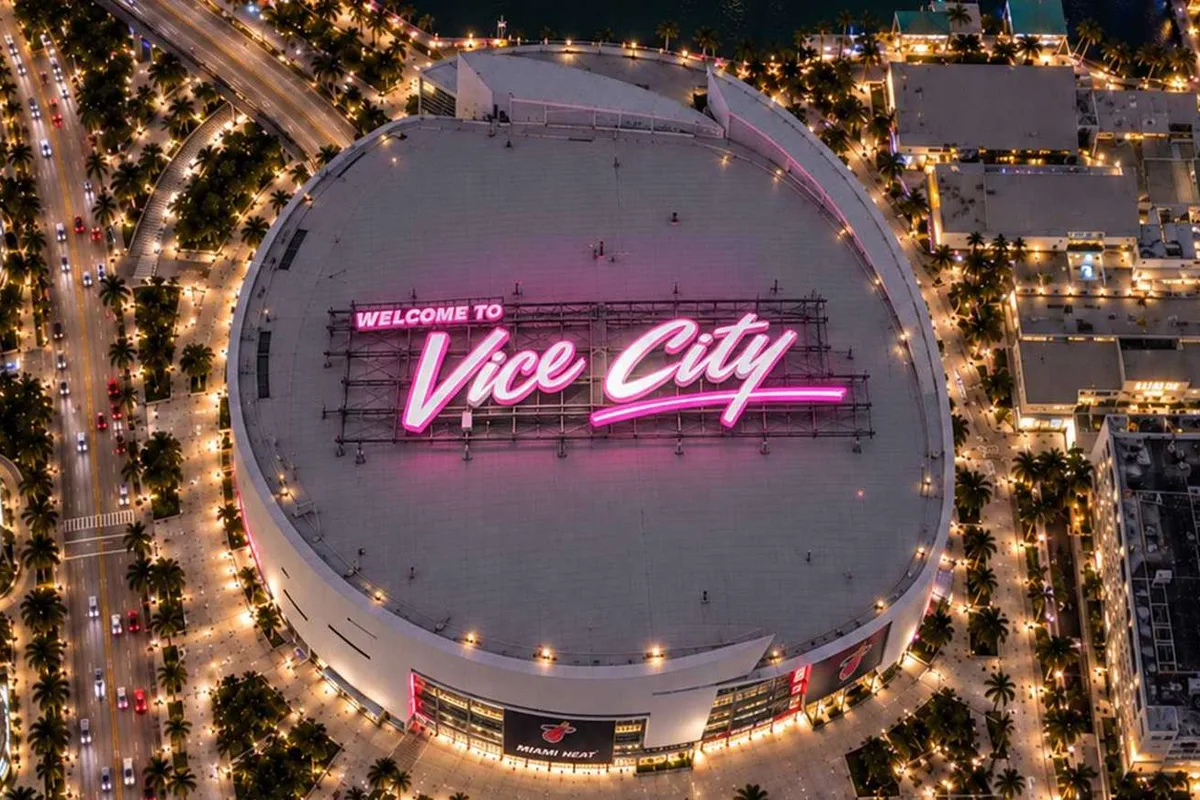
Digital kiosks in Wynwood are displaying advertisements for products belonging to the world of Grand Theft Auto. A giant Welcome to Vice City sign sits above the Kaseya Center. Murals connect the new game to artists and institutions operating in the real Miami.
The relationship works because Vice City is itself a satirical reinterpretation of Miami. Rockstar is promoting its imaginary metropolis by temporarily inserting its symbols into the actual one.
That reversal gives the campaign an unusual cultural dimension. It is not simply advertising a fictional place. It is borrowing the identity of the real city in order to make the fictional counterpart feel present.
The most interesting advertisements barely mention the game
The digital displays photographed in Wynwood are especially revealing.
They promote brands including Pfister, Kronos, Kowalski, Coil, Sprunk and Burger Shot, presenting products and services that do not exist outside Grand Theft Auto.
At first glance, they resemble conventional advertisements for sports cars, watches, jewelry or fast food. Their visual language borrows familiar techniques from luxury marketing and consumer advertising.
The humor becomes apparent when the fictional brand names and suggestive slogans are recognized.
This is a distinctive feature of Grand Theft Auto's long-established identity. Its invented businesses parody real-world advertising through exaggerated promises, innuendo and deliberately absurd consumer culture.
Rockstar has effectively translated that in-game language into a physical promotional format.
The result is a campaign that functions even when the game's protagonists and title are not prominently displayed.
Wynwood provides more than advertising space
The location is important.
Wynwood has developed an international reputation for street art and visually distinctive urban spaces. Rockstar's campaign draws on that identity through a partnership with Wynwood Walls Museum.
The museum announced that Miami-Dade residents would receive free admission through 2028 thanks to the partnership. Ten new murals connected to GTA VI were also introduced, including work associated with local artists.
The arrangement creates value beyond the immediate visibility of the game's branding. It associates Rockstar with a cultural destination while providing a tangible benefit to local residents.
That does not turn the promotion into a purely charitable enterprise. It remains commercial marketing, designed to increase attention around one of the industry's most anticipated releases.
But it demonstrates that Rockstar is using several different approaches rather than relying entirely on paid poster placements.
Sports, tourism and social media extend the campaign
The Kaseya Center has become one of its most recognizable landmarks. The enormous illuminated Vice City sign on the arena's roof brings Rockstar's fictional city into the visual environment of Miami's professional basketball team.
Other installations have appeared across Miami Beach, including branded concession equipment.
Customized sports cars resembling vehicles from Grand Theft Auto have also been filmed in the streets, producing social media attention because they appear to have driven directly out of the fictional game world.
These encounters are particularly valuable for a major publisher because members of the public create additional promotional material themselves.
An unexpected advertisement or unusually decorated vehicle becomes a photograph, a short video or a social media discussion, extending the original installation's visibility far beyond the people who encounter it in person.
Still, sightings should not automatically be interpreted as confirmation of the precise commercial relationships behind every vehicle or display.
The campaign has become a local political issue
There is also a less celebratory side to the promotion.
Several Miami-Dade officials have questioned whether public locations should be used to advertise a video game franchise built around fictional crime and violence.
Their concerns focus partly on the relationship between Miami's actual reputation and Vice City's exaggerated portrayal of urban life.
The distinction between local authorities matters. Miami, Miami Beach and Miami-Dade County are separate governmental bodies, and agreements involving one should not be assumed to apply automatically to the others.
Some proposed banner installations have been subject to specific authorization procedures. Those permissions should be distinguished from displays already photographed and confirmed in public.
Similarly, Rockstar has not published detailed information explaining the contractual basis of the Wynwood digital kiosk campaign.
The presence of the advertisements is documented. The complete administrative and financial arrangements behind them are not.
The promotion tells a story without revealing the story
The collection of advertisements offers a different kind of look at GTA VI.
Instead of focusing on missions, gunfights or the relationship between Jason and Lucia, the images describe everyday life in the fictional city.
They introduce imaginary sports teams, television programs, radio stations, nightclubs and commercial brands.
That information can make the world feel more detailed before launch, but promotional appearances should not be confused with confirmed gameplay features.
A fictional basketball logo does not establish that the player can attend or participate in a match. A television program poster does not confirm how much of that program will be visible in the final game.
The campaign creates cultural texture rather than a complete mechanical feature list.
There is something particularly appropriate about Rockstar choosing that method. Grand Theft Auto's fictional advertisements have always been central to how its worlds communicate their absurdity.
Moving those advertisements into real streets gives the studio a marketing language closely connected to the experience it is selling.
A remarkable public spectacle with an unmeasured return
The campaign's visibility is undeniable, but its financial effectiveness remains a separate question.
Large installations, museum partnerships and customized vehicles involve significant costs. Social media engagement and public curiosity do not automatically translate into additional game sales.
Without complete campaign expenditure and conversion data, it would be inappropriate to declare the operation a proven commercial success.
What can be established is the breadth of its cultural reach. Rockstar has brought GTA VI into sports, tourism, public art and local advertising in the very city that inspired its fictional setting.
Speculation concerning an additional live-action promotional video emerged after filming equipment was spotted in Miami on October 20. Rockstar has not confirmed that interpretation.
The photographed street advertisements require no such speculation. They show the game's fictional businesses operating as convincing pieces of real-world marketing.
With GTA VI scheduled for November 19, 2026, on PlayStation 5 and Xbox Series X|S, the boundaries between Miami and Vice City are becoming a central part of the promotion itself.