
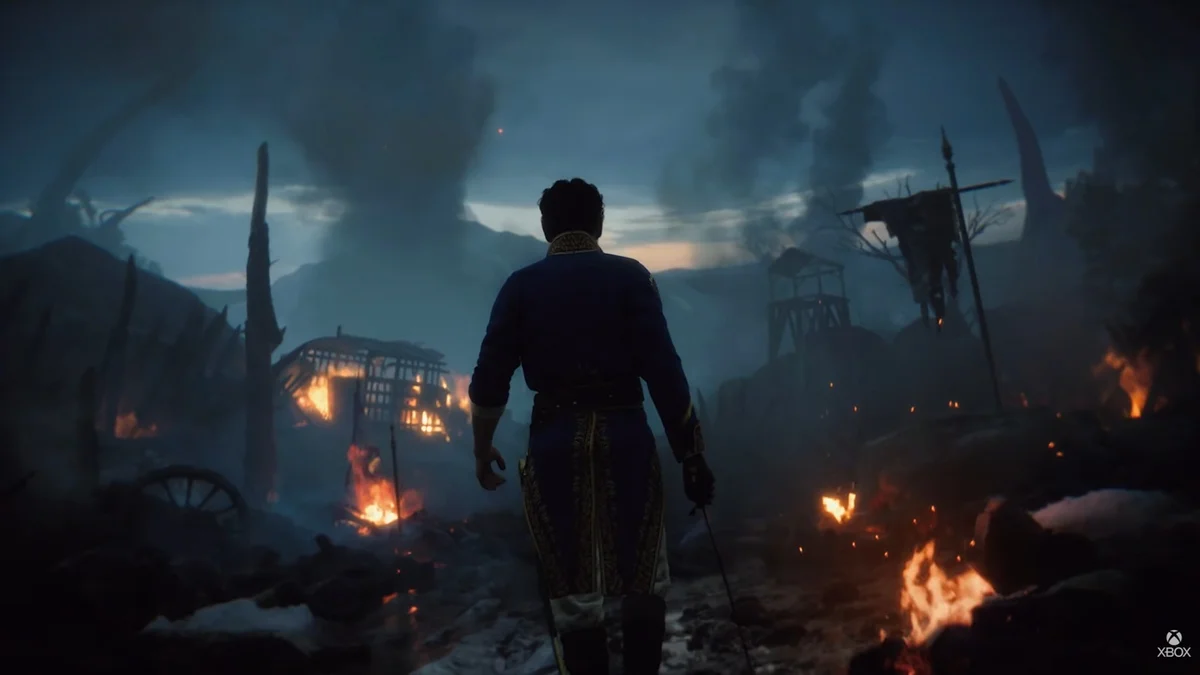
An empire haunted by its own dead
William Dowsett died serving Napoleon's army. His resurrection brings him into an alternate Europe where the consequences of war have become supernatural. Soldiers rise from the dead, monstrous creatures inhabit ruined landscapes, and the Emperor himself appears to communicate directly with the man who once served him.
Valor Mortis has an immediately compelling premise. Napoleonic warfare provides a historical foundation that horror gradually transforms into something grotesque. Military uniforms, abandoned weapons and devastated settlements make the world recognizable before the plague reveals how completely it has changed.
This is not a historical reconstruction. It is a nightmare built from the imagery of imperial ambition and endless warfare.
Its mysteries promise more than they deliver
William's resurrection and the Emperor's mysterious influence establish strong central questions. The nature of the plague and its supernatural consequences give the journey clear narrative direction.
The answers prove less surprising than the premise. The principal conspiracy follows familiar genre conventions and rarely develops the historical implications of its setting as deeply as it might.
Optional stories are often more rewarding. They focus on inhabitants and soldiers living with the devastation, providing small human tragedies that make the ruined landscapes feel inhabited rather than merely hostile.
War becomes a language of horror
The artistic presentation is particularly effective. Deformed soldiers, abandoned military installations and infected settlements create a coherent impression of a continent unable to escape violence.
William's relationship with the voice of Napoleon adds another intriguing element. The soldier has survived death, yet the authority that shaped his previous life continues to follow him. The game introduces questions about loyalty and responsibility even when its narrative remains focused on a supernatural conspiracy.
The strongest images often communicate these ideas more effectively than exposition. Battlefields filled with corpses and unnatural creatures suggest the consequences of conflict without requiring another lengthy explanation.
Combat sometimes interrupts the nightmare
Valor Mortis builds tension through deliberate swordplay and demanding parries. The violence fits its setting, and some encounters become memorable expressions of the world's cruelty.
Excessively punishing ambushes can undermine that atmosphere. Repeatedly restarting a sequence because of an unexpected trap eventually makes the world feel mechanical instead of threatening.
The limited selection of weapons and enemies creates further repetition, although inventive platforming sequences occasionally restore the game's momentum.
The experience remains worthwhile because its environment has such a distinctive personality. One More Level has created a fascinating supernatural version of Napoleonic Europe, even if its central story never becomes quite as memorable as the world surrounding it.